Did Prayer Fail?

prayWhy pray? Why go to church? Why worship God?

These questions have been dramatically tossed out before our culture. When Devin Kelly slaughtered twenty-seven people ranging in age from an unborn baby of eight months to a seventy-seven year old man, he directly challenged the value of Christianity.  When men, women, and children our gunned down in the very act of praying and worshiping, culture cannot help but surmise that following Christ is a pointless practice. And now some would extend that sentiment and claim that religion is dangerous.

Most members of secular culture tolerate some religious observances. The finger pointed up to heaven as the baseball player rounds the bases and the kneel by the quarterback who just crossed the goal line are deemed acceptable. Admittedly some do get a little queasy when encountering these displays of religious devotion. But most Americans view religion to be nothing more than the Marxian opioid that enables people to slug through the difficulties of life. Our secular friends do not inhale our religious fumes but they are happy for us to partake.

Much of that indifferent, societal good will vanished on Sunday, November 7.  The worship of Christ resulted in the death of twenty-seven people. Instead of working hard to create laws that would have protected them and others from a mass shooting, the men, women, and children were worshiping God at church. Even worse, several national politicians worship this God.

According to many in celebrities and politicians, the prayers of the church members and other Christians failed. The day began with friendly smiles ended in the tears of sorrow. Hence our culture asks us, “Why pray?” The rhetorical questions implies we should not pray. God is distant, asleep, or at the very least inept. The time for prayer is gone according to the great thinkers of the twitter universe. The time for meaningful human action has arrived. Society needs to dispense with the opioids of religion and take real action.

While many in America challenge the relevance of praying, they do so from a secular worldview. They challenge prayer because they believe religion is nothing more than a social drug. They deny the reality of heaven and hell. Many Americans are modern day epicureans, seeking to find meaning in pleasure and experience. They believe that joy consists of doing as much of what you want when you want it for tomorrow we die.

They may employee the occasional prayer to God when they encounter an illness or a bumpy airplane ride. But to them, prayer is nothing more than one of many life-lines that can be used to escape or lessen tragedy. And if it fails to help you achieve your goals it should be abandoned.

But this is not the end goal of the Christian worldview. The goal of the Christian, to borrow from the shorter catechism, is, “to glorify God and enjoy him forever.” The goal of the Christian is to commune and to be with God. Christians do not discover life through accumulating wealth, through mastering education, or through experiencing unique events. They discover life by experiencing God through his word and prayer by the power of the Holy Spirit.

Did Devin Kelly’s murderous actions separate his victims for the love of God? Did he destroy the Christian worldview? Did prayer fail?

Did Prayer Fail?

No.  Death is not the end of life. Death is when real life begins for the Christian. Death is not the ultimate sign of resignation and failure. For the believer, death is the conduit through which he or she accesses unfiltered communion with God. Paul wrote in Philippians 2:23 that, “My desire is to depart and be with Christ for that is far better.” Being with Christ means we experience no more pain, sorrow, or frustration. And it means we commune with God perfectly. We will no longer experience quiet times interrupted by day dreams. We will no longer fall asleep while praying. We will no longer leave a worship service perturbed, confused, and unloved. We will have a perfect relationship with God. The men, women, and children who died that day did not experience futility or failure. Their prayers did not go unanswered. They were answered in the most real and meaningful way possible. They came to worship God in part and ended the day worshiping him in full. To be with Christ is far better than anything in this world.

Why We Hurt?

While death was gain for the 27 people who died a few days ago, death is not gain for their families and for the people left behind. Paul also deals with the reality of loss. He notes in Philippians 2:24 “But to remain in the flesh is more necessary on your account.” Paul knows that death breaks human relationships. Death brings harm and discouragement to those who are left behind. Thankfully, God’s grace and mercy covers and sustains the broken-hearted. But the pain and sorrow associated with death is poignantly real, seeping into the depths of our hearts.  Christ had to die to overcome death. And he did. And all who follow him will not be conquered by death. Rather they join Christ and conquer death through the power that raised Christ from the dead. All who appeal to God through prayer confessing their sins will not be disappointed. They may not get their best life now on this earth. But they get something far better. They get what God promised them, life with him.

Did prayer fail on November 7, 2017? Absolutely not.

Will you keep praying?

31 What then shall we say to these things? If God is for us, who can be[i] against us? 32 He who did not spare his own Son but gave him up for us all, how will he not also with him graciously give us all things? 33 Who shall bring any charge against God’s elect? It is God who justifies. 34 Who is to condemn? Christ Jesus is the one who died—more than that, who was raised—who is at the right hand of God, who indeed is interceding for us.[j] 35 Who shall separate us from the love of Christ? Shall tribulation, or distress, or persecution, or famine, or nakedness, or danger, or sword? 36 As it is written,

“For your sake we are being killed all the day long; we are regarded as sheep to be slaughtered.”

37 No, in all these things we are more than conquerors through him who loved us. 38 For I am sure that neither death nor life, nor angels nor rulers, nor things present nor things to come, nor powers, 39 nor height nor depth, nor anything else in all creation, will be able to separate us from the love of God in Christ Jesus our Lord. – Romans 8:31-37

Sola Scriptura

scripture-aloneThis post was taken from my talk on Sola Scriptura delivered during FBCE’s Reformation Focus on October 29,2107

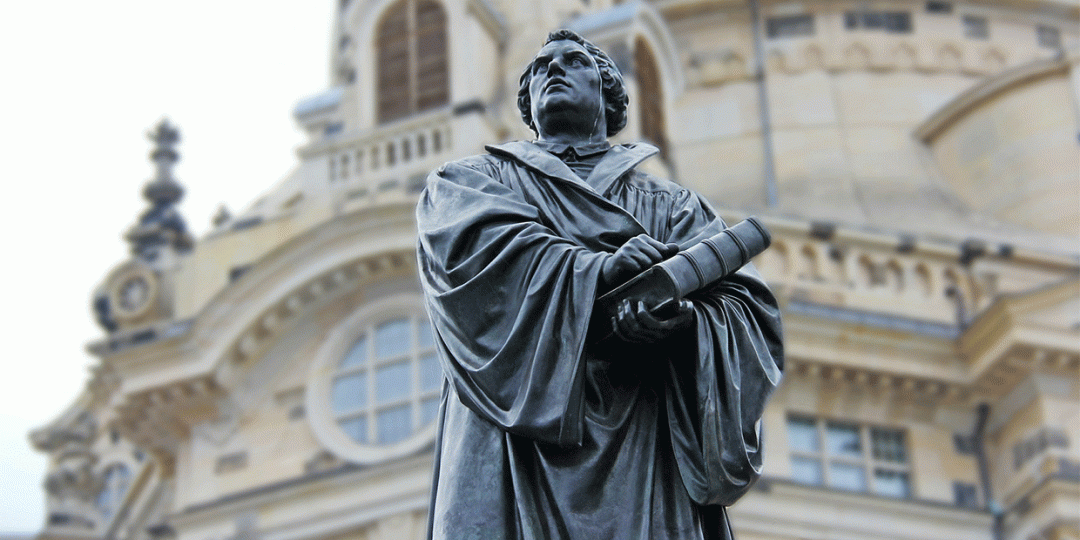
Unless I am convinced by the testimony of the Scriptures or by clear reason (for I do not trust either in the pope or in councils alone, since it is well known that they often err and contradict themselves), I am bound by the Scriptures I have quoted and my conscience is captive to the Word of God. I cannot and I will not retract anything, since it is neither safe nor right to go against conscience. I cannot do otherwise, here I stand, may, God help me, Amen.

With these words,  Luther shattered his connection to the Catholic Church, by proclaiming the Scriptures to be the final authority. Pope Leo X and his advisers believed that the Bible was the inherent Word of God. Luther’s battle was not akin to the conservative resurgence in the Southern Baptist Convention that fought to reestablish the belief that the Bible was the Word of God and was without error. Both the Luther and the Pope affirmed the inerrant nature of the Scriptures.

Luther and the Pope butted heads on the doctrine of the sufficiency and authority of the Bible. The Pope and the cardinals believed that they could and should add commands and ideas to the Scriptures because as Bishop Stephen Gardiner said, “The Scripture is dead: it must have a living expositor.” Infamously, Pope Leo X expanded upon the Scriptures by creating Indulgences to pay for the completion of St. Peter’s Cathedral.

Indulgences were little pieces of paper that transferred merit from Christ and the saints to the sinner upon payment to the church. As the evil monk Tetlsel sang, “As soon as a coin in the coffer rings, The soul from purgatory springs.” The Catholic Church was selling salvation on the authority of the Pope and on the authority of church counsels.

authorityLuther objected vehemently to the sale of indulgences, knowing that salvation comes through faith alone,  by grace alone, through Christ alone for the glory of God alone.  The Catholic Church responded to Luther’s 95 Theses and other writings by calling the German Bull to repent of his errors and to affirm the authority of the Pope and the Catholic Church.

Luther refused. He was, “bound by the Scriptures.” The church was not Luther’s authority. The Pope was not Luther’s authority. Pragmatism or the belief that what works is right was not Luther’s authority. The culture was not Luther’s authority. Right and wrong were not determined by the societal acceptance of a practice. Rather, Luther’s authority was the Bible.

The Biblical Case For Luther’s Belief

Luther made the Scriptures his authority because the Scriptures, the Word of God, claim to be the exclusive access to the voice of God. In I Timothy 3:16-18, the Bible claims to have been breathed out by God or exhaled from his mouth. The text in our hands and that shines on our phones is not simply the religious musings of some deep thinkers, it is not the divine inclinations of a few wise men and women, and it is not the suggestions of the spiritual astute. The Bible, is the Word of God. It is the essence of God.

2 Peter 2:16-21 reveals this truth clearly. The text states:

16 For we did not follow cleverly devised myths when we made known to you the power and coming of our Lord Jesus Christ, but we were eyewitnesses of his majesty. 17 For when he received honor and glory from God the Father, and the voice was borne to him by the Majestic Glory, “This is my beloved Son,[i] with whom I am well pleased,” 18 we ourselves heard this very voice borne from heaven, for we were with him on the holy mountain. 19 And we have the prophetic word more fully confirmed, to which you will do well to pay attention as to a lamp shining in a dark place, until the day dawns and the morning star rises in your hearts, 20 knowing this first of all, that no prophecy of Scripture comes from someone’s own interpretation. 21 For no prophecy was ever produced by the will of man, but men spoke from God as they were carried along by the Holy Spirit.

The Bible, the words of Peter, Paul, Matthew, Mark, Moses, Joshua, Isaiah, and the many other writers, contains the words of God. And the words that compose the Scriptures were not written in a dark room somewhere. No, these words reflect reality. Peter is recording the teachings and the events he saw and heard. He says in verse 16, “we were eyewitness.”

What was Peter an eyewitness too?

He tells us. He is talking about his experience on the mount of transfiguration. In Mark 9:1:-8, Luke 9:28-36; Matthew 17:1-8, we are told that  Jesus, Peter, James and John go up on a mountain. Jesus is transfigured. The three disciples see Jesus’ glory and listen to Jesus talk with Moses and Elijah. Then they hear as Peter recounts in verse 17 these words, “This is my beloved Son,[i] with whom I am well pleased.” They hear the voice of God the Father.

But as amazing and as grand as those words were and that experience was, Peter is affirming that you and have I something better. He says in verse 19:

And we have the prophetic word more fully confirmed, to which you will do well to pay attention as to a lamp shining in a dark place, until the day dawns and the morning star rises in your hearts

Peter affirms the prophetic word. He says that text in front of us is more sure and more helpful for our everyday lives than his experience on the mount of transfiguration. Chew on that for a minute. Peter is affirming

kiwihug-284614that the Bible is better and more helpful than being with Jesus briefly on the mountain top. God’s word is far better than any experience we may have in the woods as the sun rises. God’s word is far more helpful than any experience we can create by praying ourselves into an emotional tizzy. God word is far more excellent than any private prophecy or premonition. If we want to hear the voice of God and to know what God is saying to us,  we must read the Bible.
Peter tells to respond reality of the Bible’s authority by reminding us that we will “do well to pay attention as to a lamp shining in a dark place.” Borrowing the language of Psalm 119, Peter tells his readers that only God’s Word can guide them to light, truth, and joy. Only God’s word can show how us how live, how to worship, and how to overcome sin. God’s Word is inerrant and it is authoritative and all we need.  All of Scripture and not just the red letters is the words of our God.

And all of Scripture is the words of Christ.

John 14:25 promises:

25 “These things I have spoken to you while I am still with you. 26 But the Helper, the Holy Spirit, whom the Father will send in my name, he will teach you all things and bring to your remembrance all that I have said to you.”

Everything the disciples wrote down came from the Holy Spirit who was sent by the Father to bear witness to Jesus. The Bible is the Word that the Father ordains us to have through the Spirit, attesting to Jesus. We do not have to reach outside the Bible’s pages for a special word from the Lord. Because God the Father, God the Son, and God the Holy Spirit work together in perfect unity and unison, they will not give us competing words or visions from sources other than the Bible. No member of the trinity will go against the over members and send a rogue message out here or there. And if we hear a word outside of Scripture, we have not heard the voice of God. We have tapped into demonic darkness. To know God’s will, to hear God’s voice, we must tune our hearts to the Scriptures.

Until Christ returns, until the morning light breaks into the darkness of this world and Christ once again reigns on high above all earth, the Scriptures are fully sufficient for all we need in life and Godliness. As Luther would note,

Scripture alone is the true Lord and master of all writings and doctrines on earth.

Luther can make this bold declaration because in verse 21, we read these words,

For no prophecy was ever produced by the will of man, but men spoke from God as they were carried along by the Holy Spirit.

The apostles did not put down their own ideas. They did not write down their agenda and push their political aspirations as the writer Dan Brown asserted in the Divinchi Code. No, writers of the Bible recorded verifiable facts. wrote down the words of God.

Remember verse 16. Peter tells us that he was an eyewitness. The apostle John makes the same claim in I John 1:1:

That which was from the beginning, which we have heard, which we have seen with our eyes, which we looked upon and have touched with our hands, concerning the word of life.

And in Luke 1:1-4 we read,

Inasmuch as many have undertaken to compile a narrative of the things that have been accomplished among us, 2 just as those who from the beginning were eyewitnesses and ministers of the word have delivered them to us, 3 it seemed good to me also, having followed all things closely for some time past, to write an orderly account for you, most excellent Theophilus, 4 that you may have certainty concerning the things you have been taught.

And in Matthew 5:17-19 Jesus famously asserts the authority and sufficiency of Scripture noting

17 “Do not think that I have come to abolish the Law or the Prophets; I have not come to abolish them but to fulfill them. 18 For truly, I say to you, until heaven and earth pass away, not an iota, not a dot, will pass from the Law until all is accomplished. 19 Therefore whoever relaxes one of the least of these commandments and teaches others to do the same will be called least in the kingdom of heaven, but whoever does them and teaches them will be called great in the kingdom of heaven.”

As Luther would reflect,

The saints could err in their writing and sin in their lives, but the Scriptures cannot err.

Luther and the reformers made the Bible their authority because it is the definitive and complete Word of God. Sola Scripture; Scripture alone.

Reflections For Today

As I conclude this section, I want to reflect on how this doctrine of Sola Scripture should shape our church. As Dr. Albert Mohler the President of Southern Seminary said,

The true churches of the Reformation understood that the right call was for a church always reformed by the Word of God.

As men and women affirming the doctrines of the Reformation, the biblical idea that Salvation is through Christ alone, by Grace alone, through faith alone, for the glory of God alone, upon the authority of the Scriptures alone, we should continually examine our lives and the lives of our church for the purpose of reforming our hearts and church. to reflect the Scriptures.

I wish to close by posing to questions to help us apply the truths of Scripture alone to our hearts.

1. Do we value the Word in our church? Does the children’s ministry revolve around the teaching and preaching of the Word or is the ministry driven and directed by games and personal opinions?

Do the songs that we sing reflect our music preferences or do they reflect the gospel as revealed in the Word?

Do the sermons we hear drive us to the text? Or can we quickly close our Bibles once the pastor starts preaching? Do we regularly hear our pastors, guest preachers, and Sunday school teachers saying, “See what the text says, look at that verse, see what the word says,” or do the preachers simply tell stories and reflect on their own impressions? John Blanchard said,  “The pulpit is the throne for the Word of God”

Word prominently displayed on our throne? Do we value the word in worship?

2. Second do we value the word in our daily life? Do we truly think that the Words of eternal life are found in the Scriptures? Where do we go first when we encounter trials, tough decisions, and sickness, hardships, and unpleasant experiences? Do we run to our friends? Do we run to the psychologists and the Christian therapist for some extra biblical advice? Where do we go?

Luther noted,

A simple layman armed with Scripture is to be believed above a pope or council without it.

Several hundred years later Dietrich Bonhoeffer restated Luther’s sentiment, saying,

The most experienced psychologist or observer of human nature knows infinitely less of the human heart than the simplest Christian who lives beneath the Cross of Jesus.

God’s word claims to contain all that we need for life and godliness (2 Tim 3:16-18). Luther said that God is light and that “all else being darkness.” Do we look to the light when seeking to navigate our lives or do we embrace the darkness that parades about as the world’s wisdom? Do we value the word in our life?

The reformation began in 1517. But it has not ended. May we continue by God’s grace to cotinually reform our churches and our souls to reflect the truth of the Scriptures. Sola Scripture. Scripture alone.

5 Great Resources For Celebrating the Reformation 

LutherLuther: The Life and Legacy of the German Reformer

A Stephen McCaskell Film

product-image-luther_39c180e1-0f8a-4a73-9220-a6ac43ee9b02_2000xThis colorful documentary was shot at the locations that defined Luther’s life. It also features striking illustrations. Great theologians ranging from Steve Lawson to R.C. Sproul drive the content of documentary exploring all parts of Luther’s legacy including his view of salvation, the church, and Jews. If you want to know why the Martin Luther and the Reformation is important, I encourage you to watch this 1.5 hrs. film.

Click here to get your copy!


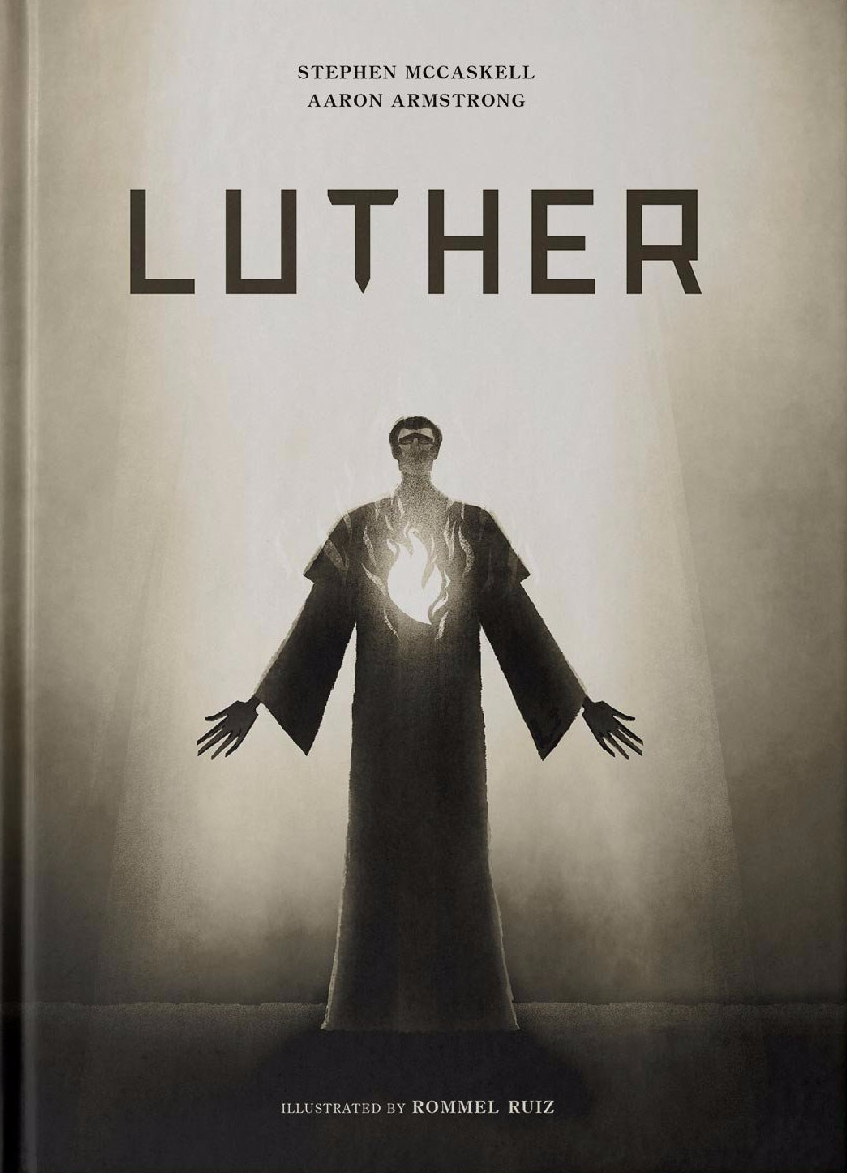
Luther

Stephen McCaskell and Aaron Armstrong

mockup01_854ba26b-34b4-430b-8fbc-60adda5809df_2000xThis striking picture does a great job of introducing older children to Luther through engaging black and white illustrations, through quotes from Luther and other reformers, and through and easy to read text. Children and homeschool families seeking to study and learn more about Luther will love this book that praises Luther for rediscovering of the doctrines of Grace and that wrestles with his noticeable character flaws.

Calvin recognized in the Luther what we all would be wise to remember: Even the greatest servant of God will continue to struggle with sin until the ends of his days. (81).

Click here to buy your copy!


Here I Stand: A Life of Martin Luther

Here I stand

Roland H. Bainon

Though written for adults,  this biography of Luther could easily be read by junior high and high school students. The short chapters often feature quotes, pictures and an easy to read text. This book one of the best Luther biographies around chroniclaling the events and culture that lead Luther to turn the world upside down.

“He [Luther] was a priest responsible for the eternal welfare of his parishioners. He must warn them against spiritual pitfalls, no matter what might happen to the Castle Church and the university.”  (56)

Click here to by your copy!


Freedom Movement: 500 Years of Reformation

Michael Reeves

freedom movementThis  great little book starts with Luther and then traces the effects of the Reformation to the present day. Children will be exposed to the Luther’s profound life and belief that salvation is through grace alone. They will also get introduced to John Bunyan, William Wilberforce and many other people who have been influenced by Luther’s great proclamation that

Martin Luther was concerned with people’s happiness. In fact, he would come to believe that he had found the secret of happiness. And that, at its heart is what the reformation is about. Not moralizing. Not self-improvement. It was a discovery of stunningly happy new – news that would transform millions of lives and change the world. (5)

Click here to buy your copy!


Bonus Find: 

The Nine Marks Ministry has devoted their latest journal to covering the theological and practical issues surrounding the Reformation! There are essays on what church services where like before the Reformation, on whether or not the Reformation is purely a white evangelical movement and on a host of other topics related to the Reformation! This amazing journal is free!  Click here to get your copy!