My Top Reads of 2023

Though it is something to have one’s words appear on a printed page (unless of course said printer is the one found in your home office), it is still much more of a something to have those same words appear in print a decade if not even a century later. While not exactly hot off the press, the three volumes below proved the most edifying and stimulating to my soul this past year. Thus, I happily pass along some aging and well-aged volumes to you.

Confronted By Grace

By: John B. Webster
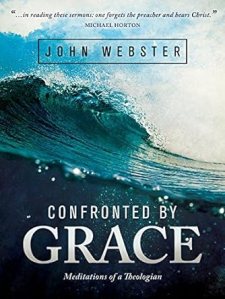
Making full use of his academic genius and renowned conversationalist skills, Webster skillfully presents deep doctrinal truths in a manner that quickly connects them with the readers heart. In the span of 247 pages, Webster provides his readers with manageable definitions of worship, anxiety, grace, faith, and many other topics that prove essential to the wellbeing of our souls. With his terms defined, the Anglican professor then thoughtfully applies the doctrines to his readers lives in the ensuing 4-5 paragraphs. In other words, Webster connects the Scriptures to his readers’ minds and emotions without devolving into the cheap sentimentality that has come to define so much of Christendom. As Michael Horton said of these short, doctrinal sermons, “One forgets the preacher and hears Christ.” Those who incorporate sermons into their devotional life or who are seeking to grow in their understanding of how to live out their Christian faith would greatly benefit from reading these sermons by the late John Webster. 

Excerpt:

Faith sees the truth about God and God’s merciful, gracious kingdom which is embodied for us in Jesus Christ. Faith is not just some crazy hope against evidence (indeed, when it becomes that it is itself a king of sickness). Quite the opposite: Faith is that deeply healthy state of the soul in which we let God be God. It’s that free, unhesitating, joyful assent to the one in the midst of whose kingdom we stand secure.

Devotion

By: Adam Makos

In the span of 445 up-tempo pages, Makos captures the essence of brotherly love against the backdrop of the Koren War. Though the movie that bears the same name as the book above portrays Jesse Brown as an angry black man, jaded by racism and Tom Hudson as a naive white man, lacking experience, the book teases out a much more complex, inspiring, and beautiful narrative. Though Jesse unquestionably encountered the brutalities of racism as children spat on him, teenagers assaulted him with eggs, and navy colleagues made unkind remarks, he was not an angry man on a mission, but rather a loving husband, father, and Christian, who longed to be home with his wife and daughter. Though much of the world was against Jessie, he easily inspired and won the friendship of men like Tom who shared the former sharecropper’s work ethic and love of neighbor. While on the ground attempting to save Jessie who had been shot down moments earlier, Tom said of his friend, “Jesse was so calm through it all, I’ve never seen anything like it…When we were on the ground, he was calming me down, when I should have been calming him down (393).” Tom, who almost never flew because of bouts with airsickness, also possessed remarkable fortitude. He stayed by Jessie’s side in the cold snow until his death and then stood with his wife and daughter in the years that followed. In a world of causes and movements, we would do well to spend more time reflecting on the bonds of friendship which can withstand even the strains of war. I fully agree with Makos that, “The world needs Jesse Brown and Tom Hudner, now more than ever.”

Excerpt

Against a backdrop of gray clouds, the two blue Corsairs dived toward the snowy mountains. Tom glanced at Jesse as their planes plummeted side by side. Jesse’s helmeted head scanned back and forth, his eyes searching for a place to crash. He was going down, seventeen miles northwest of Hagaru, deep inside enemy territory.

An Ark for All God’s Noahs
By: Thomas Brooks

Thomas Brooks’ 261-page volume serves as a spiritual b12 shot for believers who have been wounded and wearied by the world. Knowing that only a Christian’s unbelief could separate him from the glorious promises tied to the death and resurrection of Christ, Brooks wanted to help his readers get hold of their inheritance. He noted, “Nothing can make that man miserable that has God for his portion, nor nothing make that man happy who that wants God for his portion (xvii). In the first section, Brooks outlines, quantifies, and defines the nature of God’s promises, reminding the believer that God is the source of all goodness. The Puritan then explains why God freely bestows his goodness on those who believe before applying the doctrine to a host of practical concerns. He then ends the book answering objections that some of his readers had such as, could sin keep them from experiencing God’s promises. Though the book was first published in 1666, the promises of God that Brooks highlights remain forever relevant. And when Brooks makes use of a Latin phrase or even an awkward English expression, the Banner of Truth edition contains footnotes that quickly blow away any clouds of confusion that might otherwise disrupt the reading. If you want to be reminded afresh of just how amazingly good, loving, just, merciful, and patient our God is, I encourage you to read this book!

Excerpt:

If God be your portion, then every promise in the book of God is yours, and every attribute in the book of God is yours, and every privilege in the book of God is yours, and every comfort in the book of God is yours, and every blessing in the book of God is yours, every treasury in the book of God is yours, and every mercy in the book of God is yours, and every ordinance in the book of God is yours, and every sweet in the book of God is yours, if God be yours, all is yours.

Two Bonus Picks

Right Ho Jeeves by P.G. Wodehouse – “You know how it is with some girls. They seem to take the stuffing right out of you. I mean to say, there is something about their personality that paralyses the vocal cords and reduces the contents of the brain to cauliflower.

Expositions of Chapter 6: The New Man by Martyn Lloyd-Jones – “The cure for that [depression] is to realize that, whether you have sinned or not, you are in Christ; that sin does not affect you yourself as a person, that it cannot bring you again into its realm and reign; that sin only remains in your mortal body, and that – even that – because you are in Christ is going to be entirely set free.”
My Top Reads of 2022

I am all for new books. I just ordered one the other day. Still with each passing year, I find my heart increasingly aligned with C.S. Lewis’s rule to never allow oneself to read another new book “till you have read an old one in between.” Indeed, old books that make it to our time deserve our attention. If nothing else, we should be curious to know why they have survived when other volumes did not. I also suspect the more we read old books the more we will come to understand that the refinement of time ultimately furthers the stewardship of our time and thought today. As one can now guess, the books that most resonated with my soul this past year are rather well-seasoned if not downright ancient. If you are in the market for book to fill the space between the newer volumes on your shelf, I invite you to consider the following 3 options:

Link to My Goodreads stats for 2022

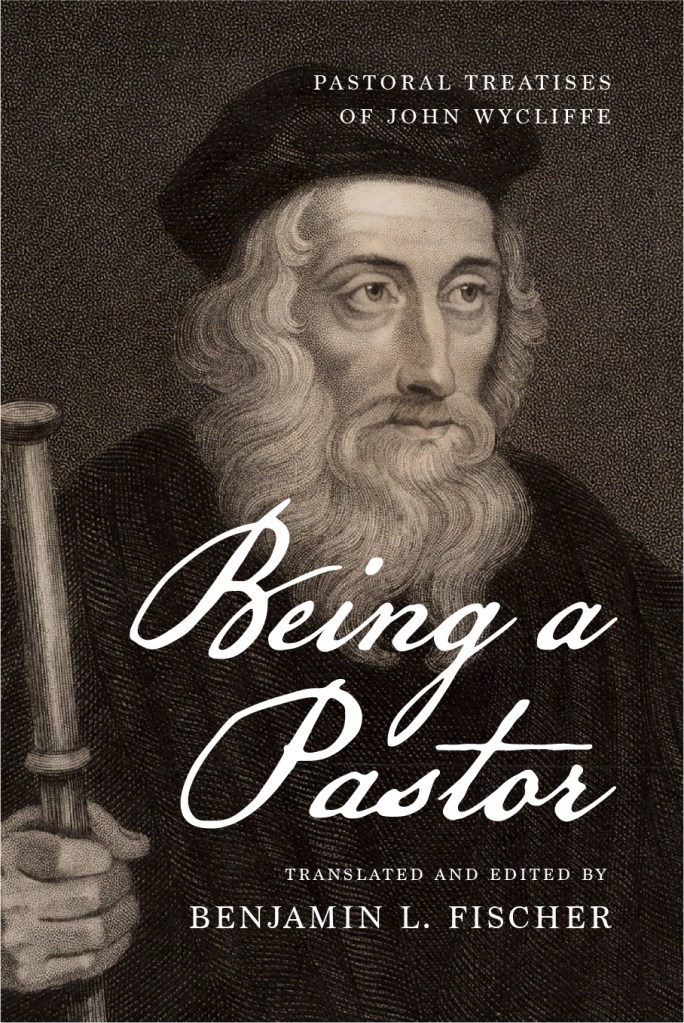
Being a Pastor

By: John Wycliffe

This small volume serves as a fantastic introduction into the stream of gospel-based theological discourse that shaped the theology of the Middle Ages. As Wycliffe’s principled defense of the authority of Scripture makes clear, the dark ages still contained many rays of truth (Click here for a brief introduction to Wycliffe’s life and ministry). Admittedly, Wycliffe remains very much a man of the Middle Ages. He possessed views on marriage and church-state relations that do not translate well into our modern theological discussions.

Thankfully, this book introduces readers to Wycliffe’s gospel convictions without distractions tied to the age of knights and princesses. The 102 pages that compose this volume clearly and concisely convey Wycliffe’s conviction that priests should stay with their sheep, should live pure, humble lives, and should preach the unadulterated gospel. In addition to repeatedly addressing the dangers of worldly greed, this book conveys Wycliffe’s passion for powerful preaching, a preaching that would replace the stories and poems that dominated so many sermons of his day with clear reflections upon the text of Scripture designed to produce biblical and lasting change. Lastly, the text provides readers with a sense of why the Catholic Church found Wycliffe so unsettling. The pages detail Wycliffe’s belief that priests, princes, and lay people should defy the pope and his officials whenever they violated the commands of Scriptures. Those who possess an interest in pastoral ministry, in English history, and in understanding how theology developed in the years leading up to the Reformation should grab a copy of this book…this window into the soul of the Middle Ages.  

Excerpt

We should take as an article of faith that God’s law surpasses all other in authority, in truth, in intelligence…Therefore, God commanded his apostles not to preach man’s law but to preach the Gospel to all kinds of people. Accordingly, those who preaching is a matter of jokes and telling stories are all the more to be blamed. For God’s Word must always be proclaimed faithfully if it is to be understood.

Christmas Thoughts

By: J.C. Ryle

This concise 128 volume written by Anglican Bishop J.C. Ryle blessed my soul the past Christmas morn. Ryle’s focus upon the complete and never-ending promises of God warmed my heart which has been cooled be dampness of deep grief. He displays his genius in explicitly warning his readers of the perils of unbelief while also showing his readers how the human longing for perfect community finds it fulfillment not in Christmas gatherings which prove fleeting and forever incomplete but in the new heavens and new earth. That wonderful meeting will consist of all God’s people from ever age and will never end. There will be no more goodbyes. No more sense of loss. Ryle’s helpfully ties the glories of Christmas to the community of the Church (all belivers of all ages), providing a small and needed correction to the Western over preoccupation with family at the holidays. In other words, if you open to the possibility that a book could stir your heart to long for Christ, to love God’s people, and to evangelize the lost all while putting up your Christmas tree, I encourage you to read this small volume at Christmas.

Moreover, it’s application does not end with the holidays. As the book’s editor, Andrew Atherstone, noted, Ryle republished several of the tracts without the Christmas references, revealing the truths contained within to be appropriate for the holiday and yet to possess the ability to reach far beyond the bounds of December 25th. The truth of the gospel is powerful both in and out of season!  

Excerpt

But, thank God there is one great family whose prospects are very different. It is the family of which I am speaking in this tract, and commending to your attention. The future prospects of the family of God are not uncertain. They are good, and only good – happy and only happy.

Surprised By Suffering

By R.C. Sproul

For most of my life, I have spent my time meditating on how to live well. But on May 31, 2022, I abandon my preoccupation with life and began contemplating in earnest how one dies well. As April and I came face to face with the cruel truth that no cure, no medicine, no hope of life remained for her, I came across R.C. Sproul’s volume. Sproul’s discussion of death being a vocation, a calling, helped me to understand that April’s last weeks had a glorious purpose. They were a time for her and me to praise God. A time to call others to repentance and faith…to the hope of Jesus. A time to once again battle sin. A time to redouble her faith in her loving Father, trusting that he would forever hold her fast. In other words, a time to finish well the last race that God had set before her.

In one sense, we should all begrudge death. And yet in another sense, Sproul shows us that we can embrace it without fear. For the believer, death does not end in the sorrows of grave. As Sproul noted, “Ultimate healing comes through death after death.” The first half of the book resolutely reminds the hurting Christians that God is with us even at death, transforming tragedy into our greatest victory.  

The second half of the book which explores heaven grows a little more speculative therefore little less insightful. The book then concludes with a series of questions and answers that cover topics such as near-death experiences and what happens to babies when they die. Regardless of what one thinks of the second half of the book, the first half of this book which applies the balms of the gospel to the pain of death more than covers the price of this volume.

I believe this 158-page volume will bless both those who are facing the prospect of death and those who seek to love the dying. And if we are honest, that is all of us.

Excerpt

Teachers argue that there is healing in the atonement of Christ. Indeed there is. Jesus bore all our sins on the cross. Yet none of us is free from sin in this life. Likewise, none of us is free from the sickness in this life. The healing that is in the cross is real. We participate in its benefits now, in this life. But the fullness of the healing from both sin and disease takes place in heaven. We still must die at our appointed times.

2 Bonus Picks

Charity and It’s Fruits: by Jonathan Edwards

Grief: Walking With Jesus: by Bob Kellemen

Top Reads of 2020

I read books much like Sam from the iconic Green Eggs and Ham who could eat the green stuff here and there. I can read pretty much everywhere. In 2020, I have read books in a plane and on a train. I’ve read them within a car and in hotels from afar. And I would read them with my wife and with PhD students who play the fife. In short, I do so like good books. I hope you too will try a good book or two soon. Below are the four tastiest volumes that I read in 2020.

If you feel the urge to stop reading this post, finding books scary, I encourage you to stay with me for another minute or two. Investigate the books below. Though you may not like books much today, I encourage you to heed the advice of Sam-I-Am who profoundly said, “Try them! Try them! And you may.

The Great Influenza: The Story of the Deadliest Pandemic in History

John M. Barry

I began the year unaware of this book. But a pandemic and a well-timed tweet by my fellow PhD. student John Blackman later, the book became my favorite volume of 2020.

When the Coronavirus swept across our shores, I found myself completely unprepared for the virus. I did not know how to think about a virus. My grandparent’s stories which dipped into the 1920s knew nothing of pandemics or plagues. Barry’s book provides the historical context that I needed to make sense of these times. In the 546-page book that reads like a novel, the author traces the conflict that erupts as scientists seek to conquer the mysterious and every changing world of microbes that are killing thousands. As the story flows from rural Kansas, to France, and then back to urban New York and to a host of other locations, Barry clarifies many misconceptions that have distorted our understanding of the Spanish Flu, the benefits of epidemiology, and the power of modern medicine. He also draws connections between the 1918 pandemic and other medical crises such as Polio and the Swine Flu, noting both the advances of modern medicine and its frustrating limits. Modern medicine still fails to definitively answer our questions. Barry notes, “They knew so little. So little. They knew only isolation worked.”

At times, Barry’s own biases bleed into the story. But his biases against Christianity do not impede his overarching commitment to leave no stone unturned. He examines Presidential files, small town newspapers, and private correspondence. The research that produced this book has captured the attention of Presidents on both sides of the political spectrum. I would encourage you to listen to Barry as well.

Excerpt

And they lied for the war effort, for the propaganda machine Wilson had created. It is impossible to quantify how many deaths the lies caused. It is impossible to quantify how many young men died because the army refused to follow the advice of its own surgeon general. But while those in authority were reassuring people that this was influenza, only influenza, nothing different from ordinary “la grippe” at least some people must have believed them, at least some people must have exposed themselves to the virus in ways they would not have otherwise, and at least some of those people must have died who would otherwise have lived.


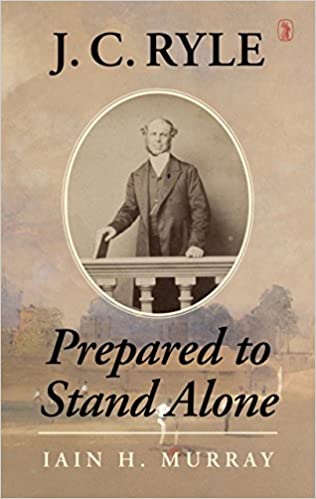
J.C. Ryle: Prepared to Stand Alone

Iain H. Murray

As the world around him descended into darkness, J.C. Ryle remained fixed to the light of Christ. In the space of 273 pages, historian Iain Murray chronicles the life and discusses the theology of one of the greatest British theologians of the nineteenth century. Ryle overcame his nominal Christian roots and was transformed into the famous grace inspired pastor we know today because of his single-minded devotion to Christ. Murry writes, “The gospel itself was ever the most important part of whatever he spoke or wrote, and the gospel meant the person and work of the Lord Jesus Christ (133).” He clung to it when his wives died, when the Church of England drifted from the truth, and when his son wrote off the historic Christian faith as being archaic. Through all the disappointments, criticisms, and sorrows, Ryle rested happily upon the rock of Jesus Christ, extending love to friend and foe alike. One contemporary described Ryle as “that man of granite with the heart of a child.” Though the church of England sank into liberalism, Ryle’s ministry bore great evangelical fruit. He opened 44 new churches and installed more than 100 new clergy in his diocese. The relevance Ryle’s son, Herbert, sought through theological innovation, J.C. Ryle achieved through the proclamation of the historic faith. Murray’s work is a valuable and encouraging read.

Excerpt

Faced with difficulties of many kinds, Ryle had no doubt where his priorities lay: ‘my first and foremost business, as Bishop of a new Diocese, is to provide for preaching of the Gospel to souls now entirely neglected’…From the time of his conversion he had believed that nominal Christianity – ‘churchianity’ without personal experience of Christ – was ‘the greatest defect of the Christianity of our times.’


Know the Creeds and Councils

Justin S. Holcom

Using only 192 small pages, Holcom accomplishes the herculean task of providing his readers with helpful introductions to more than thirteen creeds and doctrinal statements. Each of his chapters chronicles the historical background, the content, and the relevance of documents such as the Apostle’s creed, the Council of Trent, and the Chicago Statement on Inerrancy. At the end of each chapter, the author provides his readers with discussion questions and a list of books for further study, making this the perfect book for both the pastor and the lay person. Though no book of this size could comprehensively deal with every issue tied to these documents, Holcom provides his readers with a meaningful introduction to those movements that both indirectly and directly shape their theological practice. For example, he details Nicaea which solidified the church’s understanding of Jesus and the Council of Trent which explains why protestants cannot rejoin the Catholic Church. Though Jesus’s church does not need councils and theological documents to be the church, these statements prove to be more helpful than most Christians realize. Holcom writes, “Creeds aren’t dogmas that are imposed on Scripture but are themselves drawn from the Bible and provide a touchstone to the faith for Christians of all times and places.”

Excerpt

The fact that Christianity developed – that the sixteenth century, for instance, looked very different from the third, and that both looked very different from the twenty-first – can sometimes lead us to wonder what the essential core of Christianity is. As a result, some people decide to ignore history altogether and try to reconstruct “real Christianity” with nothing more than a Bible. But this approach misses a great deal. Christians of the past were no less concerned with being faithful to God than we are, and they sought to fit together all that the Scripture has to say about the mysteries of Christianity – the incarnation, the Trinity, predestination, and more – with all the intellectual power of their times. To ignore these insights is to attempt to reinvent the wheel, and to risk reinventing it badly.


The Heart of Christ

Thomas Goodwin

The sweetness of Thomas Goodwin’s 1651 book has become all the fuller with age. Instead of being driven to the edge of irrelevance by the busyness of the modern world, Goodwin’s exposition of God’s love for his people proves to be acutely applicable to our day. The first part of the book reveals how heaven amplifies Jesus’s love for his disciples, reminding readers that the God who extended grace to the bumbling Peter readily extends grace to you and me. Goodwin notes, “now that he is in heaven, his heart remains as graciously inclined to sinners that come to him, as ever on earth (4).” In the second and third part of the book, Goodwin unpacks the heart of Hebrews 4:15 which declares the Jesus is a high priest who “was in all points tempted like us, yet without sin.” He also traces Christ’s love for his people throw the Trinity, amplifying the love of God exemplified through the mercy and grace of God.

Goodwin’s recounting of God’s love for his people proves a refreshing correction to the works righteousness that dominates much of the evangelical world. Though the author’s old English could prove a little cumbersome for some readers, Goodwin’s small book will prove to be a powerful dose of encouragement for souls worn down by sickness, relationship difficulties, and the pressures put upon them by well-meaning religious folks who think God’s love flows through choir practices, painting projects, and Wednesday morning Bible studies. We don’t need those things to earn Jesus’s love. Christ’s heart is always towards his people.

Excerpt

But then, some greatly distressed souls might question thus: Though he pities me, and is affected, yet my misery and sins being great will he take them in to the full, lay them to heart, to pity me according to the greatness of them? To me with this thought therefore, and to prevent even this objection about Christ’s pity the apostle sets him out by what was the duty of the high priest, who was his shadow; that he is one that ‘can have compassion according to the measure of every one’s distress’s…Thy misery can never exceed his mercy.