 On Oct 31, 1517, the monk, Martin Luther turned the world upside down with a few shift taps on the door of the Wittenberg Chapel. Luther hoped his 95 Theses, 95 concerns, about the state of the Catholic Church would lead the church to reexamine her doctrine of indulgences, pieces of paper that promised forgiveness from sin in exchange for a fee. Luther wrote,
Thus those indulgence preachers are in error who say that a man is absolved from every penalty and saved by papal indulgences.
He continued noting, “Any true Christian, whether living or dead, participates in all the blessings of Christ and the church; and this is granted him by God, even without indulgence letters.”
Luther hoped his document would spur the erring church to return to the teachings of the primitive, apostolic church. But instead of taking on a few misguided theologians, Luther found himself challenging the essence of Catholicism. In 1520, Pope Leo X condemned the German preacher of salvation alone through faith alone, by grace alone in accordance with the Scriptures alone as being, “the slave of a depraved mind…a stone of stumbling…a heretic.” The Reformation swung into full gear. The church would never be the same.
Martin Luther’s Connection To Huss
A year earlier in 1519, Luther still believed the Catholic Church could be rescued. He traveled to the city of Leipzig to debate the well-known and revered catholic theologian Johann Eck. As they debated the “primacy of the Pope.” Eck shifted the discussion to the Council of Constance and accused Luther of “espousing the pestilent errors of John Huss which troubled the Catholic Church during the 1400’s.”
As a young scholar, Luther had read some of Huss’s sermon. Though he knew Huss was a heretic, the young Luther confessed he, “was filled with astonishment difficult to describe, as I sought out for what reason so great a man – a doctor, so worthy of veneration, and so powerful in expounding the Scripture – had been burned to death.” But Luther refused to utter his thoughts about the Bohemian heretic for fear, “that the heavens would fall me.”
The German told Eck, “I repulse the charge of Bohemianism.” And then as all good discussions do, the debate broke for lunch.
During the lunch break, Luther went to the library at Leipzig and read the charges against Huss. When Luther returned to the debate Hall, he returned a Hussite, a friend of the heretic. Luther would later declare,
I have hitherto taught and held all the opinions of Jan Hus unawares…In short, we are all Hussites without knowing it.
What did Luther find in the Library of Leipzig?
Let’s take a look.
Who Was John Huss?
John Huss entered the world in 1373 in Bohemia, modern day Czechoslovakia. Though born to a family of modest means, Huss reached the University of Prague in 1390 and paid for his education by singing. While earning his bachelor’s and master’s degree, Huss came into contact with the writings of the Oxford Professor and heretic, John Wycliffe, who had died when Huss was twelve years old. While Huss downplayed his connection to the English reformer, who advocated for purity in the church and for salvation apart from works, Huss was undoubtedly changed by his studies of Wycliffe and most importantly his studies of the Scriptures.
Commenting on his life prior to salvation, Huss wrote, “before receiving the priesthood, I lost much time in playing at chess, and through this game often suffered myself to be provoked, as well as provoked others to anger.” He also lamented his earlier fascination with fancy clothes, stating, “Alas I, too, had gowns and robes with wings, and hood with white fur; for they had so hemmed in the master’s degree with their regulations that no one could obtain the degree unless he possessed such apparel.” By the time he became a priest in 1401 and the preacher of Bethlehem chapel in 1402, Huss has embrace Jesus as his savior. For the remainder of his life, Huss gave up chess and embraced the faithful proclamation of the gospel, seeking the salvation of his hearers.
As he preached the gospel, Huss morphed into the great heretic whose name Luther feared to verbalize.
What was his crime?
John’s Huss’s Crime: The Gospel of Purity
He taught that Christians should follow Christ. He believed only those who looked to Christ for salvation through the cross as revealed in the Scriptures and who worked out their faith with fear and trembling in accordance with the Scriptures should be considered followers of Jesus. Huss wrote, “No place, or human election, make a person a member of the holy universal church.” He denied the church’s ability to sell and grant salvation to people apart from Jesus. Moreover, he believed church attendance did not save unrepentant sinners. He wrote, ”
Similarly as it does not follow that, because of ordure or sore is in the body of a man, therefore it is part of the body, so it does not follow that because a reprobate is in Christ’s mystical body of the church, therefore he is part of it.
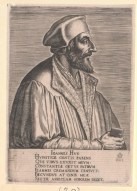 Men and women could only secure the blessing of salvation when they “adhere firmly and without wavering to the truth spoken of by God.” Huss would write, “Again the minister of the church, the vicar of Christ is not able to absolve or to bind, to forgive sins or to retain them, unless God has done this previously.” Those who professed Christ would of necessity live holy lives as their savior was holy. Huss wrote, “If anyone is predestinated to eternal life, it necessarily follows that he is predestinated unto righteousness, and if he follows life eternal, he has also followed righteousness.” Huss’s common understanding of salvation, sanctification, and personal holiness appeared to be uncontentious.
After his famous lunch, Luther told Eck, “Among the articles of John Hus, I find many which are plainly Christian and evangelical, which the universal church cannot condemn.” Given the biblical and sensible nature of Huss’s teachings, Luther asked Eck if the court records had been corrupted because Luther could not imagine the church fathers would condemn such gospel truth. Eck affirmed the truthfulness of the condemnation. So why did the preaching of Huss strike such a nerve?
Why Was Huss Killed?
Huss incurred the hatred of the Catholic Church because the Catholic Church of the 1400’s was filled with corruption. In his sermon on John 15:27, Huss noted that,
As layman walk with their canes to the churches, so these clerics go to the beer-hall with canes, and when they return they can hardly walk, much less talk, and least of all, do they know what is demanded of the priestly office…When the blood becomes heated, they talk of women and acts of lust in most wanton language…They ought to be like dogs to be turned out of the house of God, where they give such reproach and scandal to the hearts of simple layman.
During Huss’s trial at Constance, 1072 church officials showed up surround by troops and musicians and, women. Seven hundred women officially registered as prostitutes for the event. Huss condemned the decadence he observe and wrote,
He is Peter who is not known to go about in processions, ornaments with gems or silks, not clad in gold or carried about with soldiers surrounded by bustling servant. Without such things, Peter believed he was able to fulfill sufficiently the salutary commandment: If thou lovest me , feed my sheep.
In March of 1414, the council that condemned Huss condemned Pope John XXIII who had called the council. The church prelates removed the errant Pope from office because he sold church offices, slept with his brother’s wife, issued spurious and false commands, committed adultery with nuns, and engaged in sodomy. Huss rightfully noted that the “official church does not make the priest…the place does not sanctify the man, but the man the place. Not every priest is holy; but every holy person is a priest.”
To keep the lay people from complaining about their sinful lifestyles, the priests and church officials seldom preached the gospel. On his sermon on Matthew 21:43, Huss declared,
They shut up the kingdom of heaven to men. This they do by keeping back the Scriptures from the people so that they may not read or understand them, and know how men ought to live; that they may not know how to punish the priests for their sins, or through knowledge of the Scriptures may not insist that the priests become instructed in them. And again the priests keep the knowledge of the Scriptures from the people because the priests fear they will not receive the same amount of honor if the people are taught to read the Bible.
Because Huss opened up the Scriptures and exposed the warts of the Catholic Church, the leaders of the Bohemian church despised Huss. They regularly complained to the Popes and Cardinals about Huss’s preaching. As Luther, Huss never intended to defame the church and had no plans to split the church. Huss told his opponents that “The purpose of our side is that the clergy live honestly according to the doctrine of Jesus Christ, laying aside pomp, avarice and luxury.” Sadly, Huss pleas for reform, holiness, and biblical preaching fell on deaf ears.
In 1410, the Archbishop Zbyneck convinced the newly elected Pope Alexander V, one of three popes at the time, to order the church and universities of Prague to burn John Wycliffe’s books, believing the British heretic to be the source of Huss’s faith. Huss refused to obey the papal bull and was promptly excommunicated. Huss appealed to the church court in Rome, hoping to convince the greater church community his gospel reform. The church officials imprisoned Huss’s messenger and excommunicated Huss for the second time in 1411.
Despite being commanded to repent, Huss kept preaching. He said “if a pope’s command is at variance with Christ’s commands or counsel or tends to any hurt of the church, then he ought boldly to resist it lest he become a partaker in crime by consent.” Huss appealed the church’s decisions to God and kept ministering in good conscience, telling all that he had “committed [himself] to Christ alone (250).” In 1412, Huss opposed Pope John XXIII’s sale of indulgences and was excommunicated for a third time.
Huss’s Trial and Death
In 1414, Huss secured the trial he had longed for since 1410. He hoped the gospel would win the day. But he was also prepared to suffer for the gospel and understood he could be rejected by the Council of Constance. As the Bohemian priest traveled to his end, he wrote, “it would be a strange thing at present to remain unpunished when attacking the perversity of the priests, who will not endure any blame.”
 And suffer, Huss did. Instead of receiving a hearing for his beliefs, Huss was imprisoned a few days after he arrived in Constance. When Huss was brought before the Council, the Council shouted down Huss’s voice down with a veracity that reminded Huss of how the Pharisees treated Christ as his trial. The leaders of the church allowed Huss to answer one question, will “you throw yourself entirely and totally on the grace and into the hands of the Council, that whatever the Council shall dictate to you.” Huss refused to recant the gospel to please the corrupt leaders of the Catholic Church. he told his friends,
I cannot do it without denying in many things the truth…I should afford a great scandal to the people of God who have listened to my sermons; and it would be better that a millstone were tied round my neck, and that I was plunged to the bottom of the sea…Our Savoir Jesus Christ will reward me fully, and bestow on me in my trials the assistance of patience.
On July 1414, Huss would lean brilliantly upon the Lord. The day opened with a reading of the chargers against Huss. Once again, the court prevented Huss from being able to answer the charges against him. Huss refused again refused to recant and prayed for Jesus to give him mercy. The Archbishop of Milan and the Bishop Constance then defrocked Huss removing his priestly clothes. The two church officials demanded that Huss repent. The Bohemian refused saying, “I do not fear this thing least I be found a liar in the eyes of the Lord and also lest I sin against my conscience and God’s truth.” After Huss’ hair was cut and a dunce cap was placed over his head, Huss walked to the stake. As the executioners pilled wood around, Huss sang the psalms. When the flames reached Huss’s body, he said, “Christ the Son of the living God have mercy upon me. As the flames reached his head Huss and claimed his life, Huss declared, “Lord, into thy hands I commend my spirit.”
Though long dead, Huss continues to live on. Luther noted that the man the Catholic church had hoped to “obliterate forever” has continued to shine forth “which such glory that his cause and his teaching have to be praised before the whole world.” This generation should continue to glory in the testimony of Huss for the faith Huss preached, defended, and ultimately died for is the apostolic faith delivered once for all. Because men and women like Huss and Luther risked their lives for the gospel, we have access to the apostolic faith today. We are some of the “many children of the Lord” whom Huss hoped to reach through his death. Indeed, we are all Hussites.
To God be The Glory!
 On October 31, 1517, Martin Luther set off an earth quake that would reorder Christendom with a few taps of a hammer and with a postage stamp. Luther did not believe that his 95 thesis which first appeared on the door of the Wittenberg Chapel and that were mailed to Cardinal Albrecht of Mainz were controversial. Rather he saw his document as reforming abuses of Catholic doctrine. A few months earlier while delivering his
 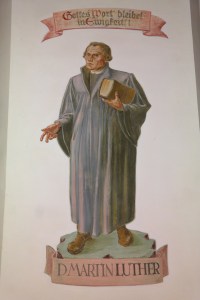 On July 17, 1505, Luther entered the Augustinian Monastery in Erfurt much to his father’s dismay. Luther had been destined for a career in Law. But on July 2, 1505, he had been caught in a severe thunderstorm. As thundered boomed overhead and as lightening flashed about him, Luther promised St. Anne that he would take monastic vows and devote his life to the church if he survived. Luther made it out alive. And so, he began serving the Catholic Church, happily embracing her doctrine of salvation by grace and works.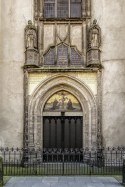
 Witkowski Blog