The Champion of Scripture: An Introduction to the Life and Ministry of William Tyndale

By 1532, both the British government and its church had universally panned William Tyndale’s books. King Henry VIII (of six wives fame) had sent spies into Europe to kidnap Tyndale and return him to London. The bishop of that same city, Cuthbert Tunstall, had denounced the books in a sermon and then tossed them into a massive bonfire. And, Thomas More – a priest and close advisor to Henry VIII- had published a confrontational and large (80,000 word) critique of Tyndale’s works. In that mammoth volume, More captured the mood of the nation’s leaders when he labeled Tyndale as “mad,” “devilish,” and “a heretic.” The Catholic priest then warned his readers that Tyndale’s books possessed the power to turn, “true Christian folk into false, wicked wretches.” 

Ironically, Tyndale’s books proved so distasteful because they championed the content and authority of the Scriptures. Tyndale believed that God’s Word in conjunction with the Holy Spirit was sufficient to save sinners, build the church, and sanctify the saints. To quote Tyndale, “We trust not in this friar or that monk, neither in anything, save the word of God only.” Operating on this believe, Tyndale sacrificed his comfort, career, and even his life to “cause every boy that drives the plough to know more of the Scriptures than the pope does!”

Salvation, Education, & Exile

Like Martin Luther who started the Reformation in 1517 with the posting of his 95 Theses, Tyndale did not begin his career with revolution in mind. Tyndale’s sharpest critic conceded the reformer had begun his career as “a man of right good living… studious and well learned in Scripture… and in divers places in England [he] was very well liked and did great good with preaching.”

Tyndale was born around 1495 into a Cotswold family on the border of Wales that had made its fortune in textiles. After leaving home, Tyndale earned a bachelor’s degree from Oxford in 1512 and then a master’s degree in 1514. During this season, he was also ordained as a Catholic priest. He then transferred to Cambridge in 1516 before retiring from academia to serve as the tutor to Sir John Walsh’s two young sons. Seemingly, he left Cambridge in 1522 to have more time to translate books such as Erasmus’s Enchiridion which offered a critic of disorderly priests and noblemen.

Not long after transitioning to the Walsh’s home in Sodbury, Tyndale was accused of preaching heresy and found himself before of a tribunal of bishops. Tyndale wrote of that experience: “The chancellor…threatened me grievously, and reviled me, and rated me as though I had been a dog.” But nothing more would come of the charges because the priests that had accused Tyndale would testify against the reformer.

Though the contents of Tyndale’s sermons have been lost, the incident points to a change in Tyndale’s faith. By 1522, Tyndale had become well acquainted with the Scriptures, had repented of his sins, and had embraced the doctrines of grace as taught by Luther. Tyndale believed that God used the law to show men and women their “sin and unrighteousness” so that with the help of the Holy Spirit they would embrace the gospel through faith.  Echoing Luther’s view of Romans, Tyndale wrote: “A man is justified by faith only… And when I say that faith justifies, understand thereby, that faith and trust in the truth of God and in the mercy promised us for Christ’s sake, and for his…works only, quiets the conscience and certifies…that our sins are forgiven, and [that] we have part in the favor of God.” Or as Tyndale said more succinctly elsewhere, “except a man have knowledge of his sins, and repent of them, he can have no part in Christ.”

Scholars debate Tyndale’s path into the reformation, pointing to the influence of men such as Erasmus, Luther, and John Wycliffe who had translated the Bible into English from Latin about a hundred years before Tyndale was born. Though Tyndale interacted with Erasmus, was steeped in Luther’s writings, and was well acquainted with Wycliffe’s life, ministry and his translation of the Bible, neither Tyndale nor any of his contemporaries documented the author’s transition into the protestant faith. But the realities of his faith were unmistakable.

Convinced that, “the Scripture is the light and life of God’s elect, and that mighty power by which God creates them,” Tyndale decided to spend his life translating the Scriptures into English. In his notes to his translation of the Pentateuch, Tyndale said that he had been moved to Translate the New Testament because he believed that lay people would only understand the truth of the gospel if “the Scripture were plainly laid before their eyes in their mother-tongue, that they might see the process, order, and meaning of the text.” As Tyndale explained elsewhere, “That precious thing which must be in the heart…is the word of God which…through the preaching of gospel, proffers, and brings unto that all that repent and believe, the favor of God in Christ.”

Such ideas proved revolutionary because the English church possessed little gospel preaching and even fewer copies of the Bible. What little preaching and gospel translations that did exist were mostly in Latin which few English people understood. Tyndale lamented, “Is it not a shame that we Christians come so often to church in vain, when he who is fourscore years old knows no more than he that was born yesterday?”

Understanding that he needed more protection than the Walsh’s could provide if he were to translate the New Testament into English, Tyndale sought the support of the Bishop of London. But Tunstall had little interest in Tyndale’s work and refused to add the reformer to his staff. Understanding now that “not only was there no room in my Lord London’s palace to translate the New Testament but also that there was no place to do it in all of England,” Tyndale sailed to Hamburg, Germany in May 1524. He would never return to England.

The Church, the Scriptures, & Persecution

But he did print his first translation of the New Testament into English in 1525. Almost as soon as the Bible were printed, England put pressure on the German states to arrest their rogue theologian, forcing Tyndale to flee to the city of Worms for protection. Here in 1526, Tyndale embarked upon his most productive era that began with his publication of his second edition of his New Testament. It would not end until his arrest in 1535. Over the next eight years as he traveled about Europe, Tyndale produced multiple editions of the New Testament, translated several Old Testament books, and wrote several theological works such as the Parable of the Wicked Mammon and Against Prelates.

With each successive publication, the opposition to Tyndale grew. Almost as soon as his New Testaments arrived in England, Bishop Tunstall and others began burning the books. About this time, Tunstall purchased several thousand of Tyndale’s New Testaments intending to keep the Bible out of the hands of the common people. But the purchase produced the opposite effect. Tunstall’s funds enabled Tyndale to pay his debts and to secure the printing his second edition of his New Testament. This edition meet with even greater success and became the first widely read English translation of the Scriptures because it contained, “clear, everyday, spoken English.”

Tyndale had anticipated such persecution knowing that “preaching that is a salting…stirs up persecution,” and had managed to stay a step ahead of Tunstall, Cardinal Wolsey, and others. But between 1531-1534, the Catholic Church managed to locate and execute at least seven of Tyndale’s supporters and sympathizers.

In 1529, More also began launching print attacks against Tyndale that placed the reformer on the defensive. Though More complained that Tyndale’s books contained “the worst heresies picked out of Luther’s works,” (things such as Luther’s criticism of purgatory, celibacy, and the pope) More’s most damaging attack which still circulates concerned the quality of Tyndale’s translation. More proclaimed that “the translation of Tyndale was too bad to be mended.” Thus, into the fire it went.

Thomas More
Thomas More

But what More objected to was not sloppy work or a changing of the Greek manuscripts as More had done to support the Catholic view of verbal tradition. Rather, More objected to Tyndale’s work in the Greek and Hebrew manuscripts which led the reformer to place the authority of the Greek and Hebrew text above the authority of popes and councils. To quote Tyndale, “When I have read the Scripture, and find not their doctrine there…I do not give so great credence unto their doctrine as unto the Scripture.”

Following this maximum, Tyndale departed from the Catholic understanding of ekklesia as “church.” Tyndale translated the word as “congregation,” believing that all believers (and not just the priests and bishops) were to be the salt and light that Jesus spoke of in Matthew 5:14-15. Tyndale also translated the Greek word as presbyteros as elder instead of bishop.

These changes which better reflected the Greek text had profound implications for the church. Since the church was “begotten through the word,” then the Scriptures and not the pope would be the church’s final authority. Tyndale noted, “God’s truth depends not on man. It is not true, because man…admit it to be true, but man is true, because he believes it.” Since the Scriptures were the final authority, then local congregations could appoint elders and preachers “to preach God’s word purely, and neither to add or diminish it.” To quote Tyndale, “Let God’s word try every man’s doctrine, and whomsoever God’s word proves unclean let him be taken for a leper.” If someone had leprosy, Tyndale believed the local church could “rebuke” and even remove that man from the pulpit. Tyndale concluded, “No man may yet be a common preacher, save that he is called and chosen…by the common ordinance of the congregation.”

This belief was further bolstered by Tyndale’s Understanding the keys of the kingdom in Matthew 16:19. The reformer said that this text was no more the exclusive domain of the apostle Peter and of popes than the command that Jesus gave to Peter in Matthew 18:21-22 to forgive others seventy times seven. Tyndale located the power to receive people into the church and to excommunicate them from the church in the local congregation. Tyndale wrote, “every man and woman, that knows Christ and his doctrine have the keys, and the power to bind and loose.”

In other words, More took issue with Tyndale’s translations not because they contained errors but because they removed errors that had propped up the Catholic Church’s tradition of papal authority and its resulting belief that sinners could “be justified by the works of the ceremonies and sacraments, and so forth.” For Tyndale, the Scriptures alone were sufficient to save and to build the church.

Sanctification, A Royal Divorce, & Death

When seeking to guide Christians through the complexities of the secular world, Tyndale once again appealed to the authority of the Scriptures. He encouraged wives to heed the example of Sarah and the words of Paul and to submit to their husbands. Similarly, he encouraged husbands to love their wives: “God has made the men stronger than the women; not to rage upon them…but to help them…and win them unto Christ, and overcome them with kindness, that out of love they may obey the ordinance that God has made between man and wife.” Tyndale also encouraged children to obey parents. He called Christians to love their neighbors and enemies, graciously meeting the needs of others without asking for loans or forms of repayment.

In response to the German peasants revolt of 1524, which was said to have resulted from Luther’s theology, Tyndale encouraged his readers to entrust their souls and wellbeing to Jesus. He encouraged kings to submit to the Scriptures and to “oppress not your subjects with rent, fines or custom…to maintain your lusts, but be loving and kind to them, as Christ was to you.” If the king became a tyrant, Tyndale told the citizens to put their “trust in God, then God will deliver you out of their tyranny for his truth’s sake.” If God delayed in rescuing his people, the citizens had no right to revolt. If they did, “then they make way for a more cruel nation.” God alone would judge kings. Tyndale believed the Scriptures could establish and maintain a just society.

Tyndale’s ethical writings caught the attention of Henry VIII with mixed results. At first, they angered British monarch. When Henry VIII sought to divorce his first wife, Catherine of Aragon – his brother’s widow, Tyndale naively entered the conversation in 1530, hoping to bring the scriptural clarity to the dilemma that the Catholic Church lacked. After surveying several Old Testament texts that dealt with divorce, Tyndale declared in The Practice of Prelates that Henry VIII’s marriage to Catherine was “lawful.” Unfortunately for Tyndale, Henry who disregard the reformer’s arguments having already determined to end his marriage to Catherine. Later English printings of The Practice of Prelates overseen by Queen Elizabeth I, Henry VIII’s daughter, would omit the reformer’s section on marriage and divorce.   

Tyndale possessed some awareness of the king’s sentiments and rejected all of Henry VIII’s invitations to return to England. He told the kings’ messengers that “he [Tyndale] will not promise to stop writing books, or return to England, until the King will grant a vernacular Bible.” As Henry VIII sought to finalize his divorce in 1533, an unknown person in the king’s government recruited the frivolous nobleman Henry Philips to locate Tyndale.

While Philips searched for Tyndale, Henry VIII’s new wife, Anne Boleyn, introduced Tyndale’s earlier work The Obedience of the Christian Man to her husband. Though Henry VIII’s appreciation of the book remains debated, Anne who was both a supporter of Tyndale and of his translations managed to warm Henry VIII to the reformation. But by that time, Philips had already found and befriended Tyndale.

Philips’ duplicitous actions highlight Tyndale’s one notable fault: the reformer’s failure to discern between friend and foe. Though Tyndale’s patron, Thomas Pointz, distrusted Philips, Tyndale brushed Pointz’s concerns aside and welcomed Philips into his inner circle. Tyndale had made a similar error in 1525 when he sought Bishop’s Tunstall’s support. He committed the same mistake a year later when he partnered with William Roye only to discover that Roye lacked the expertise in Greek in Hebrew that Tyndale valued. The one thing Roye most excelled at was insulting his opponents of whom he had many. After a year of working together, Tyndale ended his relationship with Roye. Unfortunately, Tyndale would not get the same opportunity with Philips.

On the evening of May 21, 1535, Philips led Tyndale down a dark alley surrounded by troops who quickly arrested the reformer and transported him to Vilvorde castle. Once Tyndale’s friends learned of his arrest, they asked Henry VIII to intercede on the reformer’s behalf. Showing his change of heart, Henry VIII allowed his diplomats to work for Tyndale’s release through back channels. But when he learned of Tyndale’s coming transfer, Philips acted. He accused Henry VIII’s envoy of being complicit in Tyndale’s crimes. Consequently, the man set to safely transport Tyndale to England found himself having to escape Antwerp under the cover of darkness. Tyndale’s fate was sealed.
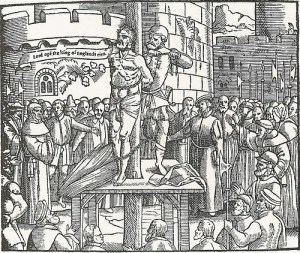
In the early days of October 1536, Tyndale found himself tied to a stake awaiting his death. With his last breaths, Tyndale cried out, “Lord! Open the king of England’s Eyes.” The executioner then pulled the rope around Tyndale’s throat tight and brought the reformer’s life to an end. The executioner then set fire to the bundles of wood stacked around the reformer’s lifeless body, reducing it to an ashy dust.  

In August of 1536, Tyndale’s tribunal condemned the reformer to death for the crime of heresy. Unfortunately, historians know little about the tribunal’s proceedings or of Tyndale’s thoughts while in captivity. All that remains from that era is one letter in which Tyndale asks to be granted the freedom to read the Hebrew Bible and new clothes.

Conclusion

Though Tyndale fell victim to the flames of persecution, his mission to see the Bible read in the common language of his people would not end. In the very New Testament that had led to Tyndale’s death, Jesus had promised that “until heaven and earth pass away, not an iota, not a dot, will pass from the Law until all is accomplished (Matt 5:18).” In 1539, Henry VIII’s eyes did partially open. That year, the king placed a copy of the Great Bible which was based on Tyndale’s translations of the Old and New Testament in every church of England. God’s word had triumphed over the gates of hell.

Tyndale’s influence did not end with the reformation. Scholars estimate that around 84% of the King James Bible reflects the wording of Tyndale’s Bible. Tyndale also shaped the Jerusalem Bible which is the Catholic Church’s translation of the Scriptures into English. In other words, the English world has the Scriptures today in its various translations because Tyndale sacrificed everything, including his life so that we might have access to the gospel that save sinners. May we forever follow Tyndale’s example and in-turn “seek nothing but the truth and to walk in the light.”


John Knox: The Biblically Bold & Yet Flawed Reformer of Scotland

The booming cannons of the French galleons in the bay below St. Andrews Castle brought John Knox’s first pulpit ministry to a sudden end on July 30, 1547. Though Knox had not participated in the capture of St. Andrews Castle in 1546, he also did not condemn those who had killed the castle’s not so celibate owner, Cardinal David Beaton, who had orchestrated the death of Knox’s mentor George Wishart and several other men who affirmed Martin Luther’s teaching of salvation by grace alone through faith alone. A year after Beaton’s death, Knox decided to make St. Andrews Castle his home and became a tutor, hoping to escape the jurisdiction of the Catholic Church which was intent on arresting protestants.  

Though ordained by the Catholic Church to serve as a priest prior to his conversion, Knox only reluctantly agreed to serve as the castle’s preacher after another area pastor publicly charged then the 30-year-old Knox to not “refuse this holy calling .” Though Knox ascended to the pulpit with much trepidation and even a few tears, his first sermons burned with transformational truth. To quote one of Knox’s earlier biographers, “Knox struck at the root of the popery, by boldly pronouncing the Pope to be the antichrist, and the whole system as erroneous and anti-scriptural.” Commenting on his preaching ministry, Knox said, “I will be part of no other church except that which has Jesus Christ as its pastor, which hears His voice, and will not hear a strangers.” Though he preached for only a few months, many of those in and around the castle repented and believed because to quote Knox, “God so assisted his weak soldier, and so blessed his labors.”

Unfortunately for the young reformer and the other 120 defenders of the castle, Catholic France did not take kindly to the murder of Cardinals and sent a fleet to restore order. Once aware that no help would come from England, the leaders of the castle surrendered to the French fleet, expecting to become political exiles. But the French doubled crossed the Scots and made them serve as Galilee slaves.

A Slave

The sickness, exhaustion, and persecution that Knox endured while a galley slave somewhat foreshadowed the general tenure of Knox’s life. Though he preached the same gospel as Huss, Zwingli, and Calvin, the Scotsman would never enjoy the permanence nor the governmental support of those other gospel preachers. He would preach and pastor in the midst of great hardship.

Upon his release from prison in 1549, Knox made his way to England whose king, Edward VI, had embraced the Protestantism of his Father Henry VIII. Though the Anglican church initially embraced Knox, his time in England would prove both contentious and short. He upset his British clergy when he labeled the practice of kneeling before the Lord’s table as “idolatrous.” But more importantly, the young King Edward VI died on July 6, 1553, and his half and devotedly Catholic sister, Queen Mary Tudor, or “Bloody Mary,” ascended to the British throne intent on reestablishing the Roman Catholic faith with both words and the sword.

Fearing for his life, Knox resettled himself and his family in Frankfurt Germany in 1554, hoping to pastor the city’s English congregation. But once again, Knox found himself out of step with his fellow believers over the practice of the Lord’s supper and out of a church. He relocated to Geneva in 1556 to pastor that city’s English congregation.

After spending three formative years pastoring in Geneva and studying under John Calvin who became one of Knox’s closest friend, the reformer attempted a return to England in 1559 only to be redirected to Edinburgh because queen Elizabeth I took exception to Knox’s belief that a “woman in her greatest perfection was made to serve and obey man, not to rule and command him.” At first, Scotland proved equally hostile to Knox. The Bishop of St. Andrews threatened to shoot Knox on sight if the reformer resumed preaching. Undaunted, Knox continued on, revival broke out, and 14 priests in St. Andrews renounced the pope and embraced Jesus as their savior. In 1560 following the death of the Catholic Queen Regent of Scotland, the Scottish parliament ratified the Scottish Confession of Faith which Knox helped write, guaranteeing Protestants the freedom of religion. But even that victory was tainted. A few months later, Marjory (who Calvin labeled as Knox’s “most sweet wife,”) died, leaving Knox to care for his two children.

From 1560-1572, Knox experienced the calmest season of his life during which he wrote several books and became the pastor of St. Giles church in Edinburgh, Scotland. Though Knox enjoyed great success in this pulpit and experienced the joy of marrying his second wife – Margaret Stewart, he still found himself constantly harassed by the youthful and Catholic Queen Mary of Scotland and a handful of others who objected to his unapologetic defense of Protestantism.

On November 9, 1572, Knox preached his last sermon and had to be carried in and out of the pulpit by his friends. Sensing that death was close, Knox exhorted his congregants to stand firm in the faith. In one of his last prayers, he asked the Lord to, “Raise up faithful pastors who will take charge of thy church. Grant us, Lord, perfect hatred of sin, both by the evidences of thy wrath and mercy.” On Monday November 24 around 11PM after spending the day listening to his wife read Calvin’s sermons on Ephesians and John 17, Knox uttered his final words, “Now it is come,” took two more deep breaths, and then died as one historian noted “without out a struggle.” To quote Knox, “Serve the Lord in fear, and death shall not be terrible to you. Nay, blessed shall death be to those who have felt the power of death of the only begotten Son of God.”

A Prophet

Like Luther, Calvin, Wycliffe, and others, Knox unapologetically built his faith and ministry on the Scriptures, believing that God had called him to “instruct the ignorant, comfort the sorrowful, confirm the weak, and rebuke the proud.” He told his fellow Christians in Scotland, “The Word of God is the beginning of life spiritual, without which all flesh is dead in God’s presence; and the lantern to our feet…and…it is the foundation of faith, without which, no man understands the good will of God – so it is the only instrument which God uses to strengthen the weak, to comfort the afflicted, to reduce to mercy by repentance such as have slidden; and finally, to preserve and keep the very soul, in all assaults and temptations.” In other words, the Bible contained the message of salvation, which the Holy Spirit used to open the eyes of the lost and then to sanctify and preserve the saved. As the reformer told Mary Queen of Scotts, “The word of God is plain in itself and if there appears any obscurity in one place the Holy Ghost…explains the same more clearly in other places, so that their can remain no doubt.” As his writings make clear, Knox’s boldness in the pulpit, on paper, and before queens arose from his confidence in the Scriptures that had so changed his life could change the life of those who heard his sermons. To quote Knox, “I desire to communicate with them the light which God hath offered and revealed unto me, in Christ Jesus his Son.”

Knox and the Catholic Church

With his conscience bound to the clear teaching of the Scriptures, Knox found himself frequently at odds with the teaching and practices of the Catholic Church especially the church’s view of the sacraments because Rome had made human tradition equal with Scripture. Knox condemned the practice of the mass because the priestly action of declaring the bread and the wine to be Jesus’ physical body that could impart grace through consumption had no biblical foundation. He wrote, “The Mass is nothing; but the invention of man, set up without…the authority of God’s Word…and therefore is Idolatry.” Knox continued, “For it is not his presence in the bread that can save us, but his presence in our hearts through faith in his blood which has washed out our sins, and pacified his Father’s wrath toward us.” Similarly, Knox sought to correct the Catholic Church’s understanding of baptism, noting that it too was a sign and not a means of regeneration. Holy water saved no one. To quote Knox, “No man is so regenerated, but…he has need of the means which Jesus Christ…appointed to be used in his church, to wit, the Word truly preached, and the sacraments rightly administered.” Captive to the Word of God, Knox called the Catholic Church to return to the clear teaching and practice of the Scriptures.

Knox and Politics

Given the political turmoil of his age and the church’s dependence upon the state, Knox also believed that the state should be shaped by the Bible. As he said in one of his sermons, “Kings then have not an absolute power to do in their regiment what pleases them; but their power is limited by God’s Word.” Moreover, Knox believed that the state’s very survival depended upon its obedience to the Scriptures. If kings or queens openly rebelled against God’s Word, then God would in time crush those nations as he had crushed Israel for its rebellion against God. Knox warned the English government saying, “The Lord will in his own time destroy unjust governments by his own people, to whom he will supply proper qualifications for this purpose, as he formerly did with Jerubbaal.” According to Knox even rulers and citizens who did not actively sin but only passively endured false teaching stood in danger of God’s judgment. Knox proclaimed, “For God does not only punish the chief offenders, but with them, does he condemn the consenters to iniquity.” Pushing further than Calvin, Knox instructed his followers to obey their kings and queens only as long as they followed Christ. He wrote, “we must not obey the king of magistrate when their commands are opposed to God and his lawful worship; but rather…expose our person and lives, and fortunes to danger.” He wanted the Scriptures to shape by the individual, the church, and state.

Knox and Queen Mary

Acting out his convictions, Knox preached against Queen Mary’s attempts to reinstate the mass and advance Catholicism in Scotland. The queen disliked Knox’s sermons and ordered him to appear before her on five different occasions to give an account for his actions. During the first confrontation, the queen accused Knox of treason because he taught a religion other than the one practice by the crown. Knox rejoined, “Madam, as right Religion took neither original strength nor authority from worldly Princess, but from the Eternal God alone, so subjects are not bound to frame their Religion according to the appetites of their Princes.” The reformer then noted that his aim was not rebellion but that “both Princes and subjects obey God.” Undaunted by the queen’s first summons, Knox continued to boldly preach against the queen’s embrace of the errors and abuses of the papacy.

Knox With Mary Queen of Scots

As anticipated, Knox found himself back at court in December 1562 and then again in April 1563. His most famous interaction with the queen occurred a month later in May1563. At that meeting, the queen shed a “great abundance” of tears because Knox opposed her wedding to her Catholic fiancé. Knox replied, “I never delight in the weeping of any of God’s creature, yes, I can scarcely well abide the tears of my twin boys…much less rejoice in your majesty’s weeping.” Still, the reformer refused to abandon his convictions and continued to preach the full counseling of God’s Word,  embracing whatever consequences might come. In October 1563, the queen once again summoned Knox to court and then referred him to the privy council for punishment. Nothing would come of that inquiry as the queen’s administration became increasingly unstable because she indulged in an affair. By God’s grace, Knox would be vindicated for his faithfulness to the Scriptures. As the reformer told his friends, “For never shall we find the church humbled under the hands of tyrants, and cruelly tormented by them, but therewith, we shall find God’s just vengeance to fall upon the cruel persecutors, and his merciful deliverance to be showed to the afflicted.”

Two Rough Edges to Knox’s Preaching

While the crux of Knox’s confidence in the Scriptures proved commendable, it’s jagged edges proved unhelpful. On occasion, the Reformer attacked secondary issues within the church with the same force that he used against the false teachers outside of Protestantism. For example, he so vehemently criticized Thomas Crammer’s British liturgical teaching that the Lord’s Supper should be consumed while kneeling that churches in England and then in Frankfurt removed him from their pulpits. Moreover, these conflicts proved fruitless. Knox’s tactics failed to win men to his position. Calvin, one of Knox’s closet allies, offered Knox the following caution: “It behooves us to strive sedulously that the mysteries of God be not polluted by the admixture of ludicrous or disgusting rites. But with this exception, you are well aware that certain things should be tolerated even if you do not quite approve of them.” Knox forever struggled with this exception.

Similarly, Knox’s poor hermeneutic – specifically his method of interpreting and applying the Old Testament (OT) – led Knox at times to be offensive where the Scriptures were not. Knox viewed the OT prophets more through epistolary than a historical or prophetical lens which led him to proclaim that earthly sufferings were the direct result of individual or national sin. He declared that “The prophets are the interpreters of the Law and they make the plagues common to all offenders.” Commenting on how God used Isaiah, Jerimiah, and Ezkiel to call down judgement on Moab, Egypt, and other nations, Knox proclaimed, “the plagues spoken of in the law of God, appertain to every rebellious people, be they Jews or be they Gentile, Christians in title or Turks in profession.” Using the OT to justify his speculation into the secret judgements of God, Knox told the Catholic Queen Regent of Scotland that the tragic death of her two sons within the space of six hours was a sign of “the anger and hot displeasure of God” and called her to repent. Though Knox rightfully called sinners to repentance, the Scriptures did not provide him with a mandate to apply the judgements of the OT to his day. If anything, Knox would have done well to heed Jesus’s teaching in John 9:1-12 were he declared that physical illness was not always a direct result of sin. “It was not that this man sinned, or his parents, but that the works of God might be displayed in him (Jn 9:3).”

A Pastor

The only thing that equaled Knox’s passion for preaching was his love for the saints who had heard his preaching. Knox devoted much of his writing ministry to encouraging the fainthearted, longing to assist them in their sanctification.

Knox and His Letters

As Knox moved from place to place, he kept up a steady correspondence with his mother-in-law, Elizabeth Bowes. He readily encouraged her through her many bouts with depression. He wrote to her of Jesus saying, “he did taste the cup of God’s wrath against sin, not only to make full satisfaction for his chosen people, but also, that he might learn to be pitiful to such as are tempted…therefore, despair not, for your troubles be infallible signs of your election in Christ’s blood, being ingrafted in his body.” Knox writings reveal that he faithfully reverenced Mrs. Boews as his, “Dear beloved Sister” for as long as she lived.

Knox’s Last House

He also kept in touch with his congregations in England and Scotland, encouraging them to stand firm in the face of persecution. As Queen Mary Tudor began arresting and killing protestants such as Thomas Crammer, Knox encouraged his former congregations to hold fast to the gospel. He reminded them that, “By avoiding idolatry you may fall into the hands of earthly tyrants, but obeyers, consenters, and maintainers of idolatry, shall not escape the hands of the living God. For avoiding idolatry, your children shall be deprived of father, friends, riches, and earthly rest; but by obedience to idolatry, they shall be left without God, without knowledge of his Word, and without hope of his kingdom.” He then pointed them to God’s faithfulness proclaiming, “the Lord himself will be your comfort; he shall come in your defense with his mighty power; he shall give you victory when none is hoped for, he shall turn your tears into everlasting joy.” As he said in another letter, “This is the chief and principal cause of my comfort and consolation in these most tearful days, neither can our infirmities nor our daily persecutions hinder the return of Jesus Christ to us.”

Knox also frequently addressed Scottish Christians. He penned his first letters to the saints of St. Andrew’s while a galley slave. He remained in contact with the Scottish church while on the continent, encouraging them to form biblical churches that installed biblically qualified men to preach. He wrote, “Wheresoever God’s Word hath supreme authority, where Jesus Christ is affirmed, preached, and received to be the only Savior of the world, where his sacraments are truly administered, and finally, where his Word rules…there is the true church of Jesus Christ.” He also repeatedly called his fellow Scotsmen to take the threat of false doctrine seriously, encouraging political leaders to affirm the biblical teaching of the reformation and their subjects to hold said rulers to the commands of Scripture. To quote Knox, “Sleep not in sin, for vengeance is prepared against all the disobedient.” He forever pointed his congregants to the grace, mercy, and hope of Jesus.

Knox and His Prayers

In addition to encouraging his fellow Christians, Knox also faithfully prayed for his family, friends, and his opponents. Knox promised his mother-in-law that, “I will daily pray that your fears may be relieved, and [that your] doubts may obtain the same, to the glory of God and your comfort everlasting.” Similarly, he told his fellow English believers, “My daily prayer is for the sore afflicted in those quarters…beseeching God of his infinite mercy to so strengthen you; that in the weakest vessels Christ’s power may appear.” He also prayed for his adversaries asking the Lord, to “Illuminate the heart of our sovereign lady, Queen Marry.” At other times, he prayers for his enemies proved less encouraging. Once, he asked the Lord to “Pour forth thy vengeance upon” those who persecuted and murdered Christians. Knox’s prayers proved so effective that the Queen regent of Scotland once remarked that she was “more afraid of [Knox’s prayers than an army of 10,000 men.”

Knox’s confidence in the power and promises of prayer arose from his confidence in God’s sovereignty. Like Calvin, Knox affirmed that God predestined men and women to salvation through election in accordance with his holy will. The reformer wrote, “There is no way more proper to build and establish faith, then we hear and…believe that our election…consists not in ourselves but in the eternal and immutable good pleasure of God.” According to Knox, what proved true of salvation proved true of all of life. Knox noted, “the way of man is not in his own power, but…his foot-steps are directed by the Eternal.” Resting in God’s power, Knox expectantly prayed for the advancement of the gospel and the destruction of the wicked because God’s Word had decreed that the battle between good and evil would culminate in the return and triumph of Christ.  Commenting on the importance of prayer, Knox said, “Let no man think himself unworthy to call and pray to God because he has grievously offended his majesty in times past…To mitigate or ease the sorrows of our wounded conscience, two plasters hath our most prudent Physician provided, to give us encouragement to pray…a Precept and a Promise. The precept … “Ask, and it shall be given unto you.” …[the] promise… “If ye, being wicked, can give good gifts to your children, much more my heavenly Father shall give the Holy Ghost to them that ask him (Matt. 7).” …let us be encouraged to ask whatever the goodness of God hath freely promised.” Knox’s faith drove him to prayer for those whom he loved.  

Knox’s Pastoral Misstep

As with his preaching, Knox’s pastoral skills also proved imperfect. At times, the urge to care for his congregants led Knox to rashly put pen to paper. Most infamously, he secretly published the The First Blast of the Trumpet Against the Monstrous Regiment of Women in 1558 as Mary Tudor sought to hand over England to the rule of Philip I, the Catholic king of Spain. Unfortunately for Knox, Mary died on November 17, 1558, ending all hopes of England becoming Catholic. Mary’s protestant, half-sister Elizabeth I ascended to the throne on January 15, 1559. Though Knox had the Catholic monarch in view, Elizabeth I still found the content of his book offensive. To understand why, one only has to Knox’s first sentence which unfolded as follows: “To promote a Woman to bear rule, superiority, dominion, or empire above any Realm, Nation, or city is repugnant to Nature; contemptable to God, a thing most contrary to his revealed will and approved ordinances; and finally, it is the subversion of good Order, of all etiquette and justice.” Though Knox did not think all women incapable of ruling, citing the example of Deborah, the damage had been done. He would never again live in England. Sadly, he also inadvertently blunted Calvin’s influence in England. Though Calvin knew nothing of the book’s publication until after it began to circulate and disagreed with parts of its premise, Elizabeth I forever held Calvin responsible for its publication as it had been birthed in Calvin’s Geneva.

Conclusion

Knox’s Grave

Knox died confident in his faith. But his legacy has proved less than certain. Though Knox’s first biographers viewed him favorably, and an increasing number of historians have begun to portray the reformer as a Philistine prone to insults, sexism, and cultural conservatism. Acting on these views, the church where Knox is buried has turned the reformer’s grave into a parking space.

Without question Knox possessed faults worthy of criticism. At times, he violated the boundaries of biblical truth that he so prized. Failing to heed the warnings of Calvin and others, Knox turned secondary debates within the protestant church into first tier issues that thereby disrupted the unity of the local churches he served. He also misapplied the prophetic texts of the OT, drawing harsh unwarranted conclusions that went against the teaching of the New Testament. Even his pastoral ministry at points proved rushed and ill-timed, stunting the spread of the Calvinism in England.

But much of the historical critique of Knox focuses not on Knox’s biblical transgressions but rather on his devotion to the Bible. Such criticism proves neither new nor novel. Commenting on the rumors that swirled around him during the 1500s, Knox once quipped, “if all [the] reports were true, I would be unworthy to live in the earth.”

But the reports then as now were not true. Overall, Knox proves worthy not of repudiation but of imitation for he built his life and ministry around the unfettered preaching of the gospel. He witnessed to peasants and queens alike. And like his savior, Knox’s boldness in the pulpit was matched by his tender care for the weak and weary. Though he traveled much and suffered even more, Knox always found time to pray for and write to those congregations and individuals who had sat under his preaching. He possessed the two voices that Calvin deemed essential for pastoral ministry. The reformer could both gather the sheep and drive away wolves. If anything, the church needs more men like John Knox who could care less about their grave being turned into a parking lot as long as the gospel they loved marched on. May we never forget the line attributed to Knox that, “One with God is always in the majority.”

My Top Reads of 2022

I am all for new books. I just ordered one the other day. Still with each passing year, I find my heart increasingly aligned with C.S. Lewis’s rule to never allow oneself to read another new book “till you have read an old one in between.” Indeed, old books that make it to our time deserve our attention. If nothing else, we should be curious to know why they have survived when other volumes did not. I also suspect the more we read old books the more we will come to understand that the refinement of time ultimately furthers the stewardship of our time and thought today. As one can now guess, the books that most resonated with my soul this past year are rather well-seasoned if not downright ancient. If you are in the market for book to fill the space between the newer volumes on your shelf, I invite you to consider the following 3 options:

Link to My Goodreads stats for 2022

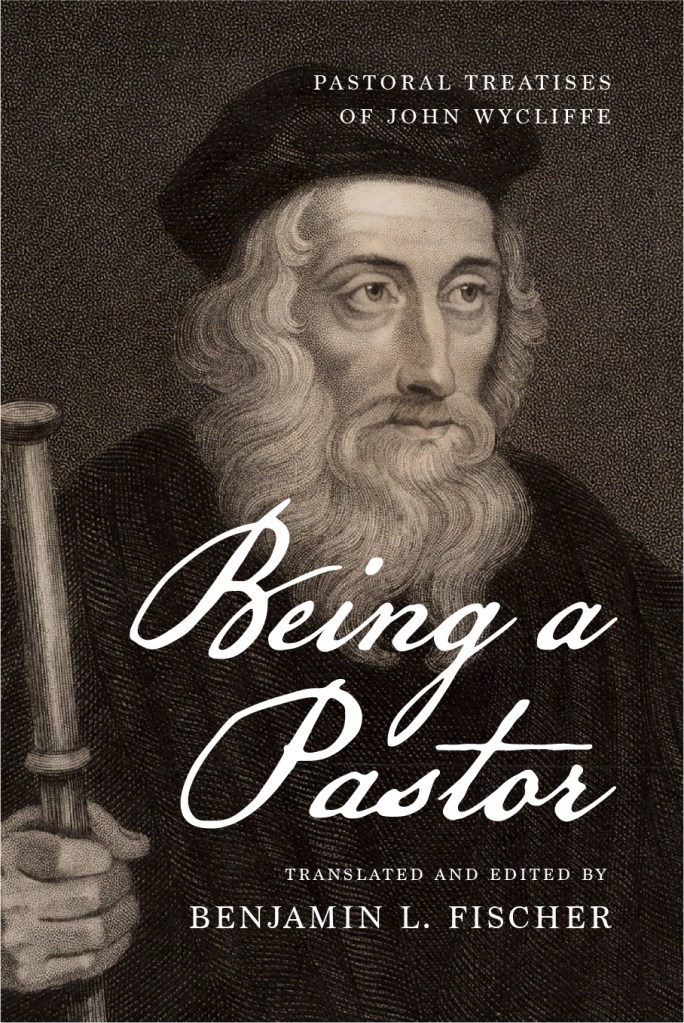
Being a Pastor

By: John Wycliffe

This small volume serves as a fantastic introduction into the stream of gospel-based theological discourse that shaped the theology of the Middle Ages. As Wycliffe’s principled defense of the authority of Scripture makes clear, the dark ages still contained many rays of truth (Click here for a brief introduction to Wycliffe’s life and ministry). Admittedly, Wycliffe remains very much a man of the Middle Ages. He possessed views on marriage and church-state relations that do not translate well into our modern theological discussions.

Thankfully, this book introduces readers to Wycliffe’s gospel convictions without distractions tied to the age of knights and princesses. The 102 pages that compose this volume clearly and concisely convey Wycliffe’s conviction that priests should stay with their sheep, should live pure, humble lives, and should preach the unadulterated gospel. In addition to repeatedly addressing the dangers of worldly greed, this book conveys Wycliffe’s passion for powerful preaching, a preaching that would replace the stories and poems that dominated so many sermons of his day with clear reflections upon the text of Scripture designed to produce biblical and lasting change. Lastly, the text provides readers with a sense of why the Catholic Church found Wycliffe so unsettling. The pages detail Wycliffe’s belief that priests, princes, and lay people should defy the pope and his officials whenever they violated the commands of Scriptures. Those who possess an interest in pastoral ministry, in English history, and in understanding how theology developed in the years leading up to the Reformation should grab a copy of this book…this window into the soul of the Middle Ages.  

Excerpt

We should take as an article of faith that God’s law surpasses all other in authority, in truth, in intelligence…Therefore, God commanded his apostles not to preach man’s law but to preach the Gospel to all kinds of people. Accordingly, those who preaching is a matter of jokes and telling stories are all the more to be blamed. For God’s Word must always be proclaimed faithfully if it is to be understood.

Christmas Thoughts

By: J.C. Ryle

This concise 128 volume written by Anglican Bishop J.C. Ryle blessed my soul the past Christmas morn. Ryle’s focus upon the complete and never-ending promises of God warmed my heart which has been cooled be dampness of deep grief. He displays his genius in explicitly warning his readers of the perils of unbelief while also showing his readers how the human longing for perfect community finds it fulfillment not in Christmas gatherings which prove fleeting and forever incomplete but in the new heavens and new earth. That wonderful meeting will consist of all God’s people from ever age and will never end. There will be no more goodbyes. No more sense of loss. Ryle’s helpfully ties the glories of Christmas to the community of the Church (all belivers of all ages), providing a small and needed correction to the Western over preoccupation with family at the holidays. In other words, if you open to the possibility that a book could stir your heart to long for Christ, to love God’s people, and to evangelize the lost all while putting up your Christmas tree, I encourage you to read this small volume at Christmas.

Moreover, it’s application does not end with the holidays. As the book’s editor, Andrew Atherstone, noted, Ryle republished several of the tracts without the Christmas references, revealing the truths contained within to be appropriate for the holiday and yet to possess the ability to reach far beyond the bounds of December 25th. The truth of the gospel is powerful both in and out of season!  

Excerpt

But, thank God there is one great family whose prospects are very different. It is the family of which I am speaking in this tract, and commending to your attention. The future prospects of the family of God are not uncertain. They are good, and only good – happy and only happy.

Surprised By Suffering

By R.C. Sproul

For most of my life, I have spent my time meditating on how to live well. But on May 31, 2022, I abandon my preoccupation with life and began contemplating in earnest how one dies well. As April and I came face to face with the cruel truth that no cure, no medicine, no hope of life remained for her, I came across R.C. Sproul’s volume. Sproul’s discussion of death being a vocation, a calling, helped me to understand that April’s last weeks had a glorious purpose. They were a time for her and me to praise God. A time to call others to repentance and faith…to the hope of Jesus. A time to once again battle sin. A time to redouble her faith in her loving Father, trusting that he would forever hold her fast. In other words, a time to finish well the last race that God had set before her.

In one sense, we should all begrudge death. And yet in another sense, Sproul shows us that we can embrace it without fear. For the believer, death does not end in the sorrows of grave. As Sproul noted, “Ultimate healing comes through death after death.” The first half of the book resolutely reminds the hurting Christians that God is with us even at death, transforming tragedy into our greatest victory.  

The second half of the book which explores heaven grows a little more speculative therefore little less insightful. The book then concludes with a series of questions and answers that cover topics such as near-death experiences and what happens to babies when they die. Regardless of what one thinks of the second half of the book, the first half of this book which applies the balms of the gospel to the pain of death more than covers the price of this volume.

I believe this 158-page volume will bless both those who are facing the prospect of death and those who seek to love the dying. And if we are honest, that is all of us.

Excerpt

Teachers argue that there is healing in the atonement of Christ. Indeed there is. Jesus bore all our sins on the cross. Yet none of us is free from sin in this life. Likewise, none of us is free from the sickness in this life. The healing that is in the cross is real. We participate in its benefits now, in this life. But the fullness of the healing from both sin and disease takes place in heaven. We still must die at our appointed times.

2 Bonus Picks

Charity and It’s Fruits: by Jonathan Edwards

Grief: Walking With Jesus: by Bob Kellemen