Renewed Congregationalism: A Cure for What Ails the SBC

To reverse the decline of the Southern Baptist Convention (SBC), I believe the platform (the leaders of the SBC) needs to rediscover the goodness of congregational piety.

Of Messengers and Leaders

To date, many of the SBC’s leaders seem to be distrustful and dismissive of the messengers who elected them or perhaps more accurately stated they distrust the messengers who elected the committee members who elected them.

The President of the SBC’s Executive Committee which runs the convention when it’s not in session, Jeff Iorg, recently blamed the decline in Cooperative Program giving and the “reshuffling of sectarian loyalties in the SBC” on the messengers. He laments that the messengers have been taken captive by the “fracturing influence of expressive individualism.” Or as Iorg notes elsewhere, they have fallen prey to “Our cultural proclivity for tribalism and sectarianism rooted in the sins of selfishness and self-promotion.” He then calls the messengers to return to their Baptist roots and embrace his vision for “messy cooperation.” He writes, “Part of doing this successfully is tolerating considerable diversity in our movement – doctrinal, methodological, strategic, and practical.”

And while readers might assume that Iorg thinks messiness would be confined within the doctrinal boundaries of the Baptist Faith and Message 2000, Iorg’s actions indicate the opposite. Over the last few years, he (as well as other SBC leaders such as Kevin Ezell, the President of the North American Mission Board – NAMB) worked to defeat the Law Amendment which sought to strengthen the long-held Baptist belief that the office of pastor was reserved for qualified men. Iorg writes, “Let’s keep debating the issue of gender leadership roles in churches with the goal of persuading churches to change their position or practices rather than removing them from the SBC.” In other words, he invites churches to openly debate elements of the SBC’s doctrinal statement. Despite his embrace of doctrinal confusion, Iorg still blames the messengers for the state of the SBC. He calls them to embrace his undefined vision of messy cooperation or else be guilty of the sin of expressive individualism.

Similarly, a letter written in the defense the Ethics and Liberty Commission (ERLC) by ten former SBC presidents calls on the messengers to abide by the will of the platform and not to divisively vote for the disbandment of the ERLC. The presidents admit that the ERLC (the political wing of the SBC) lacks a clear mission. Still, the letter goes on to proclaim that the undefine mission of the ERLC is still “an important mission and should be kept in place.” The presidents then ask the messengers to trust that the ERLC’s trustees and its president will get this undefined mission right. Recall this is the same organization that has worked with George Soros funded foundations, opposed the abolition of abortion, and whose executive board recently fired its president only to then reinstate said president and force its chairman of the board to resign. Nonetheless, the presidents ask messengers to trust them, embrace the ERLC, and avoid the sin of being divisive.  

The Nature of Trust

While the leaders of the SBC should invite the messengers to trust them, the basis of that trust comes not from the possession of that office but from the faithful stewardship of that office in accordance with Scripture. As Jonathan Leeman notes, “our submission is never finally owed to other people. It’s exclusively and uniquely owed to God.” To quote the apostle Paul, “Be imitators of me, as I am of Christ (1 Cor 11:1).” In other words, the messengers should trust the leaders of the SBC entities in much the same way they trust their pastors and elders.

Trust & the Congregation

When Christians join a local congregation, they should anticipate that their elder board (or in some cases their deacon board) will hold itself to the teaching of Scripture, correcting one another’s sins and asking the congregation to only vote on wise motions and nominations. As Paul tells Titus, “For an overseer, as God’s steward, must be above reproach (Ti. 1:7).” If church members disagree with their elders over matters lacking biblical warrant, the members should usually submit to their elders, understanding that the “bar should be pretty high before disobeying an elder.”

Still, the elders of that church should recognize that the congregation’s trust is not ultimately given but won through preaching truth, calling for wise votes that align with Scripture or its principles, and through abandoning error and those programs that would harm the church. In other words, elders should invite the congregation to vet their nominations of church officers as well as their other motions to ensure that the elders’ vision for the church wisely aligns with the Scriptures. To quote Baptist Father J.L. Dagg, “The only rule which they [the pastors] have a right to apply is that of God’s word; and the only obedience which they have a right to exact, is voluntary.”
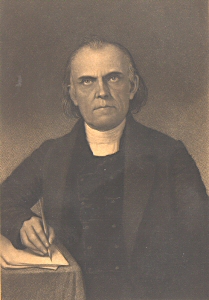
J.L. Dagg
J.L. Dagg

When elders violate the Scriptures or enact unwise policies that harm the church and the bar for disobedience is reached, the church’s members should speak up. Leeman writes, “Good loyalty says, “I’m committed to you and your successes as a leader and that means I cannot follow you into folly or unrighteousness.” This speaking up is not a defect of congregationalism but its glory. As Dagg notes the best way to prevent a church from falling into error is to have congregations “well instructed in the truth.” Since even the best elders and elder boards can err, the congregation must be prepared to stand for truth and wisdom even if their elders do not.

To quote Leeman again, “the final judicial court of appeal is the whole congregation.” And when the whole congregation speaks on behalf of the Lord and rejects the elders’ poor leadership, the elders should listen, repent, and correct their course. Like King David who at the behest of his troops refrained from battling Absalom, elders should heed the biblical wisdom of their congregation (2 Sam 18:2-4), recognizing that the Holy Spirit resides in the pew just as assuredly as he resides in the elder board.  

Congregationalism in Action

Caleb Morell’s book A Light on the Hill helpfully demonstrates the preservative power of congregationalism in the face of erring leadership. At the beginning of the twentieth century, Agnes Shankle, a long time Sunday school teacher a Capitol Hill Baptist Church (CHBC), raised concerns about her church’s pulpit committee’s recommendation to install a moderate as the church’s next pastor. After she spoke, others joined her opposition. United in their defense of the truth, the congregation of CHBC defeated their leaders’ recommendation and thereby saved their church from theological ruin. CHBC continues “as a Bible-believing, Gospel-preaching church” in-part because a faithful member challenged her leaders’ unbiblical and unwise recommendation.  

Trust and the SBC

SBC Leadership Flow Chart

Similarly, the willingness of the messengers to challenge the unbiblical and unwise actions of their leaders is neither a defect nor a rejection of Baptist polity but one of its truest expressions. The SBC entity heads should listen to their boards as pastors listen to their fellow elders or deacons. Moreover, there is a good deal to be said for bringing about reform through the SBC trustee process (the process by which messengers elect the SBC President who nominates other men and women who upon their election by the messengers to the nominating committee nominate other men and women who upon their election to the various SBC boards then elect SBC entity presidents). But that level of accountability does not absolve the leaders of the SBC from being accountable to the messengers. The biblical concerns of the messengers should be heard and not dismissed as (to quote Vance Pittman, the President of the Send Network), “100% BS.” Moreover, no number of Baptist Press editorials in support of the platform will convince messengers to trust those leaders who have led the executive committee into financial ruin, who have muddled the witness of the SBC to the broader culture, and who have undermined the theological integrity of the SBC.

The Path Forward

If the trajectory of the convention remains unchanged, I suspect there will be more division…more need for groups like The Baptist Review, The Center for Baptist Leadership, and The Association of Churches for Missions and Evangelism (ACME) to form and more churches withdrawing from the convention. To quote Leeman, “If one belongs to a church where he cannot trust the elders to make biblical decisions, he should find another church.”

And in such cases, the fault will lie not with the messengers nor with expressive individualism but with the SBC’s leadership…with the platform. As Martyn Lloyd-Jones aptly says of the Reformation, the cause of the church’s division at that time (and I would argue that of the SBC today) was not the reformers like Luther but the “state of the Roman Church that was the tragedy.” Speaking of voluntary Baptist associations, Baptist father Edward T. Hoscox concurs. He writes that the only option left for those who disagree with the trajectory of their association is to “refuse to affiliate, and withdraw.” In other words, messengers who do not trust the platform should not and will not forever remain with the platform.

If the SBC is to reverse its decline, its leaders must win the trust of the messengers and once again embrace congregationalism. They must hear the concerns of the Agnes Shankle’s in their midst and allow the wisdom of the Scriptures to triumph.

At the 2025 Annual Meeting, I encourage the stage to abandon its criticism of the messengers and to welcome their biblical corrections. I encourage the stage to join with the messengers and to help us pass the Law Amendment, the motions for increased transparency, and any other reform that will better align the SBC with the Scriptures. In short, I encourage the platform to renew its commitment to congregationalism.

Why I Support The Law Amendment: Missions, Lloyd-Jones and the Danger of Pragmatism

Without question, the Law Amendment and its call to restrict the office of pastor to qualified men has capture the attention of the Southern Baptist Convention (SBC). Pastors, SBC entity presidents, and even Dr. Mohler of the Southern Baptist Theological Seminary have published videos, blogs, and essays in defense of or in opposition to this amendment. Though the vote on the amendment can rightly be viewed as a referendum on whether the SBC will permit women to serve as pastors, it also represents an even more basic and existential question: will the convention be defined by the Scriptures or by pragmatism?

What About Missions?

Most who oppose the amendment do not do so for hermeneutical or Scriptural reasons. Like the amendments’ supporter, they recognize that 1 Timothy 3, Titus 1 and the Scriptures in general limit the office of pastor or elder to qualified men. The line, “I’m a complementarian but oppose the Law Amendment because….” has been used by many. The issue is not what does the Bible say but whether obedience to the Bible on secondary issues will prove too costly.

Most oppose the amendment because they fear such actions will dampen if not outright extinguish the SBC’s heart for missions. They view the Law Amendment as an attack on both the financial and the human resources needed to evangelize our nation and the world. Only with the help of churches who employ women pastors can the SBC hope to fulfill the great commission.

But such concern should not be seen as the exclusive domain of those opposed to the Law Amendment. Those in favor of the amendment also possess a passion for missions and fear that getting the amendment wrong could hurt missions. The disagreement over the amendment turns out not to be over whether or not to do missions but over how to best do missions. In other words, is the gospel best advanced by associations bound together by shared doctrinal convictions and a heart for biblical fidelity even if said group is small? Or is the gospel best advanced by large associations united by minimal convictions that can be remolded and even jettisoned for the sake of greater results? Scriptural authority or pragmatism?

What Can the 20th Century Teach Us?

While this discussion may prove novel to this generation of SBCers, it is not a new development. During the twentieth century, our evangelical brothers and sisters in England faced a similar dilemma. Seeking to evangelize the rapidly secularizing culture of post WW2 Britain, men such as John Stott encouraged evangelicals to embrace those who held doctrines at odds with traditional evangelical convictions for the sake of missions. The argument then as it is today consisted of a call to expand the circle of cooperation for the purpose of reaching the world…to look the other way when discussing things such as women pastors and the inerrancy of Scripture so that the busy coal miner, the over worked mom, and the poor youth could be won for the gospel. Pragmatism for the sake of salvations.

Dr. David Martyn Lloyd-Jones who pastored Westminster Chapel during those tumultuous years shared Stott’s passion for evangelism. But the Welsh doctor disagreed with his fellow evangelical’s methodology. He feared that big tent pragmatism as represented by the ecumenical movement of his day would not foster but rather frustrate missions. According to Lloyd-Jones, missions was, “highly doctrinal.” Given that salvation depended upon a person’s acceptance of the Scriptures as God’s word, the deity of Jesus, and his substitutionary atonement and resurrection, the Welsh pastor believed that the church’s ability to reach the lost depended on the church’s faithful proclamation of and adherence to the Scriptures. He wrote, “If you want to help others you must know your doctrine.” Lloyd-Jones also noted in a sermon on Philippians 4:3 that, “If the church is not right…she grieves the Holy Spirit, and if she grieves the Holy Spirit, she loses her power and she cannot be a missionary Church.” Or as he stated a touch more positively elsewhere, “Do not be concerned about numbers. If we stand for God’s truth, we can be certain that God will honor and bless us.” If a church embraced women preachers or pastors (an act which the Scriptures “prohibits:) it would not enrich by starve its missional output. For Lloyd-Jones, doctrinal purity was not a missional suppressant or limitation but there very means by which the church would fan missions into flame. He concluded, “The real understanding of doctrine leads to a heart’s longing and desire and prayer for the salvation of the lost.”

Is this A Matter of Faith?

For the sake of Christian charity, one must admit that the discussions around the Law Amendment as did the ones in twentieth century England prove secondary and not primary. It is a discussion among brothers and sisters and not one of enemies. The open defense of women pastors does not negate one’s hope in the justifying power of Jesus’s blood. Nor do such positions necessarily arise from duplicity. The SBC would do well to embrace the charity that Lloyd-Jones extended to his opponents and assert with him that, “We do not impute wrong motives to them. We grant them that they are as sincere as we are and as honest as we are, and that they believe the gospel as we believe it.” Christians can disagree about over such things.    

Does Ecclesiology Matter?

But they cannot disagree about ecclesiology and hope to effectively evangelize the lost. As Lloyd-Jones noted, “If we want revival we must start by considering this doctrine of the nature of the Christian church.” Expanding upon this idea, Lloyd-Jones proclaimed, “You can be a Christian and yet defective in your doctrine, but our concern and our endeavor is to have true doctrine presented in its fullness because we believe that it is only as this is believed and preached and propagated that men and women are going to be converted and added to the church. When a church has gone wrong in doctrine, she has ceased to be a converting influence.” In other words, the success of missions depended upon an affirmation of the essentials of the faith and upon a biblical ecclesiology. Without such supports, missions would slowly die. And any denomination that either willfully or passively adopted an ecclesiology that runs counter to the Scriptures and that willfully dilutes its adherence to its doctrinal statement will not increase but rather destroy its missional output.

Moreover, such changes to secondary or even tertiary doctrines will (if unchallenged) undermine more than missions. They will eventually reach the central tenants of the gospel and destroy the very institutions they claim to be saving.  Lloyd-Jones observed, “Every part because it belongs to every other part…if you make what appears to be a minor change somewhere on the circumference it will soon have its effect even upon the center.” If Christians accept that the rejection of the Scriptures can lead to more conversions, then no doctrine will prove essential or uneditable. Given enough time, uncontested, evangelical pragmatism will hollow out even the most cherished of doctrines of the SBC.

What Happened in England?

Though some followed Lloyd-Jones’s advice and have continued to thrive, most British denominations and their evangelical cohorts rejected the Welsh pastor’s appeals and embraced the big tent pragmatism of their day. Unfortunately, that choice has proved costly. If researchers’ predictions hold true, most of England’s historic denominations will disappear by 2050. Even Stott’s beloved Anglican church is on pace to disappear around 2060.  In other words, Lloyd-Jones has been vindicated: missions cannot thrive apart from sound doctrine and ecclesiology.

What Will We Do?

Now we must decide. As the messengers gather in Indianapolis, they will undoubtedly speak to the question of women pastors. But in so doing, they will also speak to the essence of the convention. They will determine if the SBC is primarily a doctrinal people or a pragmatic people. To borrow from Lloyd-Jones, “The ultimate question facing us these days is whether our faith is in men and their power to organize, or in the truth of God in Christ Jesus and the power of the Holy Spirit.” May we choose wisely. May we Christ Jesus and the power of the Holy Spirit. May we choose the Law Amendment.  

Lloyd-Jones, Rick Warren, & the Looming Crisis of a Paper Denomination

As British evangelicalism approached the precipice of their own crisis in 1966, the famed British preacher and evangelist, D. Martyn Lloyd-Jones passionately encouraged evangelicals to leave their floundering denominations. As he made clear in his Appeal, he was done with paper churches. Speaking of the impulse to define the local church by creeds and statements of faith, the Doctor said,

I am sorry, I cannot accept the view that the church consists of articles or a confession of faith. A church does not consist of the Thirty-Nine Articles. A church does not consist of the Westminster Confession of Faith…A church consists of living people.

At first glance, the Doctor seemed to be affirming the often-heard statement of “No creed, but the Bible” as he headed off into the world of Christian experience. But while the fiery Welsh Preacher of Westminster Chapel certainly affirmed the authority and sufficiency of the Bible and the importance of the universal Christian experience of conversion, he had not given up on creeds in 1966.

Lloyd-Jones & The Importance of Creeds

He taught that the church’s survival depended upon the existence of creeds. Reflecting upon the practice of the early church, Lloyd-Jones said, “They defined heresy, and condemned it, and excommunicated men who taught it…The result was that we have the so-called great creeds of the Church – for instance the Apostle’s Creed.” What proved true of the early church also proved true of the Protestant Reformation and of the Church during other times of revival. Lloyd-Jones continued,

The Church in every period of revival and awakening, when she is really alive…has always done this very thing. The drawing up of a Confession is nothing less than a way of ‘girding up the lions of your mind,’ or ‘putting on the girdle of truth.’

In other words, the historic, evangelical church has always welcomed creeds and statements of faith because they were “drawn up to save the life of the Church and to safeguard the truth concerning our Lord and His salvation.” Lloyd-Jones believed that those who held fast to the Scriptures would hold equally fast to documents such as “the Westminster Confession.”

In critiquing paper churches, Lloyd-Jones was not expressing antagonism towards creeds but rather towards their misuse. In other words, he did not oppose the presence of creeds but rather those disingenuous pastors and denominational workers who signed orthodox creeds so that they could teach heterodoxy if not outright heresy apart from any criticism. In the 1960s, British liberals engaged in the doublespeak that defined the liberals wing of the SBC during the conservative resurgence of the 1980s and 90s. In front of boards and councils, they publicly affirmed orthodoxy. But in their Tuesday morning lectures and their Sunday morning sermons, they openly attacked core biblical doctrines. Reflecting upon this reality in 1969, Lloyd-Jones remarked, “What the Christian church is teaching at any given time is what is being proclaimed from its pulpits and not what is handed down on paper.”

Though the British liberals hoped to revive their struggling churches through the inclusion of more culturally adept theology, their broadening theological horizons did not translate to increased membership. The grand cathedrals of old were transformed into flimsy and empty paper structures. As Lloyd-Jones noted, “If you mix with polluted doctrine, it is not surprising that you become diseased and more or less useless in the kingdom of God.” Those who abandoned or diluted the creeds would ultimately lose the gospel and their churches. He warned, “if you make what appears to be a minor change somewhere on the circumference it will soon have its effect even upon the center.”

Warren & the Baptist Faith and Message

In a few days, the SBC will face its own crisis. The messengers at the 2023 SBC Annual Meeting will have to decide whether they will reinstate Rick Warren’s old church (Saddleback Church) which has ordained and installed women pastors, violating the SBC statement of faith, the Baptist Faith in Message 2000, and its biblical moorings (and for what it’s worth – Lloyd-Jones’s teaching). With that vote, Southern Baptists will determine whether their confessional documents exist to protect the integrity of the gospel or to protect those who teach against the Bible from institutional and biblical accountability. In other words, they will be determining whether the SBC is a living or a paper denomination.

May they choose wisely.

What Did they Decide?

In God’s kindness, the messengers at the 2023 Annual Meeting affirmed that creeds exist to uphold the clear teaching of the Scriptures. They rejected Warren’s appeal to reinstate Saddleback Church by a vote of 88% to 11%. I am thankful to report that the SBC is not a paper denomination. As of 6/14/2023, it is very much alive!