Renewed Congregationalism: A Cure for What Ails the SBC

To reverse the decline of the Southern Baptist Convention (SBC), I believe the platform (the leaders of the SBC) needs to rediscover the goodness of congregational piety.

Of Messengers and Leaders

To date, many of the SBC’s leaders seem to be distrustful and dismissive of the messengers who elected them or perhaps more accurately stated they distrust the messengers who elected the committee members who elected them.

The President of the SBC’s Executive Committee which runs the convention when it’s not in session, Jeff Iorg, recently blamed the decline in Cooperative Program giving and the “reshuffling of sectarian loyalties in the SBC” on the messengers. He laments that the messengers have been taken captive by the “fracturing influence of expressive individualism.” Or as Iorg notes elsewhere, they have fallen prey to “Our cultural proclivity for tribalism and sectarianism rooted in the sins of selfishness and self-promotion.” He then calls the messengers to return to their Baptist roots and embrace his vision for “messy cooperation.” He writes, “Part of doing this successfully is tolerating considerable diversity in our movement – doctrinal, methodological, strategic, and practical.”

And while readers might assume that Iorg thinks messiness would be confined within the doctrinal boundaries of the Baptist Faith and Message 2000, Iorg’s actions indicate the opposite. Over the last few years, he (as well as other SBC leaders such as Kevin Ezell, the President of the North American Mission Board – NAMB) worked to defeat the Law Amendment which sought to strengthen the long-held Baptist belief that the office of pastor was reserved for qualified men. Iorg writes, “Let’s keep debating the issue of gender leadership roles in churches with the goal of persuading churches to change their position or practices rather than removing them from the SBC.” In other words, he invites churches to openly debate elements of the SBC’s doctrinal statement. Despite his embrace of doctrinal confusion, Iorg still blames the messengers for the state of the SBC. He calls them to embrace his undefined vision of messy cooperation or else be guilty of the sin of expressive individualism.

Similarly, a letter written in the defense the Ethics and Liberty Commission (ERLC) by ten former SBC presidents calls on the messengers to abide by the will of the platform and not to divisively vote for the disbandment of the ERLC. The presidents admit that the ERLC (the political wing of the SBC) lacks a clear mission. Still, the letter goes on to proclaim that the undefine mission of the ERLC is still “an important mission and should be kept in place.” The presidents then ask the messengers to trust that the ERLC’s trustees and its president will get this undefined mission right. Recall this is the same organization that has worked with George Soros funded foundations, opposed the abolition of abortion, and whose executive board recently fired its president only to then reinstate said president and force its chairman of the board to resign. Nonetheless, the presidents ask messengers to trust them, embrace the ERLC, and avoid the sin of being divisive.  

The Nature of Trust

While the leaders of the SBC should invite the messengers to trust them, the basis of that trust comes not from the possession of that office but from the faithful stewardship of that office in accordance with Scripture. As Jonathan Leeman notes, “our submission is never finally owed to other people. It’s exclusively and uniquely owed to God.” To quote the apostle Paul, “Be imitators of me, as I am of Christ (1 Cor 11:1).” In other words, the messengers should trust the leaders of the SBC entities in much the same way they trust their pastors and elders.

Trust & the Congregation

When Christians join a local congregation, they should anticipate that their elder board (or in some cases their deacon board) will hold itself to the teaching of Scripture, correcting one another’s sins and asking the congregation to only vote on wise motions and nominations. As Paul tells Titus, “For an overseer, as God’s steward, must be above reproach (Ti. 1:7).” If church members disagree with their elders over matters lacking biblical warrant, the members should usually submit to their elders, understanding that the “bar should be pretty high before disobeying an elder.”

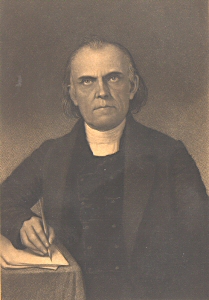
Still, the elders of that church should recognize that the congregation’s trust is not ultimately given but won through preaching truth, calling for wise votes that align with Scripture or its principles, and through abandoning error and those programs that would harm the church. In other words, elders should invite the congregation to vet their nominations of church officers as well as their other motions to ensure that the elders’ vision for the church wisely aligns with the Scriptures. To quote Baptist Father J.L. Dagg, “The only rule which they [the pastors] have a right to apply is that of God’s word; and the only obedience which they have a right to exact, is voluntary.”

J.L. Dagg
J.L. Dagg

When elders violate the Scriptures or enact unwise policies that harm the church and the bar for disobedience is reached, the church’s members should speak up. Leeman writes, “Good loyalty says, “I’m committed to you and your successes as a leader and that means I cannot follow you into folly or unrighteousness.” This speaking up is not a defect of congregationalism but its glory. As Dagg notes the best way to prevent a church from falling into error is to have congregations “well instructed in the truth.” Since even the best elders and elder boards can err, the congregation must be prepared to stand for truth and wisdom even if their elders do not.

To quote Leeman again, “the final judicial court of appeal is the whole congregation.” And when the whole congregation speaks on behalf of the Lord and rejects the elders’ poor leadership, the elders should listen, repent, and correct their course. Like King David who at the behest of his troops refrained from battling Absalom, elders should heed the biblical wisdom of their congregation (2 Sam 18:2-4), recognizing that the Holy Spirit resides in the pew just as assuredly as he resides in the elder board.  

Congregationalism in Action

Caleb Morell’s book A Light on the Hill helpfully demonstrates the preservative power of congregationalism in the face of erring leadership. At the beginning of the twentieth century, Agnes Shankle, a long time Sunday school teacher a Capitol Hill Baptist Church (CHBC), raised concerns about her church’s pulpit committee’s recommendation to install a moderate as the church’s next pastor. After she spoke, others joined her opposition. United in their defense of the truth, the congregation of CHBC defeated their leaders’ recommendation and thereby saved their church from theological ruin. CHBC continues “as a Bible-believing, Gospel-preaching church” in-part because a faithful member challenged her leaders’ unbiblical and unwise recommendation.  

Trust and the SBC

SBC Leadership Flow Chart

Similarly, the willingness of the messengers to challenge the unbiblical and unwise actions of their leaders is neither a defect nor a rejection of Baptist polity but one of its truest expressions. The SBC entity heads should listen to their boards as pastors listen to their fellow elders or deacons. Moreover, there is a good deal to be said for bringing about reform through the SBC trustee process (the process by which messengers elect the SBC President who nominates other men and women who upon their election by the messengers to the nominating committee nominate other men and women who upon their election to the various SBC boards then elect SBC entity presidents). But that level of accountability does not absolve the leaders of the SBC from being accountable to the messengers. The biblical concerns of the messengers should be heard and not dismissed as (to quote Vance Pittman, the President of the Send Network), “100% BS.” Moreover, no number of Baptist Press editorials in support of the platform will convince messengers to trust those leaders who have led the executive committee into financial ruin, who have muddled the witness of the SBC to the broader culture, and who have undermined the theological integrity of the SBC.

The Path Forward

If the trajectory of the convention remains unchanged, I suspect there will be more division…more need for groups like The Baptist Review, The Center for Baptist Leadership, and The Association of Churches for Missions and Evangelism (ACME) to form and more churches withdrawing from the convention. To quote Leeman, “If one belongs to a church where he cannot trust the elders to make biblical decisions, he should find another church.”

And in such cases, the fault will lie not with the messengers nor with expressive individualism but with the SBC’s leadership…with the platform. As Martyn Lloyd-Jones aptly says of the Reformation, the cause of the church’s division at that time (and I would argue that of the SBC today) was not the reformers like Luther but the “state of the Roman Church that was the tragedy.” Speaking of voluntary Baptist associations, Baptist father Edward T. Hoscox concurs. He writes that the only option left for those who disagree with the trajectory of their association is to “refuse to affiliate, and withdraw.” In other words, messengers who do not trust the platform should not and will not forever remain with the platform.

If the SBC is to reverse its decline, its leaders must win the trust of the messengers and once again embrace congregationalism. They must hear the concerns of the Agnes Shankle’s in their midst and allow the wisdom of the Scriptures to triumph.

At the 2025 Annual Meeting, I encourage the stage to abandon its criticism of the messengers and to welcome their biblical corrections. I encourage the stage to join with the messengers and to help us pass the Law Amendment, the motions for increased transparency, and any other reform that will better align the SBC with the Scriptures. In short, I encourage the platform to renew its commitment to congregationalism.

Lloyd-Jones, Rick Warren, & the Looming Crisis of a Paper Denomination

As British evangelicalism approached the precipice of their own crisis in 1966, the famed British preacher and evangelist, D. Martyn Lloyd-Jones passionately encouraged evangelicals to leave their floundering denominations. As he made clear in his Appeal, he was done with paper churches. Speaking of the impulse to define the local church by creeds and statements of faith, the Doctor said,

I am sorry, I cannot accept the view that the church consists of articles or a confession of faith. A church does not consist of the Thirty-Nine Articles. A church does not consist of the Westminster Confession of Faith…A church consists of living people.

At first glance, the Doctor seemed to be affirming the often-heard statement of “No creed, but the Bible” as he headed off into the world of Christian experience. But while the fiery Welsh Preacher of Westminster Chapel certainly affirmed the authority and sufficiency of the Bible and the importance of the universal Christian experience of conversion, he had not given up on creeds in 1966.

Lloyd-Jones & The Importance of Creeds

He taught that the church’s survival depended upon the existence of creeds. Reflecting upon the practice of the early church, Lloyd-Jones said, “They defined heresy, and condemned it, and excommunicated men who taught it…The result was that we have the so-called great creeds of the Church – for instance the Apostle’s Creed.” What proved true of the early church also proved true of the Protestant Reformation and of the Church during other times of revival. Lloyd-Jones continued,

The Church in every period of revival and awakening, when she is really alive…has always done this very thing. The drawing up of a Confession is nothing less than a way of ‘girding up the lions of your mind,’ or ‘putting on the girdle of truth.’

In other words, the historic, evangelical church has always welcomed creeds and statements of faith because they were “drawn up to save the life of the Church and to safeguard the truth concerning our Lord and His salvation.” Lloyd-Jones believed that those who held fast to the Scriptures would hold equally fast to documents such as “the Westminster Confession.”

In critiquing paper churches, Lloyd-Jones was not expressing antagonism towards creeds but rather towards their misuse. In other words, he did not oppose the presence of creeds but rather those disingenuous pastors and denominational workers who signed orthodox creeds so that they could teach heterodoxy if not outright heresy apart from any criticism. In the 1960s, British liberals engaged in the doublespeak that defined the liberals wing of the SBC during the conservative resurgence of the 1980s and 90s. In front of boards and councils, they publicly affirmed orthodoxy. But in their Tuesday morning lectures and their Sunday morning sermons, they openly attacked core biblical doctrines. Reflecting upon this reality in 1969, Lloyd-Jones remarked, “What the Christian church is teaching at any given time is what is being proclaimed from its pulpits and not what is handed down on paper.”

Though the British liberals hoped to revive their struggling churches through the inclusion of more culturally adept theology, their broadening theological horizons did not translate to increased membership. The grand cathedrals of old were transformed into flimsy and empty paper structures. As Lloyd-Jones noted, “If you mix with polluted doctrine, it is not surprising that you become diseased and more or less useless in the kingdom of God.” Those who abandoned or diluted the creeds would ultimately lose the gospel and their churches. He warned, “if you make what appears to be a minor change somewhere on the circumference it will soon have its effect even upon the center.”

Warren & the Baptist Faith and Message

In a few days, the SBC will face its own crisis. The messengers at the 2023 SBC Annual Meeting will have to decide whether they will reinstate Rick Warren’s old church (Saddleback Church) which has ordained and installed women pastors, violating the SBC statement of faith, the Baptist Faith in Message 2000, and its biblical moorings (and for what it’s worth – Lloyd-Jones’s teaching). With that vote, Southern Baptists will determine whether their confessional documents exist to protect the integrity of the gospel or to protect those who teach against the Bible from institutional and biblical accountability. In other words, they will be determining whether the SBC is a living or a paper denomination.

May they choose wisely.

What Did they Decide?

In God’s kindness, the messengers at the 2023 Annual Meeting affirmed that creeds exist to uphold the clear teaching of the Scriptures. They rejected Warren’s appeal to reinstate Saddleback Church by a vote of 88% to 11%. I am thankful to report that the SBC is not a paper denomination. As of 6/14/2023, it is very much alive!

Faithfulness > Fame: Understanding Salvation

Faithfulness in the minutia of life within the context of suffering reveals far more about the eternal essence of our souls than anything that happens on a stage, screen, or social media platform. Many church goers assume the opposite to be true. They think that the great preacher with a massive congregation and an even more massive online following has been granted a direct line to heaven. Potentially he has. But according to Jesus, the massive public platform is not the main evidence of his faith. The primary evidence of faith consists of simply of doing the “will of my Father who is in heaven.” If a pastor can hold the attention of thousands for 50 minutes while spending the remaining 10,030 minutes of his week in a crumbling fortress of self-centered fear that produces frequent outburst of anger, greedy demands for more money, and a never-ending stream of insults, Jesus will have nothing to do with him come eternity. He will tell the pastor, “I never knew you; depart from me, you workers of lawlessness (Matt 7:23).”

The same response will also greet exorcists and miracle workers who supposedly do great works for God while living lawless lives at odds with the salvation of the Lord that trains “us to renounce all ungodliness and evil passions (Ti. 2:12).” The great threat to the church is not the absence of the supernatural or the absence of human gifts. The great threat to the church proves to be the presence of the supernatural and grand gifts within hypocritical leaders. In other words, false teachers will gain entrance into the church precisely because they possess the supernatural or natural gifting needed to wow the masses. God tells Moses in Deuteronomy 13:1-4, that the false prophets will perform true signs and wonders, because

“God is testing you, to know whether you love the Lord your God with all your heart and with all your soul.”

Those who make either supernatural or natural ability the measure of their spirituality or of the spirituality of their leaders will be sorely disappointed. God cares far more about whether or not we love our neighbor than whether or not we can impress our neighbor.

In other words, what matters first and foremost is not someone’s ability to expand this church or that denomination. What matters most of all is the person’s faithfulness in the minutia of life within the context of suffering.

Storms and Floods > Platforms

Jesus doubles down on the importance of faithfulness when he tells the famous story of the two builders: one who builds his house upon the rock and the other who builds his house upon the sand (Matt 7:24-27). At first, both seemingly build the same structure. Both go to church, attend Bible studies, discuss the latest evangelical twitter controversy, spend a week or two on a mission trip, and read their Bible. The wolf and the sheep appear to be quintessentially the same from a distance for few can see whether they habitually lie to their neighbors or if they always speak harshly to their kids at home.

But then their circumstances change. Adversity comes in the form of everything from cancer to seeing the deacons smoking behind the shed. The foundation begins to feel the weight of physical pain, emotional anguish, and institutional hypocrisy. Though the believer may deeply feel the spiritual weight of the adversity, he or she will not turn their back on Christ as the storm rages around them. As the Apostle Peter did in John 6:68, they will declare,

“Lord to whom shall we go? You have the words of eternal life.”

They may shift their memberships from a dying church to a living church. They may shed tears and mourn the profound brokenness of this world as Jesus did when he encountered Lazarus’s death. True believers can be pushed to the brink of collapse by the intensity of their suffering, but their house will not fall. They will remain patient at the dinner table, speak kind words to their coworkers, and faithfully commune with God through prayer. As Jesus promises us in Matthew 12:20, “a bruised reed he will not break, and a smoldering wick he will not quench.” Jesus will never abandon those who have trusted in him for salvation. The righteous will withstand the storms affliction.

Conversely, the false believer, the wolf, or the hypocritical Christian will crumble when the storms beat against his home. The intensity of the storm can be as simple as a poorly timed sermon or as profound as the tragic loss of a child. But those who forsake the faith when life becomes difficult reveal that their peacetime faith was insincere. To cope with adversity, the wolf will return to its vomit for comfort, a vomit than can consist of alcohol, pornography, divorce, angry outbursts, and a host of other foul things that lead them away from worship, the local church, and Jesus.

Before the storm, the fake sheep often appear genuine. For this reason, a false Christian’s deconstruction can profoundly wound vast swaths of Christendom. As Jesus says, “the rain fell, and the floods came, and the winds blew and beat against that house, and it fell, and great was the fall of it (v27).” Of this we can be certain, those who build their lives on the sands of lawlessness will fall and at times with a loud bang. The hypocrites will be exposed. The storms will come.

The Danger of Living in the Past

Though the discussion above can be applied posthumously to a whole host of situations, Jesus’s concern and our concern should not be for the past. We should not spend an inordinate amount of time conducting autopsies of dead churches and deconstructed believers. Rather, we should examine our own lives and the lives of today’s leaders in light of Jesus’s warning in Matthew 7. We should seek to preserve the living.

How are we doing? Are our leaders faithful in the midst of suffering? Are we faithful in the minutia of life in the midst of suffering?