 King Saul is an odd duck in the biblical narrative. He experiences an outpouring of the Holy Spirit that culminates in supernatural prophesies. But then almost in the next breathe, he lies to his uncle. He offers sacrifices with unclean hands (1 Sam. 13). Things only get worse from their. He contemplate killing his son, Jonathan, because he ate some eating honey. He would have done if his soldiers had intervened and stayed Saul’s madness (1 Sam. 14). The king defies a direct order from God and keeps some of the spoil from the Amalekites (1 Sam. 15). He sets out on a murderous rampage against David because teenage girls faun over the giant killer (1 Sam 18). Perhaps must troubling of all, Saul murders most of the Levitical priesthood for unknowingly helping David escape from Saul’s murderous hand (1 Sam 22). At the end of his life, Saul’s pattern of disobedience manifests itself once again when he appeals to the Witch of Endor for spiritual advice (1 Sam. 28).
If the guy two seats down from us on Sunday regularly flew into explosive rages, attempted to lead Sunday morning worship without the pastor’s blessing, openly defied God’s Word, put out a hit on his pastor, and consulted with the local fortuneteller, we would not ask him to lead our next Youth retreat. We would be implementing church discipline and calling the police department. We would not consider such a man our spiritual brother because the fruit of his life demonstrates a lack of conversion.
Though we are tempted to write off Saul as spiritual madness, we struggle to make that judgement because of his earlier spiritual experiences. First Samuel 10:9-10 clearly states that “God gave [Saul] another heart…and the Spirt of God rushed upon him, and he prophesied among them.” Saul seemingly experienced the Holy Spirit in a way that most modern Christians could only dream about. Still he clearly lacked all other evidences of salvation: namely, faith and obedience.
What do we do with Saul? Can a person experience conversion and remained unchanged? The answer is no. As the famous Pastor Martyn Lloyd-Jones noted,
The moment a man is justified, the process of sanctification has already begun. (374 John 17).
If a man or woman comes to faith, their life begins to change as soon as they embrace Christ, because they have been liberated from the power of sin (Rom 6). Instead of sinning all the time, the redeemed can love their kids, control their tongue, and suppress their anger with the help of the Holy Spirit. Saul’s lack of works indicates that he lacked sanctification, proving he was never saved, justified, or liberated from his sins. The famed Bible commentator, Mathew Henry, rightfully concludes, “Saul by praising God in the communion of saints, become another man, but it may be questioned if he became a new man.” Paul blunts says in 2 Corinthians 5:17:
Therefore, if anyone is in Christ, he is a new creation. The old has passed away; behold, the new has come.
How could someone experience great interactions with the Spirit and become another man without becoming a spiritually reborn man?
To make sense of Saul’s supernatural experiences with have to place them back into their historical and biblical context.
In the Old Testament, the rushing of God’s spirit can be equated with salvation. But it also can be equated (as Louis Berkhoff noted) with a “visible sign of an appointment to office.” In the OT God appoints earthly leaders by giving them special outpourings of the Spirit for the purpose of endowing them with supernatural power and leadership skills. The Spirit of the Lord rushes upon Samson on multiple occasions giving the OT Judge the supernatural strength he needed to defeat the Philistines (Jud. 14:19; 15:14). The Spirit of God also rushes upon Saul in 1 Samuel 11:6, blessing the sluggish king with good leadership. Moreover, when Saul attempts to kill Samuel, the Spirit of God stays Saul’s sword, causing the corrupt king to prophecy in the nude (1 Sam. 19:20-21). In short, interactions with the Spirit are not always proof of salvation. Often God uses his Spirit do mark secular leader, a role that signifies nothing about the leader’s heart. As the late English Pastor Andrew Willet said of Saul’s spiritual encounter:
This was no inward renewal; nor did he become a regenerated man who was born of the Spirit.
The wimpy self-centered, godless man who could not find his donkeys in 1 Samuel 9 simply becomes the wimpy, self-centered, godless king of 1 Samuel 10. Saul was not redeemed.
What do we do with the life of Saul? We should take heed lest we too fall. We should realize that phenomenal religious experiences do not trump a life of sin. We may have been baptized in front of our family, friends, and coworkers. We may have shed crocodile tears over our sin as we were overcome with emotion. We may have done a million odd jobs around the church. We may have gone on a mission trip. We may have felt and done a million different things at the beginning of our spiritual journey. But then nothing else came. We still lie; we still get angry; we still cheat on our taxes; we still mock our teachers; and, we still mistreat our spouse. We define our faith by the one spectacular moment because we can point to no other evidence of faith. Friend if our life resembles the life of Saul, we are not saved. One or two emotional experiences does not invalidate a life of sin. The life of sin invalidates those one or two emotional experiences.
Jesus spoke directly to this issue in Mathew 7:21-2
Not everyone who says to me, ‘Lord, Lord,’ will enter the kingdom of heaven, but the one who does the will of my Father who is in heaven. On that day many will say to me, ‘Lord, Lord, did we not prophesy in your name, and cast out demons in your name, and do many mighty works in your name?’ And then will I declare to them, ‘I never knew you; depart from me, you workers of lawlessness.
Friends don’t trust in a moving experience. Trust in the ongoing works of the Spirit in your life. If the works are missing, repent and believe. Saul’s judgement does not have to be your judgement.
Do you have a faith that is greater than Sauls?
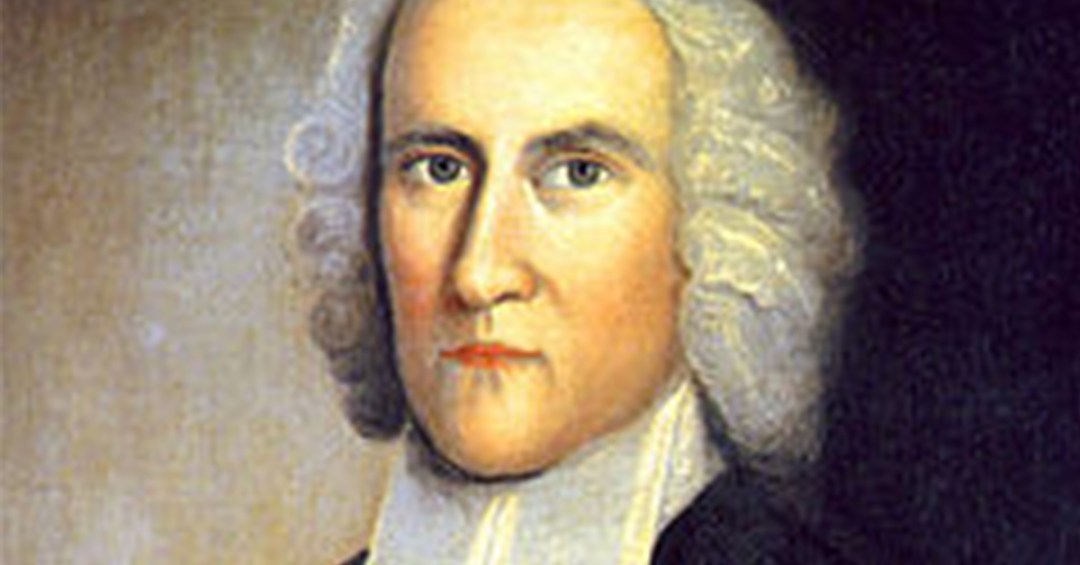 The defeated and somewhat despised Jonathan Edwards called together a council of pastors in May 1750. Recently dismissed from the pulpit of Northampton, Massachusetts because his pastoral skills did not equal his doctrinal convictions, Edwards faced a difficult choice regarding his future. A devote minority of Northampton citizens including his daughter Marry and her husband were pleading with Edwards to establish a new church in Northampton that would take the Lord’s Table, Baptism, and church membership seriously. Around the same time, the City of Stockbridge, Massachusetts had also invited Edwards to be the pastor of their English-speaking congregation and a missionary to the local Indian population. Though Edwards believed Stockbridge to be the better choice, he humbly submitted to the collective wisdom of his brothers-in-Christ. After hearing the case for both options, the council advised Edwards to move to Stockbridge (365).
 We are all about trusting Jesus. We love to sing about how great is a our God. We nod in devoted agreement as our friend encourages us to, ‘keep believing.” And, we get squeamish when someone mentions how hard their family life is. More Faith!
 Witkowski Blog