My Top Reads of 2022

I am all for new books. I just ordered one the other day. Still with each passing year, I find my heart increasingly aligned with C.S. Lewis’s rule to never allow oneself to read another new book “till you have read an old one in between.” Indeed, old books that make it to our time deserve our attention. If nothing else, we should be curious to know why they have survived when other volumes did not. I also suspect the more we read old books the more we will come to understand that the refinement of time ultimately furthers the stewardship of our time and thought today. As one can now guess, the books that most resonated with my soul this past year are rather well-seasoned if not downright ancient. If you are in the market for book to fill the space between the newer volumes on your shelf, I invite you to consider the following 3 options:

Link to My Goodreads stats for 2022

Being a Pastor

By: John Wycliffe

This small volume serves as a fantastic introduction into the stream of gospel-based theological discourse that shaped the theology of the Middle Ages. As Wycliffe’s principled defense of the authority of Scripture makes clear, the dark ages still contained many rays of truth (Click here for a brief introduction to Wycliffe’s life and ministry). Admittedly, Wycliffe remains very much a man of the Middle Ages. He possessed views on marriage and church-state relations that do not translate well into our modern theological discussions.
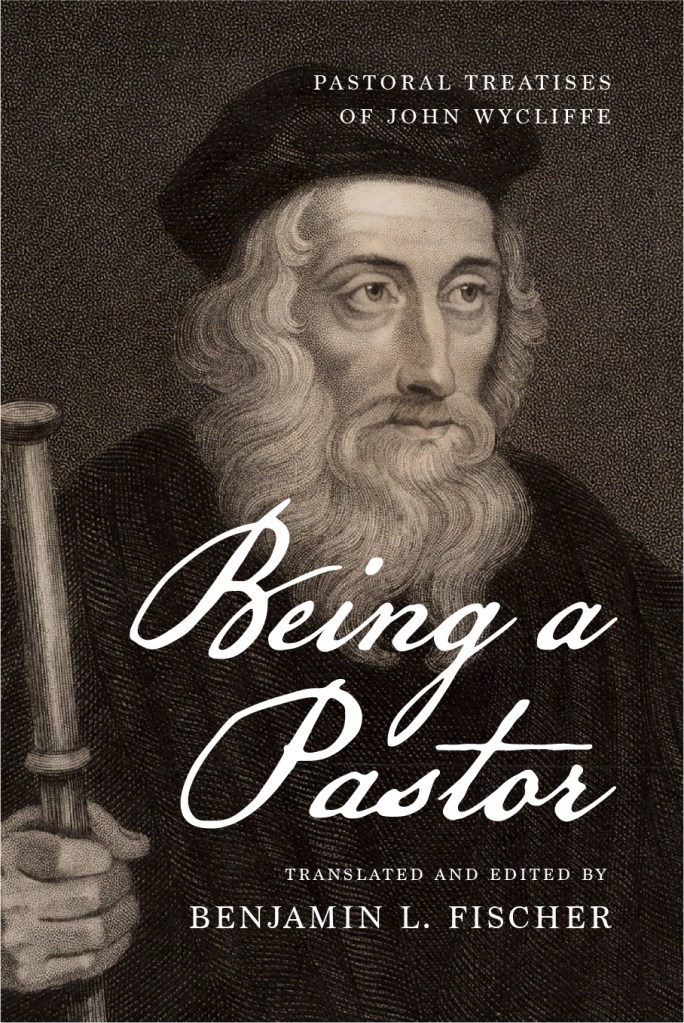
Thankfully, this book introduces readers to Wycliffe’s gospel convictions without distractions tied to the age of knights and princesses. The 102 pages that compose this volume clearly and concisely convey Wycliffe’s conviction that priests should stay with their sheep, should live pure, humble lives, and should preach the unadulterated gospel. In addition to repeatedly addressing the dangers of worldly greed, this book conveys Wycliffe’s passion for powerful preaching, a preaching that would replace the stories and poems that dominated so many sermons of his day with clear reflections upon the text of Scripture designed to produce biblical and lasting change. Lastly, the text provides readers with a sense of why the Catholic Church found Wycliffe so unsettling. The pages detail Wycliffe’s belief that priests, princes, and lay people should defy the pope and his officials whenever they violated the commands of Scriptures. Those who possess an interest in pastoral ministry, in English history, and in understanding how theology developed in the years leading up to the Reformation should grab a copy of this book…this window into the soul of the Middle Ages.  

Excerpt

We should take as an article of faith that God’s law surpasses all other in authority, in truth, in intelligence…Therefore, God commanded his apostles not to preach man’s law but to preach the Gospel to all kinds of people. Accordingly, those who preaching is a matter of jokes and telling stories are all the more to be blamed. For God’s Word must always be proclaimed faithfully if it is to be understood.

Christmas Thoughts

By: J.C. Ryle

This concise 128 volume written by Anglican Bishop J.C. Ryle blessed my soul the past Christmas morn. Ryle’s focus upon the complete and never-ending promises of God warmed my heart which has been cooled be dampness of deep grief. He displays his genius in explicitly warning his readers of the perils of unbelief while also showing his readers how the human longing for perfect community finds it fulfillment not in Christmas gatherings which prove fleeting and forever incomplete but in the new heavens and new earth. That wonderful meeting will consist of all God’s people from ever age and will never end. There will be no more goodbyes. No more sense of loss. Ryle’s helpfully ties the glories of Christmas to the community of the Church (all belivers of all ages), providing a small and needed correction to the Western over preoccupation with family at the holidays. In other words, if you open to the possibility that a book could stir your heart to long for Christ, to love God’s people, and to evangelize the lost all while putting up your Christmas tree, I encourage you to read this small volume at Christmas.

Moreover, it’s application does not end with the holidays. As the book’s editor, Andrew Atherstone, noted, Ryle republished several of the tracts without the Christmas references, revealing the truths contained within to be appropriate for the holiday and yet to possess the ability to reach far beyond the bounds of December 25th. The truth of the gospel is powerful both in and out of season!  

Excerpt

But, thank God there is one great family whose prospects are very different. It is the family of which I am speaking in this tract, and commending to your attention. The future prospects of the family of God are not uncertain. They are good, and only good – happy and only happy.

Surprised By Suffering

By R.C. Sproul

For most of my life, I have spent my time meditating on how to live well. But on May 31, 2022, I abandon my preoccupation with life and began contemplating in earnest how one dies well. As April and I came face to face with the cruel truth that no cure, no medicine, no hope of life remained for her, I came across R.C. Sproul’s volume. Sproul’s discussion of death being a vocation, a calling, helped me to understand that April’s last weeks had a glorious purpose. They were a time for her and me to praise God. A time to call others to repentance and faith…to the hope of Jesus. A time to once again battle sin. A time to redouble her faith in her loving Father, trusting that he would forever hold her fast. In other words, a time to finish well the last race that God had set before her.

In one sense, we should all begrudge death. And yet in another sense, Sproul shows us that we can embrace it without fear. For the believer, death does not end in the sorrows of grave. As Sproul noted, “Ultimate healing comes through death after death.” The first half of the book resolutely reminds the hurting Christians that God is with us even at death, transforming tragedy into our greatest victory.  

The second half of the book which explores heaven grows a little more speculative therefore little less insightful. The book then concludes with a series of questions and answers that cover topics such as near-death experiences and what happens to babies when they die. Regardless of what one thinks of the second half of the book, the first half of this book which applies the balms of the gospel to the pain of death more than covers the price of this volume.

I believe this 158-page volume will bless both those who are facing the prospect of death and those who seek to love the dying. And if we are honest, that is all of us.

Excerpt

Teachers argue that there is healing in the atonement of Christ. Indeed there is. Jesus bore all our sins on the cross. Yet none of us is free from sin in this life. Likewise, none of us is free from the sickness in this life. The healing that is in the cross is real. We participate in its benefits now, in this life. But the fullness of the healing from both sin and disease takes place in heaven. We still must die at our appointed times.

2 Bonus Picks

Charity and It’s Fruits: by Jonathan Edwards

Grief: Walking With Jesus: by Bob Kellemen
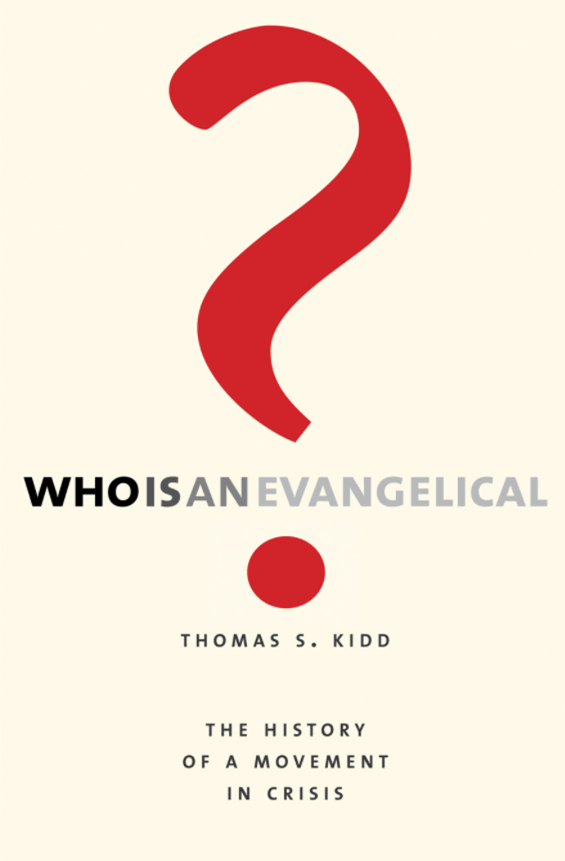
Who Is an Evangelical?: A Review

When my professor said, he did not understand Henry David’s Thoreau’s book, Walden, my shoulders relaxed. Moments earlier, he had criticized my paper on Walden for having failed to grasp the point of Thoreau’s recounting of ants, birds, and rainstorms. The professor of literature then went on to say, he could not help me improve my essay because Thoreau had stumped him as well. According to my literature professor, Thoreau was so unique that he defied categorization.

The same could be said of the term evangelical. Though the word remains tied to the “born again” concept, no one has been able to standardize the content, belief, or practices of those who march under the evangelical banner. According to a 2020 Lifeway study, 26% of evangelicals deny the divinity of Jesus and 42% believe all religions lead to God. Evangelicals possess a wide array of theological, sexual, and political views that often conflict with their evangelical neighbors.

In his book, Who is and Evangelical: The History of A Movement in Crisis, historian and Baylor University professor, Thomas Kidd, steps into this quagmire, seeking to define the seemingly undefinable. He writes, “Evangelicals are born-again Protestants who cherish the Bible as the Word of God and who emphasize a personal relationship with Jesus Christ through the Holy Spirit (4).” Sadly even as the ink dries on the pages of this 2019 volume, this definition has already begun to dissolve into ill-defined gray matter. In the before mentioned 2020 Lifeway study, only 32% of self-identified evangelicals believed the Bible was true and only 49% of the respondents affirmed the need for the Holy Spirit to give new birth. The new birth, evangelical language of Whitefield and the pietist which emphasized the importance of the Holy Spirit has not aged well, making the movement which transcends both denominational and sociological definitions that much harder to define.

Who is An Evangelical?

Despite the book’s title, Kidd appears comfortable with the ameba like nature of the evangelical movement. As Kidd tracks the development of evangelicalism which begins with George Whitefield and ends with Donald Trump, he chronicles a movement that has been forever unsettled. Evangelicals embraced African Americans, Hispanics, and female converts while simultaneously advocating for slavery, segregation, and restrictive male headship. According to Kidd, the movement has been shaped by a never-ending onslaught of small and large conflicts.

But in 1951 at the behest of Billy Graham, evangelism entered a new and a defining crisis. That year Graham asked the nominal religious and non-evangelical General Dwight Eisenhower to run for president. By supporting Eisenhower and eventually Nixon, Kidd believes Graham transformed evangelism from a movement of spiritual conversion into an organization that promoted the civil religion of spiritual patriotism. From that point on, Kidd claimed white evangelicals egged on by the secular media would confuse, “political power and access to Republican leaders with the advancement of God’s kingdom (93).” This blending of faith and politics benefited the Republican party far more than it advanced the cause of Christ. But instead of abandoning the party and calling a spade a spade, Kidd reports that 81% of white evangelicals doubled down on their commitment to political power and voted for President Donald Trump. By supporting a man whose life contradicted the values of the gospel, evangelicals revealed that their movement was now more politically than spiritually minded.

At this juncture, Kidd’s thesis becomes clear. He writes not so much to define the indefinable but to call the ameba of evangelism to return to the pond of theology. Kidd laments the notion shared by some, “that political behavior is what makes an evangelical and evangelical (151).” He goes on to write, “Partisan politics have come and gone…But conversion, devotion to an infallible Bible, and God’s discernable presence are what make an evangelical and evangelical (156).” In other words, evangelicals should first and foremost be born again believers instead of political activists.

Analysis

I concur with Kidd’s overarching analysis, appreciating his ability to deal with hundreds of years of history in the span of 156 pages. But I also think the conciseness of the volume stunted the development of his argument. Though Kidd ties evangelicals to the Holy Spirit, he does not tease out how an evangelical’s understanding of the Holy Spirit shapes that soul’s understanding of scripture which in-turn shapes the evangelical’s understanding cultural engagement. I’m curious to know if Whitefield’s, Graham’s, and A.W Criswell’s accommodation to worldly norms was spawned by a spiritism that allowed them to negate the teaching of the Scriptures. In other words, did these men misstep because they were following their impression of the Word or the Spirit?

Lastly, I wish Kidd had interacted more with the works of his historical mentor George Marsden. Though Kidd locates the downfall of evangelicalism in the 1950’s, he does not intently interact with the patriotism of the World War 1 era that transformed how many conservative churches viewed politics. Since Kidd locates the start of evangelicalism in the 1700’s, he should have allocated more space to the Woodrow Wilson era.

Final Thoughts

I think at the end of the day, Kidd would agree that no one can finally say who is an evangelical. But he also believes that the message of evangelicalism can be historically defined as a “message of conversion and eternal salvation, not partisan politics (10).” Though I do not agree with all of Kidd’s analysis, I believe his attempt to return the evangelical ameba to the pond of theology is needed. May we all swim in the waters of spiritual reflection.

The Story of the Story: A Review of the Boys in The Boat

Poughkeepsie. Most sports fans have never heard of this word that once filled the sports pages of the major newspapers. Those industrious enough to do a quick Google search of the term will discover a short definition of the word, a map, and a Wikipedia page that contains a few paragraphs about a sleepy town at the edge of the Hudson River. The amazing sports history tied to this term has almost completely faded from the American consciousness.

A Quick Overview

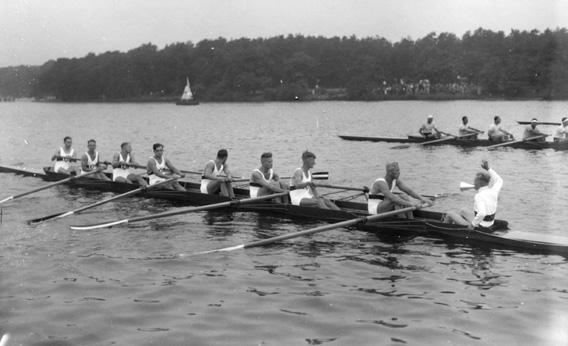
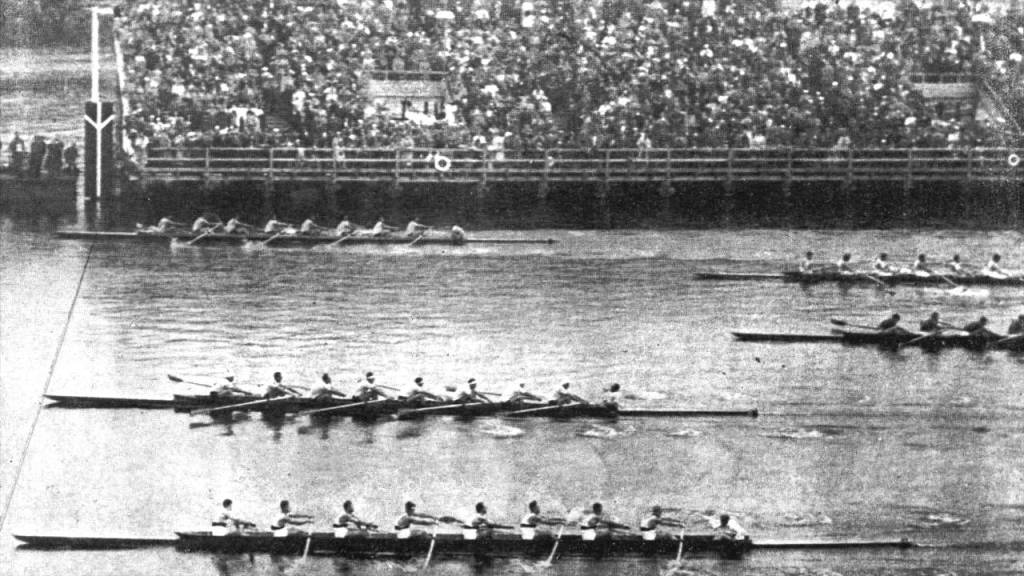
In all honesty, I too knew nothing of the word until I discovered the book, The Boys in the Boat, written by Daniel James Brown. In the span of 403 pages, Brown introduces his readers to the Poughkeepsie regatta and to the western college boys who overcame a world of adversity to best the Ivy League rowing crews at Poughkeepsie before securing Olympic gold in Berlin. I commend the author for rediscovering and then retelling this heroic tale of fortitude and perseverance that was accomplished by Joe Rantz, Roger Morris, and seven other determine, college students. As the pages turn, Brown places the reader on the edges of the Lake Washington, the Poughkeepsie and of the Grunau as he recounts the Washington University’s team’s various training exercises and multiple victories. Brown’s vivid details allow the reader to feel the boys’ powerful strokes as their racing shell, the Husky Clipper, glides past its competitors boats one seat at a time. Brown’s fulfills his mission to tell the narrative of the boys in the boat who made the 1936 Olympics. It is a story well worth remembering.

The Story of the Story

Though the book was phenomenal, I found the need for the book to be as thought provoking as the story printed on its pages. 

As Brown notes, rowing has not always been an obscure pastime. The author reminds us that, “In the 1930s and 1920s, collegiate crew was wildly popular, often ranking right up there with baseball and collegiate football in the amount of press it received and the crowds it drew.” In 1939, 125,000 fans came to watch the Poughkeepsie regatta. Radio listenership for the major rowing races came to rival the Kentucky Derby, the Rose Bowl, and the World Series. Kids even swapped trading cards of their favorite crews.

What exactly happened to the sport of collegiate rowing pushes beyond the bounds of this book. But its modern obscurity remains a fact. Where it not so, this book would not be necessary. The author recounts in the prologue how Joe Rantz’s gold medal had gone missing only to be discovered years later in a squirrel’s nest tucked away behind a wall. Picking up on the anecdote, Brown writes, “it occurred to me that Joe’s story like the medal, had been squirreled away out of sight for too long.” I am thankful that Brown was able to retrieve the story of the Husky Clipper.

Fame Does Not Last

But the fact that Joe and his boat could almost disappear from the American, public consciousness reveals that the philosopher Albert Camus was on to something. Our earthly legacy does depend a great deal on those who survive them. If one generation forgets us, our story can be lost from the halls of history forever. If a team of world-renowned fame can almost completely disappear from the modern consciousness, most of us average Joe’s and bland Betty’s face even worse odds. To quote the wise king Solomon who was reflective in his own right, “the dead know nothing, and they have no more reward, for the memory of them is forgotten (Ecc. 9:5).” If you doubt Solomon, I challenge you to recall the name of your grandmother’s grandmother without referencing your genealogy. How did that go? Don’t feel bad, I can’t do it either. We can all be easily forgotten. To quote Solomon again, “a living dog is better than a dead lion (Ecc 9:4).”

To his credit Joe Rantz was happy to be forgotten. The man who was content to let a squirrel steal his gold medal while he hauled logs down a mountain lived for much more than the fame of the moment. He enjoyed life with his bride and his children whom he loved deeply as evidence by their ability to share Joe’s various stories with Brown. To some degree, I think Joe Rantz understood that life was more than sports fame which can be lost far easier than it can be won.

Solomon also understood this principle, declaring most things to be vanity except the fear of the Lord. The story of Joe’s story reminds us all of the importance of heeding Ecclesiastes 9:13 which offers this overview of human life, “Fear God and keep his commandments, for this is the whole duty of man.” Sports Fame is fleeting. The Fear of the Lord lasts forever. Choose wisely.

Final Thoughts

The story of Joe Rantz and the boys in the boat could easily be one of the best sports stories of all time. Brown should be commended for having preserved this captivating tale for yet another generation of readers. But I find the epistemological meaning found within the story of the story to be of even greater value. To stand atop the platform of eternity, men and women must do more than strain for earthly gold. To achieve that which cannot be destroyed by rust or faulty memories, men and women must heed the wisdom of Solomon and pursue righteousness, trusting God to care for the rest.

In other words, don’t waste your life pursuing that which can be stolen by a squirrel.