Beyond the Numbers: A Biblical, Baptist Framework for Evaluating SBC Presidential Candidates

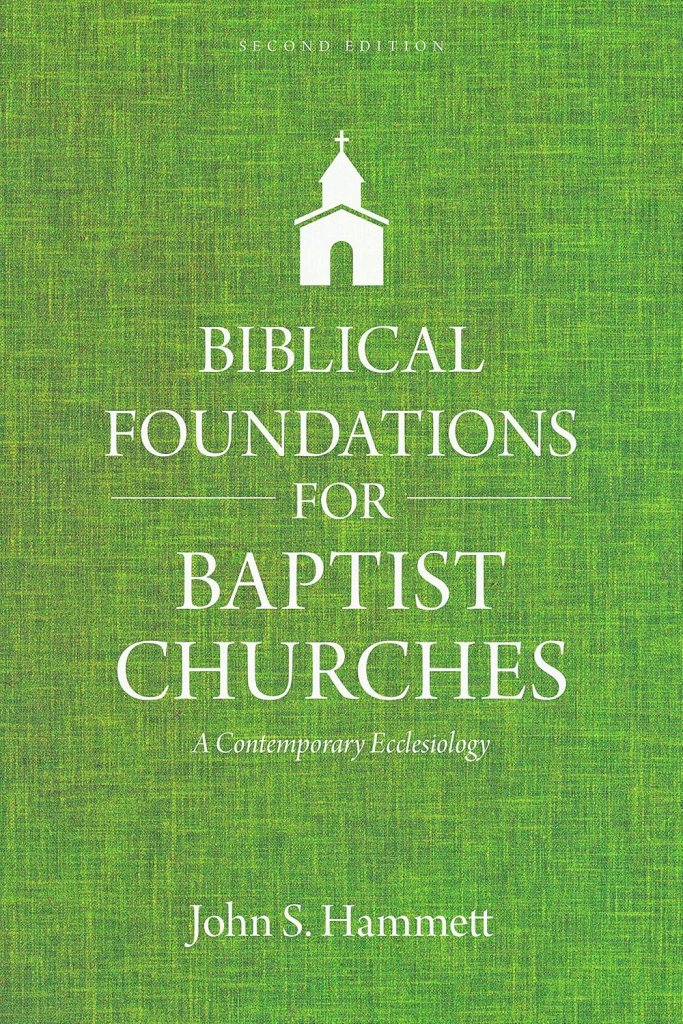
The conversation around what qualifies a man to lead the Southern Baptist Convention (SBC) needs to expand beyond the pragmatic consideration of church growth metrics. To discern whether a man is qualified to lead the SBC, messengers should evaluate his faithfulness in pastoring his local church well, looking at the four elder responsibilities outlines in Dr. John Hammett’s book Biblical Foundations for Baptist Churches: preaching, pastoral ministry, oversight/leadership, and character. In other words, those who aspire to lead the convention well should show the messengers that they pastor well.

Where the Discussion Has Been

For the last few decades, the messengers to the SBC have placed great value on how much a candidate’s church gives to the cooperative program (CP) and on how many people his church baptized. Consequently, the candidate who led his church to give $500,000 to CP and to baptize 300 people is deemed more faithful than the pastor who led his church to give $5,000 to CP and baptize 3 people. Though messengers will at times judge men on percentages instead of gross numbers, allowing for variation in congregational size, the basic principle remains. Faithfulness has been measured numerically.

A Better Way

Such measurements arise from the convention’s rightful focus on missions. Giving and growth stats do reveal something about a man’s ability to exercise oversight as an elder and pastor. But they do not reflect the full scope of a pastor’s leadership or reveal how he will respond to the theological challenges that the convention and its president will face. To gain that insight, messengers must look beyond the giving and baptism stats and burrow into their Baptist roots. They must examine the man’s preaching, pastoral ministry, oversight/leadership, and character.

Preaching

Since the well being of every local church and the convention depends on its obedience to the Scriptures, messengers should acquaint themselves with a candidate’s preaching ministry. Dr. Hammett writes, “It is primarily by the means of his preaching and teaching that the elder exerts the influence of his leadership in the congregation.” If messengers want to know how a man will lead the convention, they should listen to some of the president’s sermons. Podcasters and the members of the evangelical press, and pastors at round tables should ask questions that draw out the candidate’s view of preaching. Is he an expository preacher? Why or why not? How does he go about preparing sermons? Does he see men and women responding to the preaching of the gospel in his church? How many people are being baptized?
And since the ordinances or sacraments support the proclamation of the gospel acting as a visual, corporate sermon, messengers should be curious about the man’s practice of the sacraments. Does he believe in spontaneous baptism? Why or why not? Does he practice open communion? Why or why not? Moreover, if podcasters, members of the evangelical press, or messengers find questionable teaching in his sermons, they should share their findings with the candidate and give him opportunities to clarify. The messengers should familiarize themselves with a presidential candidate’s preaching ministry.

Pastoral Ministry

Messengers should try to understand the man’s pastoral ministry. As Hammett notes, pastors are called, “to protect the sheep (163).” Through public teaching and private counsel, they should show their congregations how to identify sin, repent of sin, and how to counsel and help those trapped in sin. They also must guard their local congregation from theological error. As Dr. Albert Mohler notes, “Error must be confronted, heresy must be opposed, and false teaching must be corrected.

To discern the candidate’s practice of pastoral ministry, podcasters, the evangelical press, and messengers should ask the candidate about his counseling practices and about how they have gone about confronting theological error in their churches. Do they believe in biblical counseling or more integrated approaches, and why? How do you facilitate discipleship of your members?

This category also leads into questions about the candidate’s practice of church discipline. As Southern Baptist church father, J.L. Dagg noted, “When discipline leaves a church, Christ goes with it.” Does the pastor seeking to lead the SBC lead his church to discipline men and women who refuse to repent of their sins or their theological error? And if so, what sins and errors and how? Does the Baptist Faith and Message shape his pastoral ministry? What theological and practically errors does the SBC face and how would you address them?

Oversight and Leadership

The pastor is called to give “overall administrative oversight and leadership to the church (164).” Or to quote the Baptist Church Father Edward T. Hiscox on pastors, “Their duties and services have mainly reference to the spiritual interests of the body, though they properly have the oversight of all its concerns.” At this point, questions about a candidate’s church budget become relevant. How much does his church give to the cooperative program and why? How does he lead his church to maximize its budget for kingdom expansion?

Questions about his church’s worship services and leadership structure also prove relevant at this juncture. Does his church have multiple services? Why or why not? What does his church’s leadership look like? Does he have elders, a deacon board, or a leadership council and why? How does his church go about selecting leaders? Does he believe that women can be elders or pastors or functionally serve in that role?

Character

Hammett notes that the pastor is called to “serve as an example to the flock (1 Peter 5:3).” As Benjamin Keach noted in 1697, a pastor was to show himself “a good Example in Conversation, Charity, Faith, and Purity.” Any man who desires to lead the SBC should possess a character that is above reproach. Those who do not should not be leading their local church much less the convention.

Podcasters, the evangelical press, and the messengers should ask the candidates if their lives are above reproach. They should work through the lists of pastoral qualification found in Titus 1 and 1 Timothy 3. Do you manage your family well? How do you go about caring for your wife and children? Are you self-controlled?

These questions should not be asked from a heart of accusation but from a heart of affirmation. Questions that dig into a candidate’s life should reveal diamonds of faithfulness that encourage the messengers regardless of their tribal affiliations. If such questions uncover coal, the fault lies not so much with the one asking the questions as with the one answering them.

Final Thoughts

I am calling for an expansion of the dialogue around those nominated to be the next president of the SBC because I long to shift the debate over the SBC’s leadership from the squishy edges of pragmatic, convention politics to the hard edges of the biblical truth. I suspect questions about preaching, pastoral care, oversight, and character will reveal far more about how someone will lead the convention than giving metrics, or one’s SBC tenure, and thoughts renewal strategies. I long to see men elected to SBC office not because they have the right pedigree or politics but because their churchmanship proves they are competent to lead the SBC. In short, I want to see men elected because they faithfully preach the gospel, practice biblical pastoral ministry, give godly oversight, and display righteous character.

The Best and Worst of Times: Thoughts on the 2025 Annual Meeting

Despite its overuse, I cannot help but once again trod out Charles Dicken’s line to describe my time at the 2025 Annual Meeting (SBC Convention). “It was the best of times, it was the worst of times.”

The Best of Times

With respect to renewed friendships and the general tenor of the platform, the 2025 Convention was the best of times. The convention facilitated reunions with faithful brothers who played basketball with me during my MDiv days at Southern Seminary and who pushed through mounds of books with me as we worked on our PhD’s at Midwestern Seminary. I rejoiced to see my brothers and sisters steadfastly advancing the gospel through their homes, local churches, and seminaries.

Moreover, the 9Marks at Nine forums, and the Midwestern Seminary lunches refreshed and encouraged my heart. In addition to offering insights into how messengers should think about the SBC’s financial struggles, men such as Dr. Mohler, Dr. Allen, Dr. Leeman, Dr. Akin, and Dr. Dever steadfastly stood for the gospel as they called for the SBC to adopt more Scriptural mission’s strategies, to recognize the need for doctrinal fidelity, and to pass the Law/Sanchez amendment which affirms that the office of pastor is restricted to qualified men. Similarly, Dr. Mark Dever should be commended for leading the attendees at the 9Marks at Nine events to loudly praise the Lord through the singing of hymns. I enjoyed circling about the 9Marks and the Seminary booths.  

Good things also occurred on the platform.  Dr. Andrew Walker of Southern Seminary graciously and yet resolutely led the convention to adopt a “a very conservative slate of resolutions,” These resolutions affirmed the moral evils and dangers of chemical abortion pills; the need to affirm God’s design for gender, marriage, and the family; the need to ban pornography; and, the harmful and predatory nature of sports betting. Throughout the debates leading up to the passage of these resolutions by almost universal assent, Dr. Walker listened intently to the various amendments put forward by the messengers. He responded graciously to all their concerns, rejecting those amendments that would have weakened the resolutions and accepting the one that strengthened the resolution on sexuality. The interactions between Dr. Walker and the messengers (as well as those between President Clint Pressley – who was elected to a second term as SBC President – and the messengers) displayed the very best of SBC polity: leaders determined to lead the convention yet open to conversation with and biblical correction from the floor. It was the best of times!

But while the platform accomplished much good, it also brought about harm…the worst of times.

The Worst of Times

With the Law/Sanchez Amendment speeding towards a vote, Dr. Jeff Iorg (President of the Executive Committee) walked to the convention microphone at its most electric moment. But instead of calling the messengers to submit their consciences and their votes to the clear teaching of Scripture, Dr. Iorg told them to fear lawsuits. He encouraged them to shy away from the implications of their Scripture-infused doctrinal statement . He claimed that such fidelity to truth would lead to lawsuits that could further drain the Executive Committee’s depleted budget. Dr. Iorg’s statement proved as monumental as it was erroneous.  

To begin with, his argument misconstrued the SBC’s legal standing. The SBC can no more be sued for limiting the office of pastor to qualified men than it can be sued for affirming the practice of believers’ baptism. Constitutional lawyer and ERLC Fellow Mathew Martens’ bluntly said of Dr. Iorg’s argument, “It’s hard to overstate how moronic such a claim is.”

Moreover, Dr. Iorg’s argument opposes Jesus’ claim that the persecution of one’s faith is a sign of blessing. Jesus says: “Blessed are you when others revile you and persecute you and utter all kinds of evil against you falsely on my account. Rejoice and be glad, for your reward is great in heaven, for so they persecuted the prophets who were before you (Rev. 5:11-12).” Though no Christian should long for persecution, every Christian should recognize that all forms of persecution (even lawsuits) are not something to be avoided through doctrinal compromise but welcomed as a signs of saving faith.  To quote Psalm 119:51: “The insolent utterly deride me, but I do not turn away from your law.”

Secondly and more importantly, Dr. Iorg’s claim proves theologically erroneous and destructive. Denominations and churches that base their doctrine upon the approval of their secular culture will increasingly find themselves at odds with the totality of Scripture. The culture surrounding the SBC that has turned some SBC churches against the Baptist Faith and Message 2000 will not retreat once the SBC welcomes women into their pulpits. The culture will in short order pressure SBC churches to abandon their commitment to the doctrine of biblical inerrancy, the doctrine of the exclusivity of Christ, the doctrine that marriage is limited to men and women, and any other doctrine the culture deems problematic. Once a denomination begins down the slippery slope of cultural appeasement, it will be almost impossible to break its fall.

Instead of listening to the messengers whose impulse for biblical fidelity led them to bring the Law/Sanchez Amendment to the floor for a vote, Dr. Iorg opposed them and opposed them in such a way that he placed himself not only at odds with messengers but with the Scriptures. 

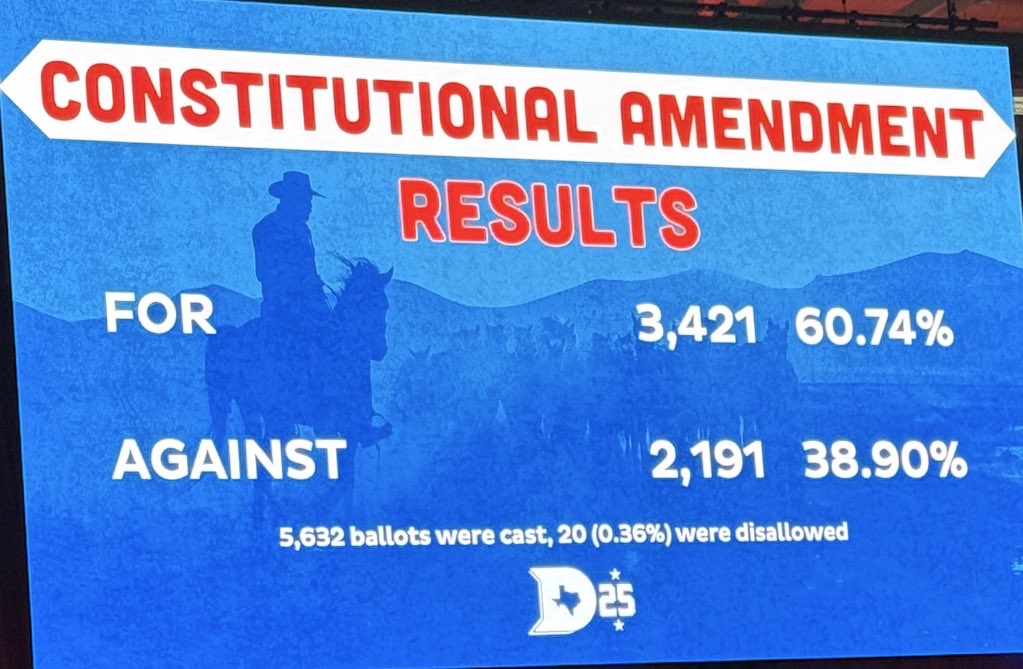
In the end, the Law/Sanchez Amendment fell short of the super majority (66%) needed to pass. Only 60% of the messengers voted for it. Though the influence of Dr. Iorg’s two-and-a-half-minute speech upon the outcome of the vote was ultimately unmeasurable, I still believe it influenced the vote. Dr. Iorg won the day, and the majority of messengers lost. It was the worst of times.

And The Next Time?

Though I and many other biblically minded Southern Baptist mourn the outcome of the Law/Sanchez Amendment vote, I do not believe the 2025 Convention marks the end of the SBC or even the beginning of its end. In short, I am still bullish on the SBC’s future.

As long as the conservatives keep their 60% majority, they can control the SBC presidency and the appointments to the various SBC boards, including the Executive Committee. Though the cleansing of the SBC’s roles (so to speak) will take time, the conservatives can still stop and eventually repeal the advances of this next generation of moderates and liberals who champion numbers and cultural ideologies instead of the more common errors of traditional theological liberalism.

Now is not the time for conservatives and reform mined Baptist to retreat.  Now is the time to for us to rally around men such as Dr. Lambert, Dr. Leeman, Dr. Burke, Dr. Mohler and Dr. Allen as they fight to keep the SBC moored to the Scriptures. In other words, now is the time to book our flights to 2026 convention in Orlando.  

Renewed Congregationalism: A Cure for What Ails the SBC

To reverse the decline of the Southern Baptist Convention (SBC), I believe the platform (the leaders of the SBC) needs to rediscover the goodness of congregational piety.

Of Messengers and Leaders

To date, many of the SBC’s leaders seem to be distrustful and dismissive of the messengers who elected them or perhaps more accurately stated they distrust the messengers who elected the committee members who elected them.

The President of the SBC’s Executive Committee which runs the convention when it’s not in session, Jeff Iorg, recently blamed the decline in Cooperative Program giving and the “reshuffling of sectarian loyalties in the SBC” on the messengers. He laments that the messengers have been taken captive by the “fracturing influence of expressive individualism.” Or as Iorg notes elsewhere, they have fallen prey to “Our cultural proclivity for tribalism and sectarianism rooted in the sins of selfishness and self-promotion.” He then calls the messengers to return to their Baptist roots and embrace his vision for “messy cooperation.” He writes, “Part of doing this successfully is tolerating considerable diversity in our movement – doctrinal, methodological, strategic, and practical.”

And while readers might assume that Iorg thinks messiness would be confined within the doctrinal boundaries of the Baptist Faith and Message 2000, Iorg’s actions indicate the opposite. Over the last few years, he (as well as other SBC leaders such as Kevin Ezell, the President of the North American Mission Board – NAMB) worked to defeat the Law Amendment which sought to strengthen the long-held Baptist belief that the office of pastor was reserved for qualified men. Iorg writes, “Let’s keep debating the issue of gender leadership roles in churches with the goal of persuading churches to change their position or practices rather than removing them from the SBC.” In other words, he invites churches to openly debate elements of the SBC’s doctrinal statement. Despite his embrace of doctrinal confusion, Iorg still blames the messengers for the state of the SBC. He calls them to embrace his undefined vision of messy cooperation or else be guilty of the sin of expressive individualism.

Similarly, a letter written in the defense the Ethics and Liberty Commission (ERLC) by ten former SBC presidents calls on the messengers to abide by the will of the platform and not to divisively vote for the disbandment of the ERLC. The presidents admit that the ERLC (the political wing of the SBC) lacks a clear mission. Still, the letter goes on to proclaim that the undefine mission of the ERLC is still “an important mission and should be kept in place.” The presidents then ask the messengers to trust that the ERLC’s trustees and its president will get this undefined mission right. Recall this is the same organization that has worked with George Soros funded foundations, opposed the abolition of abortion, and whose executive board recently fired its president only to then reinstate said president and force its chairman of the board to resign. Nonetheless, the presidents ask messengers to trust them, embrace the ERLC, and avoid the sin of being divisive.  

The Nature of Trust

While the leaders of the SBC should invite the messengers to trust them, the basis of that trust comes not from the possession of that office but from the faithful stewardship of that office in accordance with Scripture. As Jonathan Leeman notes, “our submission is never finally owed to other people. It’s exclusively and uniquely owed to God.” To quote the apostle Paul, “Be imitators of me, as I am of Christ (1 Cor 11:1).” In other words, the messengers should trust the leaders of the SBC entities in much the same way they trust their pastors and elders.

Trust & the Congregation

When Christians join a local congregation, they should anticipate that their elder board (or in some cases their deacon board) will hold itself to the teaching of Scripture, correcting one another’s sins and asking the congregation to only vote on wise motions and nominations. As Paul tells Titus, “For an overseer, as God’s steward, must be above reproach (Ti. 1:7).” If church members disagree with their elders over matters lacking biblical warrant, the members should usually submit to their elders, understanding that the “bar should be pretty high before disobeying an elder.”

Still, the elders of that church should recognize that the congregation’s trust is not ultimately given but won through preaching truth, calling for wise votes that align with Scripture or its principles, and through abandoning error and those programs that would harm the church. In other words, elders should invite the congregation to vet their nominations of church officers as well as their other motions to ensure that the elders’ vision for the church wisely aligns with the Scriptures. To quote Baptist Father J.L. Dagg, “The only rule which they [the pastors] have a right to apply is that of God’s word; and the only obedience which they have a right to exact, is voluntary.”

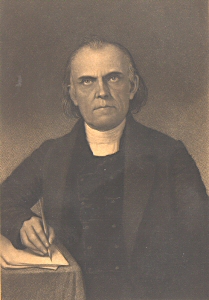
J.L. Dagg
J.L. Dagg

When elders violate the Scriptures or enact unwise policies that harm the church and the bar for disobedience is reached, the church’s members should speak up. Leeman writes, “Good loyalty says, “I’m committed to you and your successes as a leader and that means I cannot follow you into folly or unrighteousness.” This speaking up is not a defect of congregationalism but its glory. As Dagg notes the best way to prevent a church from falling into error is to have congregations “well instructed in the truth.” Since even the best elders and elder boards can err, the congregation must be prepared to stand for truth and wisdom even if their elders do not.

To quote Leeman again, “the final judicial court of appeal is the whole congregation.” And when the whole congregation speaks on behalf of the Lord and rejects the elders’ poor leadership, the elders should listen, repent, and correct their course. Like King David who at the behest of his troops refrained from battling Absalom, elders should heed the biblical wisdom of their congregation (2 Sam 18:2-4), recognizing that the Holy Spirit resides in the pew just as assuredly as he resides in the elder board.  

Congregationalism in Action

Caleb Morell’s book A Light on the Hill helpfully demonstrates the preservative power of congregationalism in the face of erring leadership. At the beginning of the twentieth century, Agnes Shankle, a long time Sunday school teacher a Capitol Hill Baptist Church (CHBC), raised concerns about her church’s pulpit committee’s recommendation to install a moderate as the church’s next pastor. After she spoke, others joined her opposition. United in their defense of the truth, the congregation of CHBC defeated their leaders’ recommendation and thereby saved their church from theological ruin. CHBC continues “as a Bible-believing, Gospel-preaching church” in-part because a faithful member challenged her leaders’ unbiblical and unwise recommendation.  

Trust and the SBC

SBC Leadership Flow Chart

Similarly, the willingness of the messengers to challenge the unbiblical and unwise actions of their leaders is neither a defect nor a rejection of Baptist polity but one of its truest expressions. The SBC entity heads should listen to their boards as pastors listen to their fellow elders or deacons. Moreover, there is a good deal to be said for bringing about reform through the SBC trustee process (the process by which messengers elect the SBC President who nominates other men and women who upon their election by the messengers to the nominating committee nominate other men and women who upon their election to the various SBC boards then elect SBC entity presidents). But that level of accountability does not absolve the leaders of the SBC from being accountable to the messengers. The biblical concerns of the messengers should be heard and not dismissed as (to quote Vance Pittman, the President of the Send Network), “100% BS.” Moreover, no number of Baptist Press editorials in support of the platform will convince messengers to trust those leaders who have led the executive committee into financial ruin, who have muddled the witness of the SBC to the broader culture, and who have undermined the theological integrity of the SBC.

The Path Forward

If the trajectory of the convention remains unchanged, I suspect there will be more division…more need for groups like The Baptist Review, The Center for Baptist Leadership, and The Association of Churches for Missions and Evangelism (ACME) to form and more churches withdrawing from the convention. To quote Leeman, “If one belongs to a church where he cannot trust the elders to make biblical decisions, he should find another church.”

And in such cases, the fault will lie not with the messengers nor with expressive individualism but with the SBC’s leadership…with the platform. As Martyn Lloyd-Jones aptly says of the Reformation, the cause of the church’s division at that time (and I would argue that of the SBC today) was not the reformers like Luther but the “state of the Roman Church that was the tragedy.” Speaking of voluntary Baptist associations, Baptist father Edward T. Hoscox concurs. He writes that the only option left for those who disagree with the trajectory of their association is to “refuse to affiliate, and withdraw.” In other words, messengers who do not trust the platform should not and will not forever remain with the platform.

If the SBC is to reverse its decline, its leaders must win the trust of the messengers and once again embrace congregationalism. They must hear the concerns of the Agnes Shankle’s in their midst and allow the wisdom of the Scriptures to triumph.

At the 2025 Annual Meeting, I encourage the stage to abandon its criticism of the messengers and to welcome their biblical corrections. I encourage the stage to join with the messengers and to help us pass the Law Amendment, the motions for increased transparency, and any other reform that will better align the SBC with the Scriptures. In short, I encourage the platform to renew its commitment to congregationalism.