Martyn Lloyd-Jones, April Witkowski & the Myth of the Wasted Ministry

To know something of Martyn Lloyd-Jones is to know that the man yearned for revival. In addition to the sermon series which later became the book Revival, Lloyd-Jones devoted countless other sermons, lectures, and letters to the topic of widespread, simultaneous conversion. More than anything else in his life, he longed to see Wales if not the whole evangelical church experience something akin to what had happened during the days of John Wesley or Martin Luther.

Why Revival

The Doctor’s emphasis upon revival in-part grew out of his understanding of spiritual baptism. In addition to the slow, steady growth associated with the normal means of Christian sanctification, the Welsh pastor taught that God would at times fill a local church with a sweet and special awareness of his spirit which would result in the church members’ exponential growth. This moment of growth would then become the foundation needed for another nationwide revival.

Somewhat ironically, I believe Lloyd-Jones helped to split the British Evangelical movement in 1966 because he so longed to lay the groundwork for such a Spiritual baptism that he pressed his Appeal for the formation of a new doctrinally robust association of evangelical churches with an intense zeal that produced more confusion than action. Thus, his very appropriate call to reform the evangelical church around the essential doctrines of the gospel went mostly unheeded. Sensing that no revival was coming in the years that followed 1966, some Lloyd-Jones’s sermons began to take on a slightly negative undertone. Though forever confident in the return of Christ, he no longer spoke of the restoration of the West but more of how all forms of democracy would eventually end in the tyranny of the French revolution. In one sense, I think Lloyd-Jones went to his grave discouraged for God had not seen fit to bring about a revival in his lifetime.

A Testimony of Faithfulness

Though a national revival never came, Lloyd-Jones’s own ministry in London had not proved ineffective. An old family friend of the Doctor told me the other day that he thought one of the greatest tragedies of Lloyd-Jones’s life was that he so longed for national revival that he missed the extraordinary work that God was doing through Lloyd-Jones at Westminster Chapel. With God’s help, the Doctor facilitated thousands of small revivals all throughout England, Wales, and the world. Thousands if not millions of people came to faith either directly through his preaching or indirectly through his writings and through the ministry of the numerous pastors, missionaries, and church members that he had discipled. I write today of Lloyd-Jones because of his very ordinary ministry at Westminster Chapel produced extraordinary fruit. Lloyd-Jones may have lacked a Reformation, but he did not lack a Wittenberg. The fire of revival burned brightly in the pulpit of Westminster Chapel.

Don’t Discount Today

The fact that Lloyd-Jones seemingly missed the glories of the ordinary forest in his unceasing search for that giant, evangelical redwood of revival should serve as a caution to all of us still in ministry – whether that be professionally or otherwise. The temptation to negate or overlook the glories of today because we are so focused on the dreams of what could be tomorrow did not pass with the end of the last century. How many pastors feel discouraged because their church has yet to cross the two-hundred-person threshold? How many singles discount their meaningful ministry to the senior adults in their church and to the young mothers with those crazy two-year-olds because they are still single and are not engaged in the discipling that come with marriage and the arrival of their own children? How many godly men and women with a bent towards missions believe their lives a waste because they spend their day evangelizing their neighbors a couple of doors down instead of reaching people hidden behinds miles of brush in the amazon? How many faithful brothers and sisters in the secular workforce believe their life counts for nothing because they have yet to start their own business or to reach that corner office from which they could make a real difference in the world?

April’s Fear

In truth, my late wife struggled with this temptation. As her life came to a close, she lamented one afternoon how her cancer had kept her from fully engaging in those things that she longed to do with me as we began our ministry at my current church such as: teach Sunday School classes, coordinate VBS programs, attend services, go on home visits, and counsel the hurting. She felt her life incomplete and feared that she had held me back. But as I told her that day as the sun filled the space around her blue rocking chair in our bedroom, she had stewarded her life well. Over the past four plus years, she had served as my greatest counselor and confidant. With her, I processed life and Scripture. Her life showed up not so much in our Sunday school curriculum or in those stick craft projects that make kids’ ministry so fun but in the subliminal content of my sermons, in the essence of my counseling, and in my visions for the future. Indeed, when she died one of the places, I grieved her loss the most was my office. Though she only set in those black chairs across from my desk sporadically during the last few years of her life, she still shaped all that happened behind that heavy white door the separates me from the back entryway. Ordinary, faithful ministry has an extraordinary influence.

The Power of the Ordinary

But what was true of my dear bride and Lloyd-Jones proves true of all of us. Our lives today will not be defined by our dreams, hopes, or expectations of what is to come (of what may never come) but will be defined by our faithful execution of the life and ministry God has given us in this moment. If we are faithfully serving God today in accordance with his Word and our calling and gifting, our lives are not a waste but rather the very definition of success. In other words, we should not discount the ordinary means of grace at work now, believing that all is a waste until the arrival of the extraordinary. In this respect, I believe the Lloyd-Jones’s insistence upon spiritual baptism proved unhelpful. The normative experience of the early church was not Pentecost but rather the faithful plodding associated with Paul’s missionary journeys.  Indeed, the most extraordinary thing about most of us is our ordinary faithfulness.

If that revival never occurs, or if that spouse never comes, or if the ticket to oversees ministry never arrives, and if we stay at our jobs for another 20 years, our lives still possess profound value in the Lord’s economy. If we are faithful today, we will in time bear extraordinary fruit. Take heart, friends. Don’t grow weary of today.

Don’t miss the forest in pursuit of your giant red wood.  

What is the Mission of the Local Church?

What should our local church be doing? Is it missions? How about kids’ ministry, choir, youth programs? What do the people of God do when they come together? What is the mission of the Church?

With a nail, a hammer, and a document of 95 thesis, Martin Luther turned the world upside down in 1517 seeking in part to answer the question: “What does a local church do?”. He knew that the local churches of his day exported religious vice and wickedness to the medieval world. The gospel seldom appeared in church, the clergy at all levels lacked biblical knowledge, and the sacraments were twisted into graceless works the little resembled the teachings of Scripture. Luther started out to reform the church seeking to answer the question what does the local church do.

The History

Since 325 A.D, the church has defined itself as the one, holy, catholic, apostolic church. The local church was defined as being a church that submitted to the Bishop Rome, which was made holy by Christ through salvation, that was universally recognizable, and that was founded on the teaching of the apostles which was often interpreted and expanded upon by church officials.

jj-jordan-140710-unsplash.jpgLuther and Reformers redefined these historical terms to better reflect the gospel. The Reformers claimed that the church was one under Christ. All who were saved were saved by Christ to be part of the church. They believed that church should be holy; it should be composed of those who had been redeemed by Christ and who were being sanctified. They agreed to the catholic nature of the church. But they did not believe all churches had to look the same and practice the same liturgy. Rather, they claimed the church was catholic in its timelessness. All true churches in all ages were viewed as being part of the universal church. And they believed the church was apostolic. But the Reformers believed that the apostolic nature of the church should be limited to the teaching of the apostles. Solo Scriptura, Scripture Alone.
The Reformers sought to clearly divide themselves from the Catholic Church by adding two more marks to the definition of the local church. The Reformers said the local church should rightly administer the sacraments and preach the Word.

The Answer

Now back to our question. What does the local church do?

The local church comprised of holy believers who have been united to the universal church by salvation in Christ Jesus preach the Word and administer the sacraments correctly. For a group of believers to be a church, they must preach the Word and practice baptism and the Lord’s Supper.

John Calvin plainly said,

Wherever we see the Word of God purely preached and heard, and sacraments administered according to Christ’s institution, there, it is not to be doubted, a church of God exists.

What about kids’ ministry, Super Youth Sundays, the choir, missions, singing, and prayer? All of those things begin and flow from the preaching of the Word and from the sacraments. You can have church without them. But you cannot have a church apart from the preaching of the Word and apart from the Sacraments.

Paul tells Timothy:

 “Until I come, devote yourself to the public reading of Scripture, to exhortation, to teaching. 14 Do not neglect the gift you have, which was given you by prophecy when the council of elders laid their hands on you. 15 Practice these things, immerse yourself in them, so that all may see your progress. 16 Keep a close watch on yourself and on the teaching. Persist in this, for by so doing you will save both yourself and your hearers (1 Tm 4:13-16). 

Do we want to have a healthy God glorifying church? Do we want to reach young families, encourage the old, and bless the new converts? Then, we preach the Word. Paul tells us we keep a close watch on our doctrine on the truth of the Bible and teach it to others.

What saves people? What makes our church look attractive to lost world? What breathes new life into the exhausted and crumbling congregation? It is the Word of God. The preaching of the Word of God is central to all that we do. The Holy Spirit works through his Word to redeem the lost and to sanctify the redeemed.

Christ is the Word become flesh.

John 1:1-4 states:

 1 In the beginning was the Word, and the Word was with God, and the Word was God. 2 He was in the beginning with God. 3 All things were made through him, and without him was not any thing made that was made. 4 In him was life, and the life was the light of men. 5 The light shines in the darkness, and the darkness has not overcome it.”

To know Christ, to experience him, revive our hearts through his presence, we must preach the Word. As Jesus says in John 17:17, “Sanctify them in truth; your word is truth.”  The church must be dedicated to the proclamation of the Word.

How is the done? The Word is proclaimed and taught through every element of the service. Pastor Mark Dever rightly notes,

Everything teaches, whether you intend it to or not. The songs teach people doctrine and proper affections for God. Your prayers (or lack of them) teach people how to pray themselves. The kinds of prayers you pray or don’t pray) teach people about the important difference between prayers of adoration confession, thanksgiving, and supplication. The way you administer the ordinances teaches people about their meaning and even the very meaning of the Gospel. You preaching teachers people how to study and use the Bible appropriately. Everything from the call to worship to the benediction counts as teaching. Teaching is everything.

Everything the local church does begins and ends with the Word of God. Singing, prayer, and evangelism are all driven by our understanding of the Word of God. The songs that we sing reflect what we believe about the Bible. The prayers that we pray reflect our understanding of God and ourselves. Our passion and methods for reaching the lost are driven by our understanding of what the Bible says about salvation. All the other functions of the local Church can only exist if the Word is fully, accurately, and faithfully preached.  And all the other functions of the church help with the preaching and dissemination of the Word. In short, if we get Sunday morning preaching wrong, we will work in vain to fix our church. The struggling church does not have a discipleship, outreach, or kids’ ministry problem. It has gospel proclamation problem.

Martin Luther notes,

Outwardly he deals with us through the preached Word, or the gospel, and through the visible signs of baptism and the Lord’s Supper. Inwardly, he deals with us through the Holy Spirit and faith. But this is always in such a way and in this order that the outward means must precede the inward means.

If a local church hopes to be filled with the Holy Spirit and wishes the world to be changed by Christ, that assembly of believers must preach the Word.

Any local church that does not preach the Word is not a church. Religious clothing, sacraments, stain glass windows, and the sacraments alone do not make a group of people a local church. Religious minded people can have and do all these things and never preach the gospel. They cease to be a church when they preach a different gospel proclaiming salvation through other names, deeming sins to be acceptable, and demanding good works in the place of grace. Paul writes in Galatians 1:8

“But even if we or an angel from heaven should preach to you a gospel contrary to the one we preached to you, let him be accursed.”

The one true, holy, catholic, apostolic church preaches the one true gospel.

Our Motivation: The Glory of God 

Why do we do this? Why should the church be passionate about preaching the Word?

The local church should be passionate about the Word because Christ is only present where the Word is preached. And we as the people of God can only expand the kingdom of God through the power of Christ. Moses nails this truth on its head in Exodus 33 when he says,

And he said to him, “If your presence will not go with me, do not bring us up from here. 16 For how shall it be known that I have found favor in your sight, I and your people? Is it not in your going with us, so that we are distinct, I and your people, from every other people on the face of the earth?”

What makes the people of God distinct? What makes our local church distinct from every other social group? It is the presence of God via the Holy Spirit who works through the words of God as revealed in the Scriptures. The local church desperately needs God.

When the church fails to value the Word’s of God, God will not be present. And when the church ceases to experience the supernatural presence of God decay sets in. When the church cares more about tradition, cultural acceptance, and political power than about glorifying God, God will leave the church. James McDonald rightfully notes,

God will quickly withdraw His favor where sin is ignored or avoided and difficult people are coddled instead of confronted in love.

The local church should be about the preaching of the Word because she desires to experience the presence and power of God. Apart from Him, the local church can do nothing. And with Him the local church can do everything.

What does the local church do?

The local church preaches the word and rightly performs the sacraments (more on that soon!)

The Amish: America’s Fastest Growing Church?

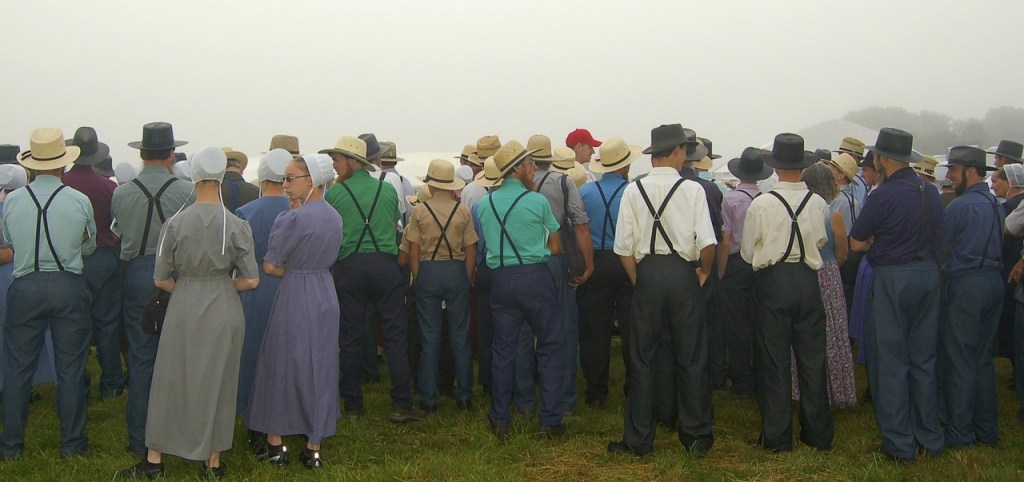
amishWhen we think of happening Christian groups, we typically imagine big church conferences, exciting worship concerts, and authentic community groups meeting in local coffee shops. (And in all fairness some seminary types will even find themselves daydreaming about dudes in skinny jeans, sporting untucked, plaid shirts, and low key, grey sneakers. “Down with the Gaithers up the Lecrae,” they tweet. Given this mindset, the following information will probably blow your mind and the minds of most the people in your church. In fact, you may need to sit down for this.

The fastest growing sector of the evangelical world right now is the Amish. That is correct – our beard sporting, bonnet wearing, and buggy driving brothers and sisters are expanding at a record pace. Over the past five years, the Amish have grown by 18 percent. Between 2015-2016, they started 66 new congregations. They have even reached out to South America, planting communities in both Bolivia and Argentina. During that same time, the number of people that attend Southern Baptist Convention Church (SBC) churches declined by 11 percent.

Despite our well-trained SBC clergy, our smooth programming, and our billion dollar budgets, SBC churches are losing out to their brothers and sisters who churn their own butter. What’s more, the Amish have no major outreach campaigns. They typically struggle to reach out to people outside their villages, making their growth even more perplexing to SBC and other evangelical denominations. There is no Amish equivalent of Rainer on Leadership. Yet since 1992, the Amish have been beating our church growth percentages left and right.

When researchers began studying this phenomenon, they discovered that the growth of the Amish movement had little to do with cold calling evangelism and everything to do with birthrate and education.

The latest birthrate statistics for the SBC estimate that each SBC couple has around 2.1 kids, a number that sits below the replacement level. Once death and other things are factored in, SBC churches would slowly die even if every kid born to SBC parents stayed in the church. And unfortunately they do not. Almost 51 percent of all evangelical kids (including our SBC’ers) will leave the church. Most of those children will not return. In other words for a church to maintain its size, every member (including the single ones) in the church must bring about 1.2 people into the church via birth or evangelism.

(For more information on how birth rates influence church growth click here)

amish-287407_1280The Amish do not have this problem. The average Amish couple has 6.8 kids per family. And 85 percent of their children will choose to remain in the Amish community. When given the chance to freely choose between the modern world and the Amish lifestyle, more than 8 out of 10 Amish children choose to stay. Every Amish couple will add about 5 kids to their local church’s congregation while the average Baptist couple will add about 1. And when the couples die off, the Amish church will have grown by 150 percent and the SBC church will have decreased by 50 percent if birthrate is the only factor.

This numbers show that evangelism is not the major failing of our local SBC and evangelical churches. Our problem has everything to do with our view of children and the family. Churches that do not have members having children will not succeed.

Now, every Christian does not have to embrace the Duggar family lifestyle. Christ is still our ultimate goal and not family size. But, we must begin to embrace pro-family in our churches. Being pro-family goes well past having a catchy kids’ program. We need to celebrate birth. We need to praise parents for having big families instead of chastising them with snide comments. When need to come to the point where we value kids more than traveling, nice homes, and our own tranquility. We need to live as if children are a blessing.

amish-1728517_1280And then, we need to commit to training our kids. We need to organize our families around the Gospel. We need to have intentional times of family worship. We must realize that going to church twice a week or twice a month will not provide our kids with an adequate religious framework. We must realize that the world evangelizes our kids 7 days a week. We must do the same. And we must intentionally find ways to protect our kids from the dangerous doctrines of the world and find ways to train them in righteousness. Commenting on Psalm 1, the pastor Voddie Bauchman says,

We must not allow our children to stand, sit and walk with those who deny biblical truth and morality…We can no longer coast along and ignore biblical truth when deciding where and how to educate our children…Do everything in your power to place your child in an educational environment that supplements and facilitates their discipleship.

The Amish have understood this truth and have applied it. As a result of their faithfulness, most of their children remain in their communities and churches. The Baptist and other evangelicals have not grasped this principles. And now, we are losing over half of our kids to the world around us. The realities cannot be denied.

Now admittedly, the Amish have not gotten everything right. I do not think electricity leads to sin. I also think our churches should be more evangelistic than the typical Amish farmer. But the Amish have realized that family is key. They have functionally realized that children under the age of 18 are the population most open to being evangelized and have literally devoted a large portion of their life to reaching this next generation.. If we want our SBC and evangelical Bible-believing churches to once again flourish, we too must be pro-family and do a better job of training our children in the faith. Are we willing to make the hard choices and to become a little more Amish?