
Airplane Crashes: Lessons in Church Leadership

airplane“I don’t like this,” were First Officer David Hare’s final words. Six brief seconds the later, the Boeing 737 that he and Captain Blair Rutherford were piloting slammed into the side of a hill killing 12 of the 15 people aboard the aircraft. Prior to the crash, Hare made six statements to Rutherford concerning the planes trajectory. Tragically, Rutherford ignored them all.

Captain Rutherford is not alone. Most airplane crashes result from similar circumstances. Almost all of the planes encounter some kind of small mechanical error while their tired crews navigated through bad weather. These circumstance in and of themselves do not doom the aircraft. Everyday, tired crews land planes safely in less than perfect conditions.  Crashes occur because the Captains flying in the doomed aircraft have a large Power Distance Index.

HL7492-Korean-Air-Lines-Boeing-747-400_PlanespottersNet_296887In 1997, Korean Air Flight 801 infamously slammed into the mountains of Guam. Like Captain Rutherford, the Captain of flight 801 refused to listen to the concerns of both his first officer and his flight engineer. Although the first officer and the flight engineer had quickly realized that the plane was in trouble, they were slow to speak up because the Captain’s authority was rarely challenged. When the crew did finally directly challenge the Captain’s piloting, he ignored them because they were after all subordinate and inferior. By the time the Captain realized that he had misjudged their approach, the time for his 747’s salvation had passed. Less than two minutes later, flight 801 barreled into the jungle hillside killing most everyone on board.

After many crash investigations, researchers have discovered that a crew’s leadership style often determines whether they crash or land peacefully unnoticed by the media. Crews with a strict hierarchy are more prone to crash than crews with first officers and flight engineers who were encouraged to challenge a captain’s authority directly.

In much the same way, Christians can determine the future of their church and the children’s ministry by looking at their leaders. All leaders fly through the storms of life. But, leaders who distance themselves from accountability and from their church members during their flight are destined for disaster. Their mountain could be a whole host of things including sexual immorality, drunkenness, pride, or theological error. But, it is coming. To have a healthy church and children’s ministry, pastors and leaders must invite others to speak into their lives.

In Mark 10:42-44, Jesus says,

You know that those who are considered rulers of the Gentiles Lord it over them, and their great ones exercises authority over them. But it shall not be so among you. But whoever would be great among you must be your servant, and whoever who be first among you must be the slave of all.

Christians cannot lead well if they have created a hierarchical structure that prevents people from challenging their authority. To be the servant of all, Christians leaders must being willing to pour coffee and stack chairs. But servant leadership also means that pastors, elders, and directors must be willing to listen to the concerns of those around them. Think about Paul, Peter and the church at Antioch. The early church leaders constantly listened and responded to the concerns of their people They had a low level Power Distance Index. Like Jesus, the early church fathers were approachable and humble. The church today is not captivated by legalism because Paul spoke up and corrected Peter when he started building additions on the the gospel. Christian leaders must continue to model these qualities. If they do not, they will depart from Christ’s example and will slam into failure. As Dietrich Bonhoeffer correctly noted,

He who can no longer listen to his brother will soon be no longer listening to God either… This is the beginning of the death of the spiritual life, and in the end there is nothing left but spiritual chatter and clerical condescension arrayed in pious words”

As the first officers and flight engineers of God, church members also must be willing to speak up and express their concerns when they sense disaster approaching. When members care enough about their pastors to talk to them, the church functions better. As Gabe Lyons said, “Our friendships and personal growth opportunities come when we step into the uncomfortable space of conflict, not when we evade it.”  “Faithful are the wounds of a friend.” (Prov. 27:6a).

Christian leaders are not meant to function alone exhausted by the cares of ministry. They are called to equip others by teaching and modeling the gospel, inviting others to be a part of their life. As they do so and as church members join them in the cockpit of ministry, our churches will experience unprecedented safety and success.

Are you ready to be part of your church’s flight crew? Are you ready to advocate for small Power Distance Index?

5 Things Habits Of Effective Nursery Workers:

nursery-workers1. Listen To Your Leaders:

To be a great servant, we must be a great listener and doer. We must make every effort to listen to our pastor. If he ask us to arrive 15 minutes early, we make every effort to arrive on time. If our nursery director tells us not to pull out the blocks today, we follow her advice and leave the blocks put up. To be a great nursery worker, we must listen to and follow our leader’s directions.

2. Listen to the Parents:

To be a great nursery worker, we must listen to the parents. If they ask us to give junior a bottle at 9:15AM, we should do everything we can to give him the bottle then. If they ask us to get them quickly if their child will not stop crying, we go get them. If they tell us that little Sally will be fine, we let little Sally cry it out until it becomes obvious she needs mom or until her crying become so disruptive that the wellbeing of necessitates her removal. Again, we may not always agree with the parents. But if the child is not being harmed, we need to die to ourselves and our pride and listen to the child’s mom and dad. After all they (and not us) have been charged with caring for the child. We need to respect the parents. We should listen to them.

3. Listen to the Kids

When we come to nursery, we need to arrive with a kid focus; our goal should not be to catchup with the other adults in the room. Our mission should be to learn and to play with the kids in our room. We should talk to them about preschool. Learn about their favorite colors. Play dragons, farm, and restaurant with them. And if they are too small to talk, we should study the babies, seeing what makes them happy or upset. As we learn which babies like the swing and which ones like the bouncy seat, we will be better equipped to care for the children. And as the babies become happier, we demonstrate the love of Christ to both the little people and their parents. We show the onesie wearing souls that we love them. And we show the parents that we care about them enough to keep their kid happy so that they can make it through a sermon.

4. Talk To Your Leaders

After listening well, we should seek to speak well. We should seek to mention concerns and problems to our leaders. For example, our church has restroom signs above our restrooms because a nursery worker noticed that those signs were missing. All the rooms, had nice big signs jutting out from the wall. But the bathrooms did not. By speaking to me, he made our church better. No children’s pastor or nursery director can anticipate or catch every problem. By speaking well and with love, you can make your nursery and your church more welcoming, safe, and friendly. A good worker is willing to address concerns.

5. Talk To The Parents:

When parents come to the door to pick up their child, capture the moment. Tell them something their child did well. Brag about how well the slept or about how well they shared. My wife and I love hearing how our kids did in nursery. All parents do. And as we talk to the parents about their children, we begin to build relationships with them. We begin to lay a foundation from which to share the gospel or from which to talk about church membership. By reaching out to parents with hospitable speech we have a chance to make much of God.
Your Kids Should Read: “The Radical Book For Kids”

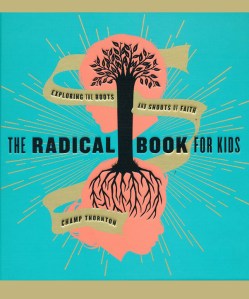
radical-book-for-kidsAre your kids interested in the Christian faith? Do they regularly want to discuss what happens at church? Are they starting to ask the big Why Questions of life? If this is your child, I encourage you to get them a copy of The Radical Book For Kids.

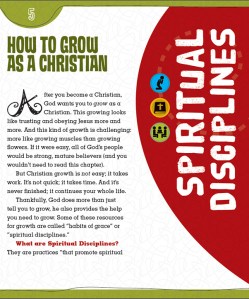
Written by Camp Thorton for children between the ages of 8-14, The Radical Book For Kids tackles 67 important issues in the Christian faith in an immensely fun, highly practical, and beautifully theological fashion. Discussions about how to tie cool knots develop into lessons about original sin and salvation. The 253 colorful pages also cover things like “Fun and Games in Bible Times, The Weapons of the Bible, The Passion Week, Women Who Gave Their Lives for Christ, and How to Make Good Decisions.” Each 2-5 page chapter begins in kid friendly way and ends with biblically precise language. Thow-to-grow-as-a-christianhe book does a wonderful job of explaining complicated truths in both a simplistic and yet fully biblical manner. If your kids love to read. They will love this book.

As a grade schooler and junior higher, I would have loved this book. The book allows kids to explore the theological doctrines, practical methodologies, and important stories that have shaped our faith at their own pace. I would have enjoyed being able to slowly skip around this book as I wrestled with questions about my sin nature, the purpose of the church, and why we follow the Bible. And although I was not a particularly great reader as a kid, the illustrations, diagrams, and artwork would have kept me engaged. I highly encourage all parents to grab a copy of this book. Your kids will benefit from it. And I suspect, you may even benefit from it.

Word Of Caution

This book is not a devotional. For example, chapter 16 focuses on the Hebrew Alphabet. It is a great chapter. I think it is great for kids to understand that the Hebrew language is not radical-book-for-kids-2our language and has its own nuances. How about reading from left to right?

But if chapter 16 is your kids, or your family devotion, you will not be encouraged by the Scriptures.

However, that is not the purpose of the book. While many of the sections do call for radical actions based on obedience to the Scriptures, this book is not a devotional. As Thorton wrote in the introduction, “Parents and Teachers may also find it helpful as a supplement for devotions or discussions.” Please do not make it your main discipleship tool.

The book is more a fun theological textbook for children (But please do not think boring when you think textbook). Though I have many adult theology textbooks on my shelf, I do not use them for my devotions. I encourage all to follow the author’s advice. Use the book to make children, “more curious and more thirsty to know God and the good news of his Word.”

radical-book-for-kids-3And when you or your kids are curious to know more about a doctrine, story, or person mentioned in The Radical Book For Kids,  you can grab the books Thorton mentions in his “more to explore” sections.

Overall, book is an amazing resource filled! I give it 5 out of 5 stars.

I encourage you to get your own copy. Keep discipling your children. Keep teaching your children the Word. Keeping encouraging them to study the Bible on their own. And then hand them a copy of The Radical Book For Kids. Give them this amazing tool that will help them explore their faith even more. And then get ready to have some awesome discussions. Who’s ready to get radical?

Click Here To Purchase Your Copy