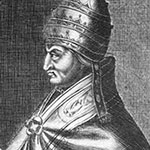
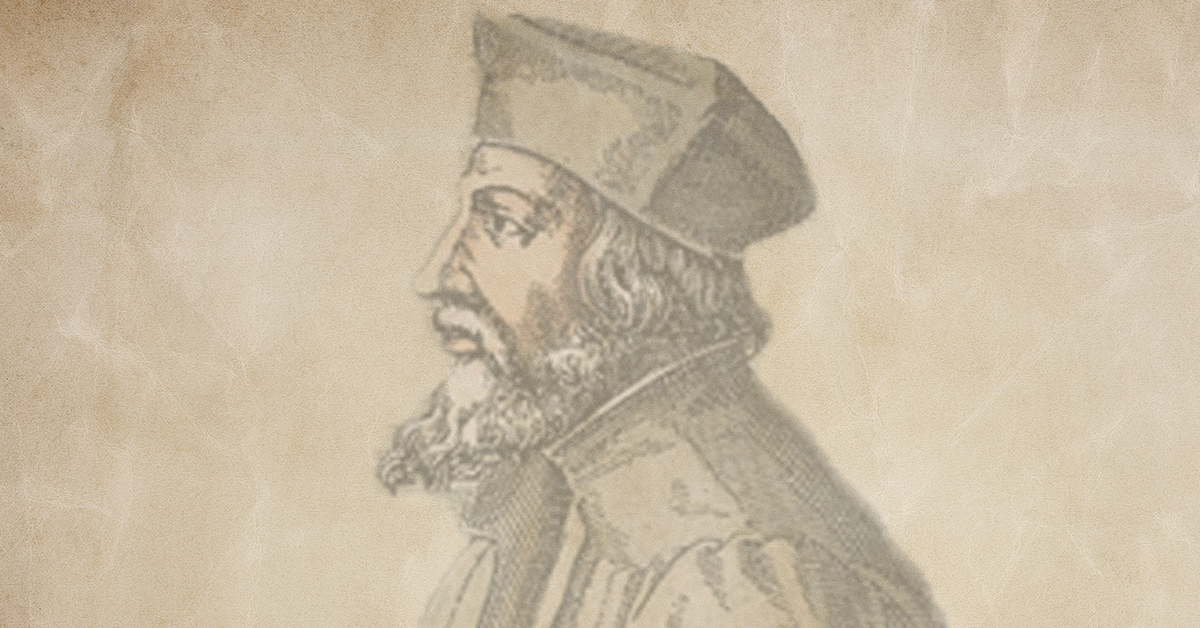
John Knox: The Biblically Bold & Yet Flawed Reformer of Scotland

The booming cannons of the French galleons in the bay below St. Andrews Castle brought John Knox’s first pulpit ministry to a sudden end on July 30, 1547. Though Knox had not participated in the capture of St. Andrews Castle in 1546, he also did not condemn those who had killed the castle’s not so celibate owner, Cardinal David Beaton, who had orchestrated the death of Knox’s mentor George Wishart and several other men who affirmed Martin Luther’s teaching of salvation by grace alone through faith alone. A year after Beaton’s death, Knox decided to make St. Andrews Castle his home and became a tutor, hoping to escape the jurisdiction of the Catholic Church which was intent on arresting protestants.  

Though ordained by the Catholic Church to serve as a priest prior to his conversion, Knox only reluctantly agreed to serve as the castle’s preacher after another area pastor publicly charged then the 30-year-old Knox to not “refuse this holy calling .” Though Knox ascended to the pulpit with much trepidation and even a few tears, his first sermons burned with transformational truth. To quote one of Knox’s earlier biographers, “Knox struck at the root of the popery, by boldly pronouncing the Pope to be the antichrist, and the whole system as erroneous and anti-scriptural.” Commenting on his preaching ministry, Knox said, “I will be part of no other church except that which has Jesus Christ as its pastor, which hears His voice, and will not hear a strangers.” Though he preached for only a few months, many of those in and around the castle repented and believed because to quote Knox, “God so assisted his weak soldier, and so blessed his labors.”

Unfortunately for the young reformer and the other 120 defenders of the castle, Catholic France did not take kindly to the murder of Cardinals and sent a fleet to restore order. Once aware that no help would come from England, the leaders of the castle surrendered to the French fleet, expecting to become political exiles. But the French doubled crossed the Scots and made them serve as Galilee slaves.

A Slave

The sickness, exhaustion, and persecution that Knox endured while a galley slave somewhat foreshadowed the general tenure of Knox’s life. Though he preached the same gospel as Huss, Zwingli, and Calvin, the Scotsman would never enjoy the permanence nor the governmental support of those other gospel preachers. He would preach and pastor in the midst of great hardship.

Upon his release from prison in 1549, Knox made his way to England whose king, Edward VI, had embraced the Protestantism of his Father Henry VIII. Though the Anglican church initially embraced Knox, his time in England would prove both contentious and short. He upset his British clergy when he labeled the practice of kneeling before the Lord’s table as “idolatrous.” But more importantly, the young King Edward VI died on July 6, 1553, and his half and devotedly Catholic sister, Queen Mary Tudor, or “Bloody Mary,” ascended to the British throne intent on reestablishing the Roman Catholic faith with both words and the sword.

Fearing for his life, Knox resettled himself and his family in Frankfurt Germany in 1554, hoping to pastor the city’s English congregation. But once again, Knox found himself out of step with his fellow believers over the practice of the Lord’s supper and out of a church. He relocated to Geneva in 1556 to pastor that city’s English congregation.

After spending three formative years pastoring in Geneva and studying under John Calvin who became one of Knox’s closest friend, the reformer attempted a return to England in 1559 only to be redirected to Edinburgh because queen Elizabeth I took exception to Knox’s belief that a “woman in her greatest perfection was made to serve and obey man, not to rule and command him.” At first, Scotland proved equally hostile to Knox. The Bishop of St. Andrews threatened to shoot Knox on sight if the reformer resumed preaching. Undaunted, Knox continued on, revival broke out, and 14 priests in St. Andrews renounced the pope and embraced Jesus as their savior. In 1560 following the death of the Catholic Queen Regent of Scotland, the Scottish parliament ratified the Scottish Confession of Faith which Knox helped write, guaranteeing Protestants the freedom of religion. But even that victory was tainted. A few months later, Marjory (who Calvin labeled as Knox’s “most sweet wife,”) died, leaving Knox to care for his two children.

From 1560-1572, Knox experienced the calmest season of his life during which he wrote several books and became the pastor of St. Giles church in Edinburgh, Scotland. Though Knox enjoyed great success in this pulpit and experienced the joy of marrying his second wife – Margaret Stewart, he still found himself constantly harassed by the youthful and Catholic Queen Mary of Scotland and a handful of others who objected to his unapologetic defense of Protestantism.

On November 9, 1572, Knox preached his last sermon and had to be carried in and out of the pulpit by his friends. Sensing that death was close, Knox exhorted his congregants to stand firm in the faith. In one of his last prayers, he asked the Lord to, “Raise up faithful pastors who will take charge of thy church. Grant us, Lord, perfect hatred of sin, both by the evidences of thy wrath and mercy.” On Monday November 24 around 11PM after spending the day listening to his wife read Calvin’s sermons on Ephesians and John 17, Knox uttered his final words, “Now it is come,” took two more deep breaths, and then died as one historian noted “without out a struggle.” To quote Knox, “Serve the Lord in fear, and death shall not be terrible to you. Nay, blessed shall death be to those who have felt the power of death of the only begotten Son of God.”

A Prophet

Like Luther, Calvin, Wycliffe, and others, Knox unapologetically built his faith and ministry on the Scriptures, believing that God had called him to “instruct the ignorant, comfort the sorrowful, confirm the weak, and rebuke the proud.” He told his fellow Christians in Scotland, “The Word of God is the beginning of life spiritual, without which all flesh is dead in God’s presence; and the lantern to our feet…and…it is the foundation of faith, without which, no man understands the good will of God – so it is the only instrument which God uses to strengthen the weak, to comfort the afflicted, to reduce to mercy by repentance such as have slidden; and finally, to preserve and keep the very soul, in all assaults and temptations.” In other words, the Bible contained the message of salvation, which the Holy Spirit used to open the eyes of the lost and then to sanctify and preserve the saved. As the reformer told Mary Queen of Scotts, “The word of God is plain in itself and if there appears any obscurity in one place the Holy Ghost…explains the same more clearly in other places, so that their can remain no doubt.” As his writings make clear, Knox’s boldness in the pulpit, on paper, and before queens arose from his confidence in the Scriptures that had so changed his life could change the life of those who heard his sermons. To quote Knox, “I desire to communicate with them the light which God hath offered and revealed unto me, in Christ Jesus his Son.”

Knox and the Catholic Church

With his conscience bound to the clear teaching of the Scriptures, Knox found himself frequently at odds with the teaching and practices of the Catholic Church especially the church’s view of the sacraments because Rome had made human tradition equal with Scripture. Knox condemned the practice of the mass because the priestly action of declaring the bread and the wine to be Jesus’ physical body that could impart grace through consumption had no biblical foundation. He wrote, “The Mass is nothing; but the invention of man, set up without…the authority of God’s Word…and therefore is Idolatry.” Knox continued, “For it is not his presence in the bread that can save us, but his presence in our hearts through faith in his blood which has washed out our sins, and pacified his Father’s wrath toward us.” Similarly, Knox sought to correct the Catholic Church’s understanding of baptism, noting that it too was a sign and not a means of regeneration. Holy water saved no one. To quote Knox, “No man is so regenerated, but…he has need of the means which Jesus Christ…appointed to be used in his church, to wit, the Word truly preached, and the sacraments rightly administered.” Captive to the Word of God, Knox called the Catholic Church to return to the clear teaching and practice of the Scriptures.

Knox and Politics

Given the political turmoil of his age and the church’s dependence upon the state, Knox also believed that the state should be shaped by the Bible. As he said in one of his sermons, “Kings then have not an absolute power to do in their regiment what pleases them; but their power is limited by God’s Word.” Moreover, Knox believed that the state’s very survival depended upon its obedience to the Scriptures. If kings or queens openly rebelled against God’s Word, then God would in time crush those nations as he had crushed Israel for its rebellion against God. Knox warned the English government saying, “The Lord will in his own time destroy unjust governments by his own people, to whom he will supply proper qualifications for this purpose, as he formerly did with Jerubbaal.” According to Knox even rulers and citizens who did not actively sin but only passively endured false teaching stood in danger of God’s judgment. Knox proclaimed, “For God does not only punish the chief offenders, but with them, does he condemn the consenters to iniquity.” Pushing further than Calvin, Knox instructed his followers to obey their kings and queens only as long as they followed Christ. He wrote, “we must not obey the king of magistrate when their commands are opposed to God and his lawful worship; but rather…expose our person and lives, and fortunes to danger.” He wanted the Scriptures to shape by the individual, the church, and state.

Knox and Queen Mary

Acting out his convictions, Knox preached against Queen Mary’s attempts to reinstate the mass and advance Catholicism in Scotland. The queen disliked Knox’s sermons and ordered him to appear before her on five different occasions to give an account for his actions. During the first confrontation, the queen accused Knox of treason because he taught a religion other than the one practice by the crown. Knox rejoined, “Madam, as right Religion took neither original strength nor authority from worldly Princess, but from the Eternal God alone, so subjects are not bound to frame their Religion according to the appetites of their Princes.” The reformer then noted that his aim was not rebellion but that “both Princes and subjects obey God.” Undaunted by the queen’s first summons, Knox continued to boldly preach against the queen’s embrace of the errors and abuses of the papacy.

Knox With Mary Queen of Scots

As anticipated, Knox found himself back at court in December 1562 and then again in April 1563. His most famous interaction with the queen occurred a month later in May1563. At that meeting, the queen shed a “great abundance” of tears because Knox opposed her wedding to her Catholic fiancé. Knox replied, “I never delight in the weeping of any of God’s creature, yes, I can scarcely well abide the tears of my twin boys…much less rejoice in your majesty’s weeping.” Still, the reformer refused to abandon his convictions and continued to preach the full counseling of God’s Word,  embracing whatever consequences might come. In October 1563, the queen once again summoned Knox to court and then referred him to the privy council for punishment. Nothing would come of that inquiry as the queen’s administration became increasingly unstable because she indulged in an affair. By God’s grace, Knox would be vindicated for his faithfulness to the Scriptures. As the reformer told his friends, “For never shall we find the church humbled under the hands of tyrants, and cruelly tormented by them, but therewith, we shall find God’s just vengeance to fall upon the cruel persecutors, and his merciful deliverance to be showed to the afflicted.”

Two Rough Edges to Knox’s Preaching

While the crux of Knox’s confidence in the Scriptures proved commendable, it’s jagged edges proved unhelpful. On occasion, the Reformer attacked secondary issues within the church with the same force that he used against the false teachers outside of Protestantism. For example, he so vehemently criticized Thomas Crammer’s British liturgical teaching that the Lord’s Supper should be consumed while kneeling that churches in England and then in Frankfurt removed him from their pulpits. Moreover, these conflicts proved fruitless. Knox’s tactics failed to win men to his position. Calvin, one of Knox’s closet allies, offered Knox the following caution: “It behooves us to strive sedulously that the mysteries of God be not polluted by the admixture of ludicrous or disgusting rites. But with this exception, you are well aware that certain things should be tolerated even if you do not quite approve of them.” Knox forever struggled with this exception.

Similarly, Knox’s poor hermeneutic – specifically his method of interpreting and applying the Old Testament (OT) – led Knox at times to be offensive where the Scriptures were not. Knox viewed the OT prophets more through epistolary than a historical or prophetical lens which led him to proclaim that earthly sufferings were the direct result of individual or national sin. He declared that “The prophets are the interpreters of the Law and they make the plagues common to all offenders.” Commenting on how God used Isaiah, Jerimiah, and Ezkiel to call down judgement on Moab, Egypt, and other nations, Knox proclaimed, “the plagues spoken of in the law of God, appertain to every rebellious people, be they Jews or be they Gentile, Christians in title or Turks in profession.” Using the OT to justify his speculation into the secret judgements of God, Knox told the Catholic Queen Regent of Scotland that the tragic death of her two sons within the space of six hours was a sign of “the anger and hot displeasure of God” and called her to repent. Though Knox rightfully called sinners to repentance, the Scriptures did not provide him with a mandate to apply the judgements of the OT to his day. If anything, Knox would have done well to heed Jesus’s teaching in John 9:1-12 were he declared that physical illness was not always a direct result of sin. “It was not that this man sinned, or his parents, but that the works of God might be displayed in him (Jn 9:3).”

A Pastor

The only thing that equaled Knox’s passion for preaching was his love for the saints who had heard his preaching. Knox devoted much of his writing ministry to encouraging the fainthearted, longing to assist them in their sanctification.

Knox and His Letters

As Knox moved from place to place, he kept up a steady correspondence with his mother-in-law, Elizabeth Bowes. He readily encouraged her through her many bouts with depression. He wrote to her of Jesus saying, “he did taste the cup of God’s wrath against sin, not only to make full satisfaction for his chosen people, but also, that he might learn to be pitiful to such as are tempted…therefore, despair not, for your troubles be infallible signs of your election in Christ’s blood, being ingrafted in his body.” Knox writings reveal that he faithfully reverenced Mrs. Boews as his, “Dear beloved Sister” for as long as she lived.

Knox’s Last House

He also kept in touch with his congregations in England and Scotland, encouraging them to stand firm in the face of persecution. As Queen Mary Tudor began arresting and killing protestants such as Thomas Crammer, Knox encouraged his former congregations to hold fast to the gospel. He reminded them that, “By avoiding idolatry you may fall into the hands of earthly tyrants, but obeyers, consenters, and maintainers of idolatry, shall not escape the hands of the living God. For avoiding idolatry, your children shall be deprived of father, friends, riches, and earthly rest; but by obedience to idolatry, they shall be left without God, without knowledge of his Word, and without hope of his kingdom.” He then pointed them to God’s faithfulness proclaiming, “the Lord himself will be your comfort; he shall come in your defense with his mighty power; he shall give you victory when none is hoped for, he shall turn your tears into everlasting joy.” As he said in another letter, “This is the chief and principal cause of my comfort and consolation in these most tearful days, neither can our infirmities nor our daily persecutions hinder the return of Jesus Christ to us.”

Knox also frequently addressed Scottish Christians. He penned his first letters to the saints of St. Andrew’s while a galley slave. He remained in contact with the Scottish church while on the continent, encouraging them to form biblical churches that installed biblically qualified men to preach. He wrote, “Wheresoever God’s Word hath supreme authority, where Jesus Christ is affirmed, preached, and received to be the only Savior of the world, where his sacraments are truly administered, and finally, where his Word rules…there is the true church of Jesus Christ.” He also repeatedly called his fellow Scotsmen to take the threat of false doctrine seriously, encouraging political leaders to affirm the biblical teaching of the reformation and their subjects to hold said rulers to the commands of Scripture. To quote Knox, “Sleep not in sin, for vengeance is prepared against all the disobedient.” He forever pointed his congregants to the grace, mercy, and hope of Jesus.

Knox and His Prayers

In addition to encouraging his fellow Christians, Knox also faithfully prayed for his family, friends, and his opponents. Knox promised his mother-in-law that, “I will daily pray that your fears may be relieved, and [that your] doubts may obtain the same, to the glory of God and your comfort everlasting.” Similarly, he told his fellow English believers, “My daily prayer is for the sore afflicted in those quarters…beseeching God of his infinite mercy to so strengthen you; that in the weakest vessels Christ’s power may appear.” He also prayed for his adversaries asking the Lord, to “Illuminate the heart of our sovereign lady, Queen Marry.” At other times, he prayers for his enemies proved less encouraging. Once, he asked the Lord to “Pour forth thy vengeance upon” those who persecuted and murdered Christians. Knox’s prayers proved so effective that the Queen regent of Scotland once remarked that she was “more afraid of [Knox’s prayers than an army of 10,000 men.”

Knox’s confidence in the power and promises of prayer arose from his confidence in God’s sovereignty. Like Calvin, Knox affirmed that God predestined men and women to salvation through election in accordance with his holy will. The reformer wrote, “There is no way more proper to build and establish faith, then we hear and…believe that our election…consists not in ourselves but in the eternal and immutable good pleasure of God.” According to Knox, what proved true of salvation proved true of all of life. Knox noted, “the way of man is not in his own power, but…his foot-steps are directed by the Eternal.” Resting in God’s power, Knox expectantly prayed for the advancement of the gospel and the destruction of the wicked because God’s Word had decreed that the battle between good and evil would culminate in the return and triumph of Christ.  Commenting on the importance of prayer, Knox said, “Let no man think himself unworthy to call and pray to God because he has grievously offended his majesty in times past…To mitigate or ease the sorrows of our wounded conscience, two plasters hath our most prudent Physician provided, to give us encouragement to pray…a Precept and a Promise. The precept … “Ask, and it shall be given unto you.” …[the] promise… “If ye, being wicked, can give good gifts to your children, much more my heavenly Father shall give the Holy Ghost to them that ask him (Matt. 7).” …let us be encouraged to ask whatever the goodness of God hath freely promised.” Knox’s faith drove him to prayer for those whom he loved.  

Knox’s Pastoral Misstep

As with his preaching, Knox’s pastoral skills also proved imperfect. At times, the urge to care for his congregants led Knox to rashly put pen to paper. Most infamously, he secretly published the The First Blast of the Trumpet Against the Monstrous Regiment of Women in 1558 as Mary Tudor sought to hand over England to the rule of Philip I, the Catholic king of Spain. Unfortunately for Knox, Mary died on November 17, 1558, ending all hopes of England becoming Catholic. Mary’s protestant, half-sister Elizabeth I ascended to the throne on January 15, 1559. Though Knox had the Catholic monarch in view, Elizabeth I still found the content of his book offensive. To understand why, one only has to Knox’s first sentence which unfolded as follows: “To promote a Woman to bear rule, superiority, dominion, or empire above any Realm, Nation, or city is repugnant to Nature; contemptable to God, a thing most contrary to his revealed will and approved ordinances; and finally, it is the subversion of good Order, of all etiquette and justice.” Though Knox did not think all women incapable of ruling, citing the example of Deborah, the damage had been done. He would never again live in England. Sadly, he also inadvertently blunted Calvin’s influence in England. Though Calvin knew nothing of the book’s publication until after it began to circulate and disagreed with parts of its premise, Elizabeth I forever held Calvin responsible for its publication as it had been birthed in Calvin’s Geneva.

Conclusion

Knox’s Grave

Knox died confident in his faith. But his legacy has proved less than certain. Though Knox’s first biographers viewed him favorably, and an increasing number of historians have begun to portray the reformer as a Philistine prone to insults, sexism, and cultural conservatism. Acting on these views, the church where Knox is buried has turned the reformer’s grave into a parking space.

Without question Knox possessed faults worthy of criticism. At times, he violated the boundaries of biblical truth that he so prized. Failing to heed the warnings of Calvin and others, Knox turned secondary debates within the protestant church into first tier issues that thereby disrupted the unity of the local churches he served. He also misapplied the prophetic texts of the OT, drawing harsh unwarranted conclusions that went against the teaching of the New Testament. Even his pastoral ministry at points proved rushed and ill-timed, stunting the spread of the Calvinism in England.

But much of the historical critique of Knox focuses not on Knox’s biblical transgressions but rather on his devotion to the Bible. Such criticism proves neither new nor novel. Commenting on the rumors that swirled around him during the 1500s, Knox once quipped, “if all [the] reports were true, I would be unworthy to live in the earth.”

But the reports then as now were not true. Overall, Knox proves worthy not of repudiation but of imitation for he built his life and ministry around the unfettered preaching of the gospel. He witnessed to peasants and queens alike. And like his savior, Knox’s boldness in the pulpit was matched by his tender care for the weak and weary. Though he traveled much and suffered even more, Knox always found time to pray for and write to those congregations and individuals who had sat under his preaching. He possessed the two voices that Calvin deemed essential for pastoral ministry. The reformer could both gather the sheep and drive away wolves. If anything, the church needs more men like John Knox who could care less about their grave being turned into a parking lot as long as the gospel they loved marched on. May we never forget the line attributed to Knox that, “One with God is always in the majority.”
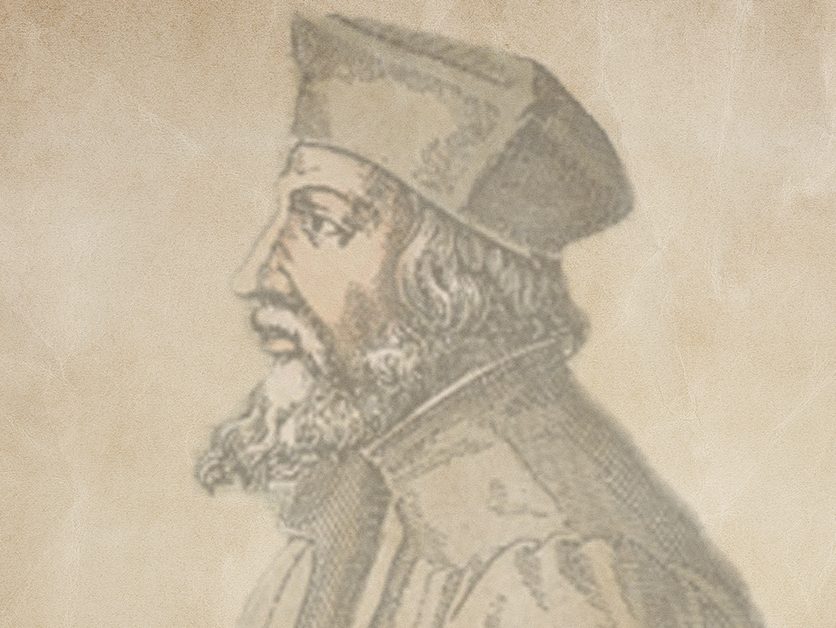
Why John Wyclif Matters: Simony, Scripture, & the Sacraments

The group of dedicated and zealous church officials tossed the decaying skeleton into the newly lit fire with a sense of devotional glee. The men from Lincoln were carrying out the wishes of the Council of Constance which had declared that the scholar and theologian, “John Wyclif, was a notorious heretic, and that he died obstinate in his heresy; cursing alike him and his memory.” In perhaps one of the greatest ironic moments in history, the Catholic Church had Wycliff’s body which had lain peacefully in the ground since December 1384, exhumed burned, and then tossed into the River Swift in 1415 so as to erase his errors if not his very memory from the historical record. And yet as the presence of this discussion of him makes clear, Wycliff’s legacy and ideas continue to live on within the halls of church history and prove worthy of our examination. If for no other reason than curiosity, we cannot help but ask the question of: “What great evil must one do to warrant one’s bones being dug up, burnt, and then cast into a river?” What had Wyclif done?

From Oxford to Prague to Luther

To begin with, he had the misfortune of being associated with another heretic by the name of John Huss who arrived on the theological scene more than decade after Wyclif’s body have been entombed. While studying in Prague almost 700 miles away from Wyclif’s beloved Oxford, Huss came across Wyclif’s books while in the University of Prague’s library and would go on to attribute many of his theological beliefs to Wyclif. For example, when Huss discussed heresy, he borrowed Wyclif’s categories of, “simony, blasphemy, and apostacy.” Such citations did not enhance Wyclif’s legacy. The year before the Council of Constance condemned Wyclif’s body to be burned, it had ordered that John Huss be burned at the stake. What was Huss’s great crime?

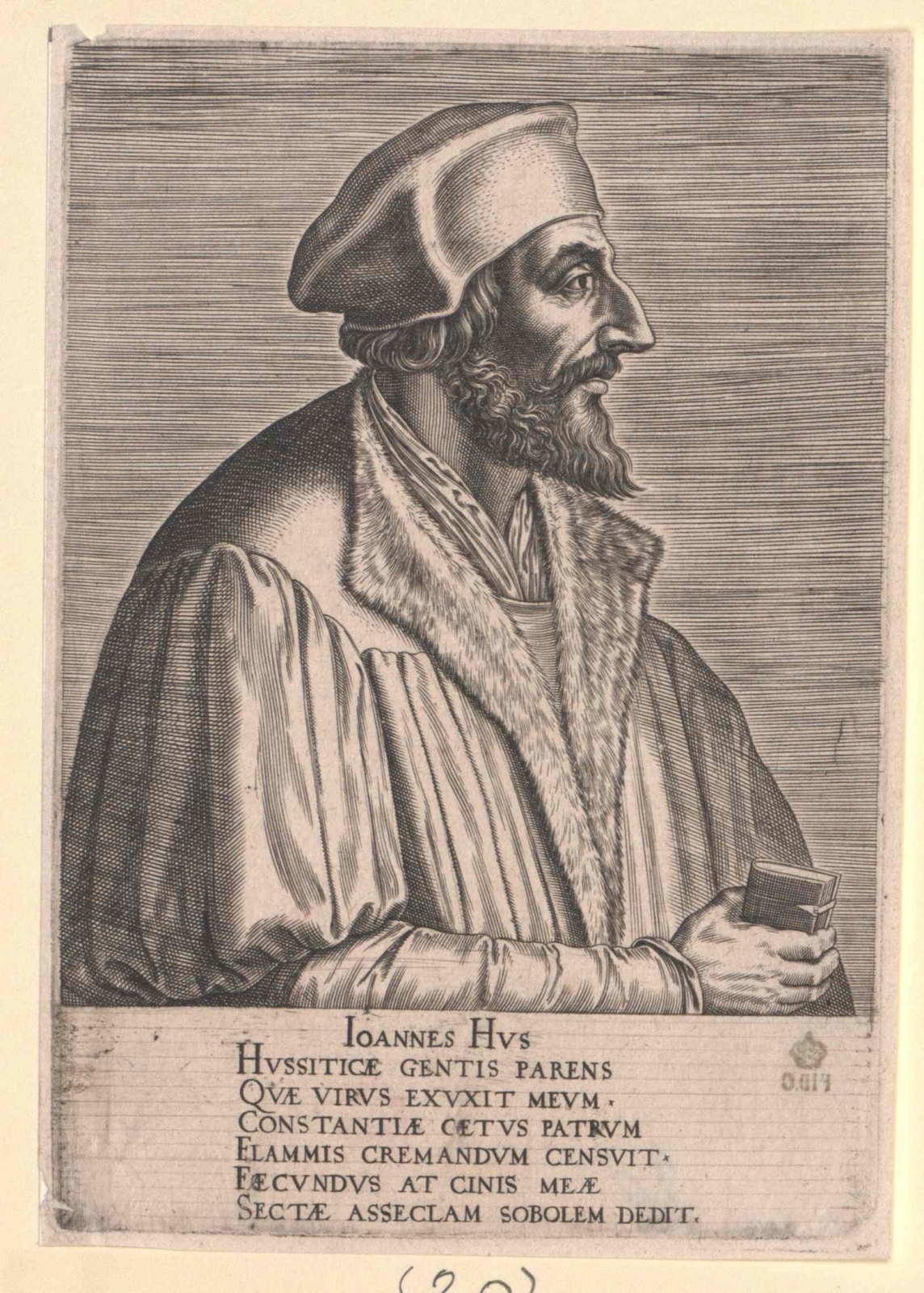
John Huss

Huss had proclaimed that salvation came not through sacraments such as the mass nor through the purchasing of indulgences but rather came when men and women adhered,  “firmly and without wavering to the truth spoken of by God.” While defending the power of the gospel as revealed in the Bible, Huss rebuked priests for spending more time at the local bar than in their pulpits and took issue with the Pope when he countermanded the clear teaching of Scripture. As Huss noted,

If a pope’s command is at variance with Christ’s commands or counsel or tends to any hurt of the church, then he [a Christian] ought boldly to resist it lest he become a partaker in crime.

In many ways, Huss’s teaching should not have been controversial. Huss had hoped to peacefully reform the church, but the Catholic Church which had two popes at the time and enough scandals to set twitter ablaze for decades had no stomach for this biblical and rather a-political call for its local churches to be defined by pure doctrine derived from the Scriptures and by pure living. Thus, Huss found himself on trial in 1413 for his teaching. 

The famed monk, Martin Luther, who started the reformation by nailing the 95 Theses to the door of the Wittenberg Chapel on Oct 31, 1517, would declare at his own trial in 1519 that, “I cannot believe that the Council of Constance would condemn these propositions of Huss.” But alas, it did. As the flames reached Huss’s head in 1414, he cried out “Lord, into thy hands I commend my spirit.” Huss’s body would be so thoroughly burnt that, “not a particle was left of body or garment that could be preserved and taken back to Bohemia to be used as a relic.”

How had Wyclif influenced Huss? Why was the British theologian deemed to be one of the most dangerous enemies of the Catholic Church?

John Wyclif

Wyclif had championed three theological positions that had encouraged Huss and earned the commendation of the Church. Wyclif proclaimed that simony or holding church office for the purpose of financial gain was sinful. Second, he proclaimed that the Church’s ultimate authority rested upon Scripture and not tradition. And lastly, he denied that the Eucharist or the Lord’s Supper was the physical body of Christ. All three positions (simony, Scripture, and sacraments) had emboldened Huss and indirectly Luther to follow Jesus and succeeded in irking the Catholic for generations to come.

Though Foxe portrayed Wyclif as a great organizer and visionary in his famous Foxe’s Book of Martyrs, the historical record revealed Wyclif to have been more of a reactionary as Martin Luther and John Huss would be in later years. Huss more stumbled into his position as a reformer than sought it out.

Wyclif was born in 1330’s in the town of Yorkshire to a family of limited nobility. With the help of some scholarships, he would go on to earn what would be the modern equivalent of his bachelor’s, master’s, and doctoral degrees at Oxford University where he earned the reputation of being an excellent lawyer, debater and scholar.

Simony and his Rise to Fame

In the 1360s and early 1370s, Wyclif came to prominence when the Duke of Lancaster asked Wyclif to help the English monarchy decide whether they must pay Papal taxes. England was in the middle of a war with France and could ill afford to allow the Catholic Church to take a share of its annual income. Though consulted more for his legal skill than his theological insight, Wyclif’s position on simony or of using the church as a for-profit business (think church greed) quickly became theological in nature. Wyclif affirmed that the church did not have to pay the pope if the pope had sinned. Diverging from Catholic doctrine which proclaimed, that the office made the man, Wyclif argued that the office’s authority depended upon the pope living a righteous life. As he noted in 1377,

No man ought to follow either pope, bishop, or angel but only insofar as he follows Christ, for Christ is both God and man.

If a man lived outside the bounds of Scripture, he ceased to exercise his church office, regardless of its prestige. Wyclif wrote, “Any act that loosens the bond of worship between man and the Father is sin against the Father. The pope, when he has broken by heresy the bond of divine service, is no longer apostolic but apostate.” Secular rulers were to disregard and pull the funding of any priest or pope who had besmirched the purity of the church. Even the threat of excommunication which resulted in one’s removal from the church and being condemned to hell carried no weight if the pope were in sin. Wyclif encouraged the nobles and kings to not fear, “the lightning bolts of excommunication in this case, because a curse resulting from this will be turned into a blessing.” As Wyclif noted, salvation depend upon faith in the providential work on the cross and not upon whims of the pope.

More importantly, Wyclif believed the very act of collecting taxes to support the secondary ministries of the church in ways that did not directly benefit local parishes and churches from which the money came was an act of simony or of church-based greed. According to Wyclif, Jesus had called the church and its officers to collect only those funds needed to support gospel ministry. As Wyclif said, “it is appropriate that he [the priest] duly feed his body sparingly and moderately.” But the money collected to support monasteries or other civic functions of the church were sinful. He also strongly condemned friars, medieval – traveling preachers whom Wyclif called “a pack of apes,”- and anyone else who directly exchanged gospel ministries such as prayer, the appointment of church officials, or the sacraments for money. He wrote,

When someone in exchange for money performs a service or ministers in an office in which the Holy Spirit is conferred, he not only makes money his god, but sacrifices both persons to the idol that he adores.

He similarly took issue with indulgences, the idea that people could purchase their salvation or sanctification, declaring, “that priests granting indulgences commonly blaspheme…God’s wisdom.” Grace freely bestowed by God resolved the complexities of human sin apart from payment. To quote Wyclif once more, “It is clear that a viator [traveler] can take it that his sin is destroyed or that he is contrite in soul only through hope in the mercy of Jesus Christ, a marked sorrow and a holy life.” Salvation came through belief in the life, death, and resurrection of Jesus. To quote the theologian, “A right-looking of full belief on Christ saves His people.”

The only remedy for the greed, “the leprosy,” that consumed the church of Wyclif’s day was for, the “Lord pope, bishops, all religious Lords, simple clerics endowed with…possessions…to renounce these possessions into the hands of the secular arm of the church, and if they stubbornly refuse, they should be forced to do so by secular lords.” Wyclif believed the king had a moral and biblical duty to resist any pope who stole from his parishioners. Those kings that refused to protect the spiritual quality of their nations would endure an even worse punishment than the sinful church officials. The church was to instruct the state and the state was to preserve the church.

While this understanding of church-state relationships would understandably trouble modern readers who believe the church and state should be separate entities, they also troubled Wyclif’s contemporaries. The Catholic Church thought herself above the state and disliked the idea of church-state cooperation.

In 1377, Pope Gregory XI issued Papal Bulls or decrees condemning Wyclif’s teaching. One of the Pope’s letters went to Oxford and another to the King. While not necessarily in favor of Wyclif’s ideas, Oxford refused to act, seeking to prove itself independent of papal authority. The king at the time was twelve years old and highly influenced by his Queen Mother and the Duke of Lancaster, Wyclif’s protector, John Gaunt who also took no action. But in 1377, Wyclif had to defend his ideas before a tribunal of Bishops at the chapel in Lambeth, England. That tribunal condemned Wyclif’s ideas as heretical and forbad Wyclif and others from teaching his ideas. But nothing much came of this decision for Gregory XI died in 1378 and then two different men claimed to be pope which brought the administrative wheels of the church to a temporary halt.

The Sufficiency of Scripture

As the screws of persecution began to tighten around him, Wyclif increasingly turned to the Scriptures for wisdom. As he wrote in 1384,

Scripture is the foundation of every Catholic opinion and within it resides the very salvation of the faithful.

As Wyclif read and study God’s Word, he became convinced of the authority of the Scriptures. He boldly asserted that, “the certitude and authority of Scripture should be given preference over human reason…since Holy Scripture is the word of the Lord and thus must be of the highest authority.” Scripture could be trusted for it was “true in all of its parts according to its intended sense.” For any doctrine or idea to be believed, it had not only to align with church practice but with the clear and authoritative teachings of Scripture. To quote Wyclif,

It is lawful for bishops and vicars of Christ to formulate statutes designed to help the church…they ought to be accepted, unless they…prove contrary to Holy Scripture.

He continued, “To say…that all papal bulls are of equal authority or certainty with truth with Holy Scripture would be blasphemous attributing to pope the claim of being the Christ.” Christ alone was the Word of truth as contained in the Scriptures. And the Word was the final authority. Wyclif concluded, “Holy Scripture exceeds all human canons in usefulness, authority, and subtley.”

Lollards & the Wyclif Bible

Since the Scriptures were true, understandable and authoritative, Wyclif placed great priority upon the preaching of the Word. Wyclif concluded, “the right preaching of God’s Word is the most worthy work a priest may do among men…more fruit comes from good preaching than from any other work.” Faithful preaching would reflect the clear teaching of the Scriptures and would lead people to salvation and holiness. To quote Wyclif, “God does not ask for cleverness or rhymes from one whose duty it is to preach, but simply to explain rightly God’s Gospel and his words, to stir his people thereby.” Though the Reformation term of Sola Scriptura or Scripture Alone would not appear for a few hundred more years, the concept proved to be a fixture of Wyclif’s theology.

Given Wyclif’s high view of preaching, his name became readily associated with the Lollard movement, a movement of lay preachers devoted to the gospel. While the extent of Wyclif’s involvement in the movement remains debated, historians fully affirm both Wyclif’s high view of the Scriptures and of preaching. As Wyclif noted in his pastoral handbook, “the best life for a priest is a holy life keeping the commands of God through faithfully preaching the gospel, as Christ did and charged all his priest to do likewise.” Even if he did not create the Lollard movement, his teachings inspired the lay men who traveled about England preaching the gospel.

Similarly, the extent of Wyclif’s involvement in the English translation of the Bible remains a topic of debate given the fact that John Purvey the main editor of the Bible makes no mention of Wyclif’s influence upon the project. But historians do not doubt that Wyclif wanted the common people to have the Bible in their own tongue. As he said in 1384, “the knowledge of God’s word should be taught in the language known to the people, for God’s Word is essential knowledge.” Commenting on Pentecost, he concluded,

God willed that the people were taught his Word in diverse tongues; therefore, what man acting on God’s behalf would reverse God’s ordinance and his revealed will?

Those who only allowed the Bible to be translated into Latin and who restricted lay people from reading the gospels went against God’s will. Though Wyclif understood that English translations would need to be constantly updated, he believed such translations would empower people to follow God’s law and would prevent the church from falling into heresy.  If they lay people could read the Scriptures, they could hold their clergy accountable. While the extent of his involvement in the Lollard preaching movement and in the translation of the Bible that bears his name are debated, his support of such ideas can be easily found in his writings. As Steve Lawson noted, Scripture was, “the vital heartbeat of Wyclif’s ministry.”

Understandably, the church which claimed to have the exclusive right to both teach and interpret the Scriptures took issue with Wyclif’s ideas.

Sacraments & Trouble

In 1381, he found himself called before another council for his teaching on the church, the Scriptures, and lastly the Eucharist or the Sacrament of the Lord’s Supper.

In 1215 at the Fourth Lateran Council, the Catholic Church had declared that when the priest prays over the elements of the Lord’s Supper, the bread and the wine become the physical body of Christ. By consuming the bread and wine, Christians ate Jesus and gained additional strength to fight sin. After studying the Scriptures and the early church fathers, Wyclif concluded that such a theory was unbiblical. He wrote,

We ought to believe not that it is itself the body of Christ, but that the body of Christ is sacramentally concealed in it…The spiritual receiving of the body of Christ consists not in bodily receiving, chewing, or touching of the consecrated host, but in the feeding of the soul out of the fruitful faith according to which our spirit is nourished in the Lord…nothing is more horrible than the necessity of eating the flesh carnally and of drinking the blood carnally of a man [Jesus Christ] loved so dearly.

While such a move might seem insignificant, it proved significant for Wyclif for he had openly written against a rather standard and well-known doctrine of the fourteenth century church.

In May 1382 at the Black friars Synod, Oxford condemned Wyclif’s teachings and forbade him or anyone else from teaching any of Wyclif’s ideas. Facing house arrest as well, Wyclif appealed to the king for help. John Gaunt arrived and kept Wyclif out of prison but also showed him the necessity of resigning from Oxford. Given the young king’s precarious position, the crown could not afford a long and protracted battle with Oxford or the Catholic Church. Thus, Wyclif moved to Lutterworth to live out his days writing about the Scriptures and sharing the gospel he loved so dearly. He died from a stroke on December 31, 1384, at (most probably) the age of 54.

Final Thoughts

As the catholic officials digging up his tomb made clear, Wyclif’s ideas did not die with him. The man who called priest to repent of simony or greed, who championed the authority of the Scriptures, and who advocated for a scriptural understanding of the Sacrament of the Lord’s Supper will in once since never die. For what made Wyclif famous was not his ingenuity but his foundation, the gospel of Jesus Christ. What God promised Isaiah in 55:11 would prove true of Wyclif,

“My word…that goes out form my mouth; it shall not return to me empty, but it shall accomplish that which I purpose, and shall succeed in the thing for which I sent it.”

God’s word continued on from Wyclif to Huss to Luther and then to millions of us today. No one can stamp out the Word of God or those who stand with it. Even if they burn our bodies and toss our ashes into the sea, the God’s Word abideth still.


John Huss: A Name Martin Luther Thought All Christians Should Know

John-Huss-BlogOn Oct 31, 1517, the monk, Martin Luther turned the world upside down with a few shift taps on the door of the Wittenberg Chapel. Luther hoped his 95 Theses, 95 concerns, about the state of the Catholic Church would lead the church to reexamine her doctrine of indulgences, pieces of paper that promised forgiveness from sin in exchange for a fee. Luther wrote,
Thus those indulgence preachers are in error who say that a man is absolved from every penalty and saved by papal indulgences.

He continued noting, “Any true Christian, whether living or dead, participates in all the blessings of Christ and the church; and this is granted him by God, even without indulgence letters.”

Luther hoped his document would spur the erring church to return to the teachings of the primitive, apostolic church. But instead of taking on a few misguided theologians, Luther found himself challenging the essence of Catholicism. In 1520, Pope Leo X condemned the German preacher of salvation alone through faith alone, by grace alone in accordance with the Scriptures alone as being, “the slave of a depraved mind…a stone of stumbling…a heretic.” The Reformation swung into full gear. The church would never be the same.

Martin Luther’s Connection To Huss

A year earlier in 1519, Luther still believed the Catholic Church could be rescued. He traveled to the city of Leipzig to debate the well-known and revered catholic theologian Johann Eck. As they debated the “primacy of the Pope.” Eck shifted the discussion to the Council of Constance and accused Luther of “espousing the pestilent errors of John Huss which troubled the Catholic Church during the 1400’s.”

As a young scholar, Luther had read some of Huss’s sermon. Though he knew Huss was a heretic, the young Luther confessed he, “was filled with astonishment difficult to describe, as I sought out for what reason so great a man – a doctor, so worthy of veneration, and so powerful in expounding the Scripture – had been burned to death.” But Luther refused to utter his thoughts about the Bohemian heretic for fear, “that the heavens would fall me.”

The German told Eck, “I repulse the charge of Bohemianism.” And then as all good discussions do, the debate broke for lunch.

During the lunch break, Luther went to the library at Leipzig and read the charges against Huss. When Luther returned to the debate Hall, he returned a Hussite, a friend of the heretic.  Luther would later declare,

I have hitherto taught and held all the opinions of Jan Hus unawares…In short, we are all Hussites without knowing it.

What did Luther find in the Library of Leipzig?

Let’s take a look.

Who Was John Huss?

John Huss entered the world in 1373 in Bohemia, modern day Czechoslovakia. Though born to a family of modest means, Huss reached the University of Prague in 1390 and paid for his education by singing. While earning his bachelor’s and master’s degree, Huss came into contact with the writings of the Oxford Professor and heretic, John Wycliffe, who had died when Huss was twelve years old. While Huss downplayed his connection to the English reformer, who advocated for purity in the church and for salvation apart from works, Huss was undoubtedly changed by his studies of Wycliffe and most importantly his studies of the Scriptures.

Commenting on his life prior to salvation, Huss wrote, “before receiving the priesthood, I lost much time in playing at chess, and through this game often suffered myself to be provoked, as well as provoked others to anger.” He also lamented his earlier fascination with fancy clothes, stating, “Alas I, too, had gowns and robes with wings, and hood with white fur; for they had so hemmed in the master’s degree with their regulations that no one could obtain the degree unless he possessed such apparel.” By the time he became a priest in 1401 and the preacher of Bethlehem chapel in 1402, Huss has embrace Jesus as his savior. For the remainder of his life, Huss gave up chess and embraced the faithful proclamation of the gospel, seeking the salvation of his hearers.

As he preached the gospel, Huss morphed into the great heretic whose name Luther feared to verbalize.

What was his crime?

John’s Huss’s Crime: The Gospel of Purity

He taught that Christians should follow Christ. He believed only those who looked to Christ for salvation through the cross as revealed in the Scriptures and who worked out their faith with fear and trembling in accordance with the Scriptures should be considered followers of Jesus. Huss wrote, “No place, or human election, make a person a member of the holy universal church.” He denied the church’s ability to sell and grant salvation to people apart from Jesus. Moreover, he believed church attendance did not save unrepentant sinners. He wrote, ”

Similarly as it does not follow that, because of ordure or sore is in the body of a man, therefore it is part of the body, so it does not follow that because a reprobate is in Christ’s mystical body of the church, therefore he is part of it.

Hus, JohannesMen and women could only secure the blessing of salvation when they “adhere firmly and without wavering to the truth spoken of by God.” Huss would write, “Again the minister of the church, the vicar of Christ is not able to absolve or to bind, to forgive sins or to retain them, unless God has done this previously.” Those who professed Christ would of necessity live holy lives as their savior was holy. Huss wrote, “If anyone is predestinated to eternal life, it necessarily follows that he is predestinated unto righteousness, and if he follows life eternal, he has also followed righteousness.” Huss’s common understanding of salvation, sanctification, and personal holiness appeared to be uncontentious.

After his famous lunch, Luther told Eck, “Among the articles of John Hus, I find many which are plainly Christian and evangelical, which the universal church cannot condemn.” Given the biblical and sensible nature of Huss’s teachings, Luther asked Eck if the court records had been corrupted because Luther could not imagine the church fathers would condemn such gospel truth. Eck affirmed the truthfulness of the condemnation. So why did the preaching of Huss strike such a nerve?

Why Was Huss Killed?

Huss incurred the hatred of the Catholic Church because the Catholic Church of the 1400’s was filled with corruption. In his sermon on John 15:27, Huss noted that,

As layman walk with their canes to the churches, so these clerics go to the beer-hall with canes, and when they return they can hardly walk, much less talk, and least of all, do they know what is demanded of the priestly office…When the blood becomes heated, they talk of women and acts of lust in most wanton language…They ought to be like dogs to be turned out of the house of God, where they give such reproach and scandal to the hearts of simple layman.

During Huss’s trial at Constance, 1072 church officials showed up surround by troops and musicians and, women. Seven hundred women officially registered as prostitutes for the event. Huss condemned the decadence he observe and wrote,

He is Peter who is not known to go about in processions, ornaments with gems or silks, not clad in gold or carried about with soldiers surrounded by bustling servant. Without such things, Peter believed he was able to fulfill sufficiently the salutary commandment: If thou lovest me , feed my sheep.

In March of 1414, the council that condemned Huss condemned Pope John XXIII who had called the council. The church prelates removed the errant Pope from office because he sold church offices, slept with his brother’s wife, issued spurious and false commands, committed adultery with nuns, and engaged in sodomy. Huss rightfully noted that the “official church does not make the priest…the place does not sanctify the man, but the man the place. Not every priest is holy; but every holy person is a priest.”

To keep the lay people from complaining about their sinful lifestyles, the priests and church officials seldom preached the gospel. On his sermon on Matthew 21:43, Huss declared,

They shut up the kingdom of heaven to men. This they do by keeping back the Scriptures from the people so that they may not read or understand them, and know how men ought to live; that they may not know how to punish the priests for their sins, or through knowledge of the Scriptures may not insist that the priests become instructed in them. And again the priests keep the knowledge of the Scriptures from the people because the priests fear they will not receive the same amount of honor if the people are taught to read the Bible.

Because Huss opened up the Scriptures and exposed the warts of the Catholic Church, the leaders of the Bohemian church despised Huss. They regularly complained to the Popes and Cardinals about Huss’s preaching. As Luther, Huss never intended to defame the church and had no plans to split the church. Huss told his opponents that “The purpose of our side is that the clergy live honestly according to the doctrine of Jesus Christ, laying aside pomp, avarice and luxury.” Sadly, Huss pleas for reform, holiness, and biblical preaching fell on deaf ears.

In 1410, the Archbishop Zbyneck convinced the newly elected Pope Alexander V, one of three popes at the time,  to order the church and universities of Prague to burn John Wycliffe’s books, believing the British heretic to be the source of Huss’s faith. Huss refused to obey the papal bull and was promptly excommunicated. Huss appealed to the church court in Rome, hoping to convince the greater church community his gospel reform. The church officials imprisoned Huss’s messenger and excommunicated Huss for the second time in 1411.

Despite being commanded to repent, Huss kept preaching. He said “if a pope’s command is at variance with Christ’s commands or counsel or tends to any hurt of the church, then he ought boldly to resist it lest he become a partaker in crime by consent.”  Huss appealed the church’s decisions to God and kept ministering in good conscience, telling all that he had “committed [himself] to Christ alone (250).”  In 1412, Huss opposed Pope John XXIII’s sale of indulgences and was excommunicated for a third time.

Huss’s Trial and Death

In 1414, Huss secured the trial he had longed for since 1410. He hoped the gospel would win the day. But he was also prepared to suffer for the gospel and understood he could be rejected by the Council of Constance. As the Bohemian priest traveled to his end, he wrote, “it would be a strange thing at present to remain unpunished when attacking the perversity of the priests, who will not endure any blame.”

CouncilofConstanceDebatesthePope-5b44edb6c9e77c0037e7ed04And suffer, Huss did. Instead of receiving a hearing for his beliefs, Huss was imprisoned a few days after he arrived in Constance. When Huss was brought before the Council, the Council shouted down Huss’s voice down with a veracity that reminded Huss of how the Pharisees treated Christ as his trial. The leaders of the church allowed Huss to answer one question, will “you throw yourself entirely and totally on the grace and into the hands of the Council, that whatever the Council shall dictate to you.” Huss refused to recant the gospel to please the corrupt leaders of the Catholic Church. he told his friends,

I cannot do it without denying in many things the truth…I should afford a great scandal to the people of God who have listened to my sermons; and it would be better that a millstone were tied round my neck, and that I was plunged to the bottom of the sea…Our Savoir Jesus Christ will reward me fully, and bestow on me in my trials the assistance of patience.

On July 1414, Huss would lean brilliantly upon the Lord. The day opened with a reading of the chargers against Huss. Once again, the court prevented Huss from being able to answer the charges against him. Huss refused again refused to recant and prayed for Jesus to give him mercy. The Archbishop of Milan and the Bishop Constance then defrocked Huss removing his priestly clothes. The two church officials demanded that Huss repent. The Bohemian refused saying, “I do not fear this thing least I be found a liar in the eyes of the Lord and also lest I sin against my conscience and God’s truth.” After Huss’ hair was cut and a dunce cap was placed over his head, Huss walked to the stake. As the executioners pilled wood around, Huss sang the psalms. When the flames reached Huss’s body, he said, “Christ the Son of the living God have mercy upon me. As the flames reached his head Huss and claimed his life, Huss declared, “Lord, into thy hands I commend my spirit.”

Though long dead, Huss continues to live on. Luther noted that the man the Catholic church had hoped to “obliterate forever” has continued to shine forth “which such glory that his cause and his teaching have to be praised before the whole world.” This generation should continue to glory in the testimony of Huss for the faith Huss preached, defended, and ultimately died for is the apostolic faith delivered once for all. Because men and women like Huss and Luther risked their lives for the gospel, we have access to the apostolic faith today. We are some of the “many children of the Lord” whom Huss hoped to reach through his death. Indeed, we are all Hussites.

To God be The Glory!