In her latest article, “How the Ultrasound Became Political” The Atlantic writer Moira Weigel laments that arrival of Ultrasound technology. The technology that was once used to hunt down and sink German subs is now being used to hunt down and dehumanize women. She writes,
The framing of the ultrasound image was notable for what it excluded: the woman. In order to make the fetus visible, it made her disappear.
Before the ultrasound, the woman was the primary focus of the doctor and society. She was the sole proprietor and mediator of her body. She alone was the voice for her child. The woman was first. But the ultrasound redirected the authorial control of the birthing narrative to people other than the woman. Wiegel writes again,
“Before ultrasound, medical care received by pregnant women had depended on their testimony, or how they described their own sensations. Ultrasound made it possible for the male doctor to evaluate the fetus without female interference.”
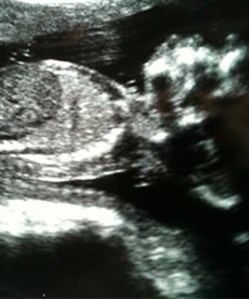 The woman no longer controlled the narrative of her body. Now doctors, politicians, social media platforms, and even the fetus can and do shape the dialogue. The little pictures of an alien like creature swimming in the womb have obscured the very woman carrying it. And so, Weigel mourns the arrival of the ultrasound.
But having seen the ultrasounds of all four of my children, I think Weigels argument is deeply flawed. Ultrasounds do not obscure the woman. They highlight and celebrate her very being and essence. They highlight the triumph of motherhood. They highlight several of the very things that make a woman unique and valuable. For this reason, I am proud to have all four of my children’s ultrasound photos in my office. The do not obscure my view of my wife. They praise her.
The first and most memorable ultrasounds I ever saw involved our first-born son. When he was just 19 weeks and 4 days, my wife saw his perfect little silhouette on the screen for the first time. Instead of obscuring my bride, the ultrasound helped me see how amazing she was. The ultrasound validated her cravings, need for sleep, and ever changing shape.
And for the first time, we were both able to share an experience with our child simultaneously. Our eyes locked; we smiled; and I began to gain a fuller understanding of what it meant for my wife to carry a child. I went home that morning with a far greater respect for my beautiful bride.
A little less than two weeks later, I saw another ultrasound of my son. As the doctors rushed to stop my wife’s premature labor, I saw my little boy on the ultrasound monitor again. This time the screen was smaller and the situation was dire. I relayed the images of my tiny sons outstretched arm to my moaning wife, they did not minimize her pain. It did not make her seem invisible. Rather it revealed that she was suffering and risking her own health for a precious little person. It validated her struggles, her concerns, and her love for her child, and; it helped me and the medical staff fully understand what my bride was experiencing inside her body. The ultrasound was a blessing.
Admittedly, Weigel acknowledges that, “ultrasound technology has been a crucial component of prenatal care, too.” I think Weigel would fully support the doctors’ decision to use the ultrasound to help their diagnosis my wife’s condition that terrible day. However, I do not think this concession is enough. The beauty of the ultrasound is not purely by its medical utility.
The machine does more. Those tiny black pictures circulating on Instagram, Facebook, and Twitter, validate the very life of the woman from which they came.
The second most memorable ultrasound image for my wife and me was the one taken of our third child. Unfortunately shortly after that picture was handed to us, my wife miscarried. Because of that ultrasound photo, we know my wife had a baby. We were able to grieve and honor that child’s existence because of this fabulous invention.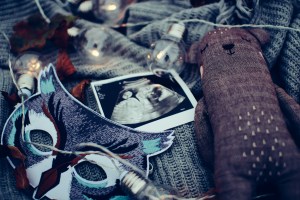
Before the ultrasound, my wife would have bled. She would have not known the cause. While she might have suspected that she lost a baby, she would not have been able to celebrate her motherhood and the little life with credibility. She would have been left with an incomplete picture.
Because of science, she knows about that precious life she lost. The ultrasound enabled her to share her heart with me, with our families, and with the world in a demonstrative and very real way. Instead of obscuring her, the ultrasound helped others to understand my wife and her story. The ultrasound enriched her narrative.
And my amazing bride is not alone. All over the world, women know that they are mothers precisely because they have an ultrasound picture. If we were to take those images away from them, we would marginalize these women and their experiences. We would denigrate their very nature.
At the end of the day, I believe Weigel dislikes the ultrasound machine not because it hurts women but because it damages her worldview. In the midst of attacking the machine Wiegel notes, “These images produced a new and unprecedented vision of human development.” These machines reveal aspects of humanity to us that were previously unsee. Though she hates the machines, Weigel cannot even fully escape the reality that ultrasounds reveal. She cannot escape the face that babies are more than tissue. And so, Wiegel laments that arrival of ultrasound images. She laments that her view does not mesh with science.
Now, I do fully agree with one of Weigel’s conclusions: “What the appearance of the flicker on the ultrasound shows is not a change of state but a threshold of the imaging technology.” The little beating heart images that many have seen via the ultrasound machine do not change the reality of when a fetus becomes a human. Those pictures merely reveal when we can see the human heart. Our ability to physically see a baby does not carry moral authority with it.The thing in the mother’s womb is what it is from conception irrespective of our prying eyes.
Technology does not make a baby any more a baby any more than the lack of technology makes a baby a fetus. Changing the threshold of technology does not mean that a baby becomes human at an earlier age. God has already declared all babies to be human from conception. The ultrasound machine helps humanity to understand the scientific and moral reality that God has declared.
The question facing us all is this week as we prepare for the March For Life this Sunday is this, “Are willing to accept science and advocate for life or will we lament science and press on for death?”
 Have you ever wanted to throw your kid through the window? If you are a parent (or at the very least a dad), I think most of us would have to say that at some point we’ve had that thought.
 If we want to reach the children in our homes or at our church, we have to be with them. We have to spend time driving toy cars on the furniture, hosting tea-parties, and celebrating the good grades on their report cards. In short, we have to do life with these precious little souls.
 Witkowski Blog