Renewed Congregationalism: A Cure for What Ails the SBC

To reverse the decline of the Southern Baptist Convention (SBC), I believe the platform (the leaders of the SBC) needs to rediscover the goodness of congregational piety.

Of Messengers and Leaders

To date, many of the SBC’s leaders seem to be distrustful and dismissive of the messengers who elected them or perhaps more accurately stated they distrust the messengers who elected the committee members who elected them.

The President of the SBC’s Executive Committee which runs the convention when it’s not in session, Jeff Iorg, recently blamed the decline in Cooperative Program giving and the “reshuffling of sectarian loyalties in the SBC” on the messengers. He laments that the messengers have been taken captive by the “fracturing influence of expressive individualism.” Or as Iorg notes elsewhere, they have fallen prey to “Our cultural proclivity for tribalism and sectarianism rooted in the sins of selfishness and self-promotion.” He then calls the messengers to return to their Baptist roots and embrace his vision for “messy cooperation.” He writes, “Part of doing this successfully is tolerating considerable diversity in our movement – doctrinal, methodological, strategic, and practical.”

And while readers might assume that Iorg thinks messiness would be confined within the doctrinal boundaries of the Baptist Faith and Message 2000, Iorg’s actions indicate the opposite. Over the last few years, he (as well as other SBC leaders such as Kevin Ezell, the President of the North American Mission Board – NAMB) worked to defeat the Law Amendment which sought to strengthen the long-held Baptist belief that the office of pastor was reserved for qualified men. Iorg writes, “Let’s keep debating the issue of gender leadership roles in churches with the goal of persuading churches to change their position or practices rather than removing them from the SBC.” In other words, he invites churches to openly debate elements of the SBC’s doctrinal statement. Despite his embrace of doctrinal confusion, Iorg still blames the messengers for the state of the SBC. He calls them to embrace his undefined vision of messy cooperation or else be guilty of the sin of expressive individualism.

Similarly, a letter written in the defense the Ethics and Liberty Commission (ERLC) by ten former SBC presidents calls on the messengers to abide by the will of the platform and not to divisively vote for the disbandment of the ERLC. The presidents admit that the ERLC (the political wing of the SBC) lacks a clear mission. Still, the letter goes on to proclaim that the undefine mission of the ERLC is still “an important mission and should be kept in place.” The presidents then ask the messengers to trust that the ERLC’s trustees and its president will get this undefined mission right. Recall this is the same organization that has worked with George Soros funded foundations, opposed the abolition of abortion, and whose executive board recently fired its president only to then reinstate said president and force its chairman of the board to resign. Nonetheless, the presidents ask messengers to trust them, embrace the ERLC, and avoid the sin of being divisive.  

The Nature of Trust

While the leaders of the SBC should invite the messengers to trust them, the basis of that trust comes not from the possession of that office but from the faithful stewardship of that office in accordance with Scripture. As Jonathan Leeman notes, “our submission is never finally owed to other people. It’s exclusively and uniquely owed to God.” To quote the apostle Paul, “Be imitators of me, as I am of Christ (1 Cor 11:1).” In other words, the messengers should trust the leaders of the SBC entities in much the same way they trust their pastors and elders.

Trust & the Congregation

When Christians join a local congregation, they should anticipate that their elder board (or in some cases their deacon board) will hold itself to the teaching of Scripture, correcting one another’s sins and asking the congregation to only vote on wise motions and nominations. As Paul tells Titus, “For an overseer, as God’s steward, must be above reproach (Ti. 1:7).” If church members disagree with their elders over matters lacking biblical warrant, the members should usually submit to their elders, understanding that the “bar should be pretty high before disobeying an elder.”

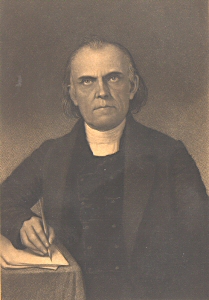
Still, the elders of that church should recognize that the congregation’s trust is not ultimately given but won through preaching truth, calling for wise votes that align with Scripture or its principles, and through abandoning error and those programs that would harm the church. In other words, elders should invite the congregation to vet their nominations of church officers as well as their other motions to ensure that the elders’ vision for the church wisely aligns with the Scriptures. To quote Baptist Father J.L. Dagg, “The only rule which they [the pastors] have a right to apply is that of God’s word; and the only obedience which they have a right to exact, is voluntary.”

J.L. Dagg
J.L. Dagg

When elders violate the Scriptures or enact unwise policies that harm the church and the bar for disobedience is reached, the church’s members should speak up. Leeman writes, “Good loyalty says, “I’m committed to you and your successes as a leader and that means I cannot follow you into folly or unrighteousness.” This speaking up is not a defect of congregationalism but its glory. As Dagg notes the best way to prevent a church from falling into error is to have congregations “well instructed in the truth.” Since even the best elders and elder boards can err, the congregation must be prepared to stand for truth and wisdom even if their elders do not.

To quote Leeman again, “the final judicial court of appeal is the whole congregation.” And when the whole congregation speaks on behalf of the Lord and rejects the elders’ poor leadership, the elders should listen, repent, and correct their course. Like King David who at the behest of his troops refrained from battling Absalom, elders should heed the biblical wisdom of their congregation (2 Sam 18:2-4), recognizing that the Holy Spirit resides in the pew just as assuredly as he resides in the elder board.  

Congregationalism in Action

Caleb Morell’s book A Light on the Hill helpfully demonstrates the preservative power of congregationalism in the face of erring leadership. At the beginning of the twentieth century, Agnes Shankle, a long time Sunday school teacher a Capitol Hill Baptist Church (CHBC), raised concerns about her church’s pulpit committee’s recommendation to install a moderate as the church’s next pastor. After she spoke, others joined her opposition. United in their defense of the truth, the congregation of CHBC defeated their leaders’ recommendation and thereby saved their church from theological ruin. CHBC continues “as a Bible-believing, Gospel-preaching church” in-part because a faithful member challenged her leaders’ unbiblical and unwise recommendation.  

Trust and the SBC

SBC Leadership Flow Chart

Similarly, the willingness of the messengers to challenge the unbiblical and unwise actions of their leaders is neither a defect nor a rejection of Baptist polity but one of its truest expressions. The SBC entity heads should listen to their boards as pastors listen to their fellow elders or deacons. Moreover, there is a good deal to be said for bringing about reform through the SBC trustee process (the process by which messengers elect the SBC President who nominates other men and women who upon their election by the messengers to the nominating committee nominate other men and women who upon their election to the various SBC boards then elect SBC entity presidents). But that level of accountability does not absolve the leaders of the SBC from being accountable to the messengers. The biblical concerns of the messengers should be heard and not dismissed as (to quote Vance Pittman, the President of the Send Network), “100% BS.” Moreover, no number of Baptist Press editorials in support of the platform will convince messengers to trust those leaders who have led the executive committee into financial ruin, who have muddled the witness of the SBC to the broader culture, and who have undermined the theological integrity of the SBC.

The Path Forward

If the trajectory of the convention remains unchanged, I suspect there will be more division…more need for groups like The Baptist Review, The Center for Baptist Leadership, and The Association of Churches for Missions and Evangelism (ACME) to form and more churches withdrawing from the convention. To quote Leeman, “If one belongs to a church where he cannot trust the elders to make biblical decisions, he should find another church.”

And in such cases, the fault will lie not with the messengers nor with expressive individualism but with the SBC’s leadership…with the platform. As Martyn Lloyd-Jones aptly says of the Reformation, the cause of the church’s division at that time (and I would argue that of the SBC today) was not the reformers like Luther but the “state of the Roman Church that was the tragedy.” Speaking of voluntary Baptist associations, Baptist father Edward T. Hoscox concurs. He writes that the only option left for those who disagree with the trajectory of their association is to “refuse to affiliate, and withdraw.” In other words, messengers who do not trust the platform should not and will not forever remain with the platform.

If the SBC is to reverse its decline, its leaders must win the trust of the messengers and once again embrace congregationalism. They must hear the concerns of the Agnes Shankle’s in their midst and allow the wisdom of the Scriptures to triumph.

At the 2025 Annual Meeting, I encourage the stage to abandon its criticism of the messengers and to welcome their biblical corrections. I encourage the stage to join with the messengers and to help us pass the Law Amendment, the motions for increased transparency, and any other reform that will better align the SBC with the Scriptures. In short, I encourage the platform to renew its commitment to congregationalism.

Abortion, Faith, and Politics: Examining Harris’ Dangerous New Claims

Over the last few months, Vice President Kamala Harris has radically reshaped the political conversation around abortion, sliding into the pulpit of orthodoxy. Throughout the course of her campaign, Vice President Harris has boldly asserted that, “One does not have to abandon their faith or deeply held beliefs to agree: The government, and certainly Donald Trump, should not be telling a woman what to do with her body.”  Notice, she does not appeal to the authority of other religious leaders, saying as, “Pastor so and so said.”  Nor does she claim that her understanding of faith is compatible with abortion, inviting other religious people to join her. Rather, she presents herself as a religious authority. In other words, her language does not convey that she hopes conservative evangelicals will find a church that aligns with her party’s platform. Rather, she is telling them and all people of faith what should be true of every church or place of worship. Namely, no Christian or religious person should object to a woman getting an abortion because to quote the Vice President  “that decision does not require anyone to abandon their faith or their beliefs.” To disagree with her is no longer to disagree with a political party or ones’ government but with the God of the universe.

My Main Concern is Not

My main concern today is not to debate the morality of abortion which is firmly fixed in my mind nor the need for Christians to oppose the practice. Abortion is murder. I lament that liberals and even a growing number of conservatives long to normalize this brutal culture of death, using duplicitous language of “healthcare.” Without reservation, I believe Christians should advocate for life across the political spectrum. Tax rates, housing prices, and issues pertaining to the quality of one’s life count for nothing if one is not alive to pay taxes or buy homes.

Neither a conservative, evangelical pastor’s opposition to nor a Democratic Presidential Candidate’s support of abortion is noteworthy.

My Main Concern

But what is and what I object to is Vice President Harris’ defense of abortion with an appeal to a governmental defined religious orthodoxy. I oppose not only to the content of her orthodoxy, but her very use of orthodoxy. In other words, I do not wish to replace the Vice President’s political forays into theological orthodoxy with those of a candidate more closely aligned with my theological convictions. For example, I acknowledge that most non-evangelicals who identify as some form of “Christian” disagree with the pro-life position. Though I hope to win those churches back to the apostolic faith of Jesus, I also believe that the government has no authority to tell those affiliated with the Sparkle Creed or any other religious creed what is or is not an acceptable tenant of their faith.

Faith Still Belongs

I am also not advocating that those with religious opinions should retreat from the public square or deny that their faiths have a shaping influence on their actions. Without question, one’s faith and worldview will have a profound effect on one’s personal and public ethic. I long for pro-life politicians to unapologetically live out their religious convictions in the public square through the creation of laws that promote life, understanding that those of liberal faiths can do the same with their convictions. I do not object to the enforcement of a public ethic (though I long for that ethic to reflect God’s righteous standards), but with proscribing that all people should conform their faith to that ethic.

The Separation of Church and State

By invoking the language of orthodoxy, Vice-President Harris is straining the bounds of the separation of church and state. To borrow the language of the hour, she is toying with the idea of establishing a leftist “Christian” or perhaps more accurately stated leftist “Religious Nationalism.”

When Thomas Jefferson coined the phrase “a wall of eternal separation” to describe the relationship between the state and the church in 1802, he had in mind the very overreach committed by the Harris Campaign. He wrote, “religion is a matter which lies solely between man and his god…the legitimate powers of government reach action only and not opinions.” The state and those running the state have the right to enforce laws that reflect the ethic that flows from their religious views but possess no religious authority to bind the consciences of its citizens to the particular religious views of those in power. Politicians are not prophets.

The Biblical View

While ideas of religious freedom have a foundation in American political history and theory, they also have a biblical foundation. Except when coerced by the state, the church does not look to the state for instruction on what is or is not orthodox. Rather, the church claims a God given right to determine its own doctrine in accordance with Scripture and then to share those doctrines with both its surrounding culture and the state. “Your word is a Lamp unto my feet and light to my path (Ps 119:105).”  

When it comes to religion, the state should not inform the pastor of God’s will. The pastor should inform the state. To quote the British theologian John Stott, the church should function as the “nation’s conscience.” Operating in this vein, Nathan rebuked King David for his sexual sin and murder. Elijah condemned Ahab for his unjust grab of land. Isaiah scolded Hezekiah for his foolish foreign policy. Jesus rebuked Pilate for assuming divine authority. And Paul pleaded with Felix to embrace Jesus as his savior.

In other words, the church should share God’s principles with those in power. It should praise leaders when they repeal unjust laws that condemn shoplifters to life sentences. Conversely, the church should call those who pass a bill that legalizes infanticide to repentance. As Lloyd-Jones notes, “The church is here to show that according to biblical teaching, the general consensus of opinion is not the basis on which you arrive at moral decisions, either with regard to homosexuality, or with regard to divorce, or abortion, or birth control, or any one of these questions.” The state should not preach to the church. The church should preach to the state, reminding those in power to “Serve the Lord with fear (Ps. 2:11).”

For the sake of the United States and its faith community, I encourage Vice President Harris to abandon her usurpation of the pulpit, and to sit once again in the pew.

Presidential Anointing: Christian Identity Politics & the Need for Biblical Principles

In the days after the assassination attempt on President Trump, a whole cavalcade of B and C level Christian and political personalities and a few A listers have asserted that God has anointed President Trump to lead the United States. The argument runs something like this: “Because President Trump survived the assassination attempt on his life, God has called him to be the next U.S. president.” In other words, God has made his choice and by implication so should you.

Given the theological implications of this claim (No Christian wants to vote down God’s candidate), Christians would do well to pause and consider the merits of this statement before embracing it. Does surviving an assassination attempt prove the righteousness of one’s cause?

Does Survival=Anointing?

A quick scan of history and the Scriptures reveals that the answer to the above question must be a “No.” Though God can and does destroy the wicked and deliver the righteous, some of the most vilified men in world history have survived assassination attempts. Survival and the assumption of political power do not prove to be a sign of God’s special intervention and endorsement but a manifestation of his common grace. As Jesus noted in Matthew 5:45, God, “makes his sun to rise on the evil and on the good, and sends rain on the righteous and the unrighteous.” Survival and even political victory are not inherently signs of God’s divine favor or special blessing. To quote the prophet Daniel, “He changes the times and seasons; he removes kings and sets up kings (Den 2:21).” And as the righteous Job lamented during the midst of his suffering, “Why do the wicked live, reach old, age, and grow mighty in power (21:7)?” Christians should thank the Lord for sparing President Trump’s life and should acknowledged that God sovereignly determines the length of every life and the course of every election. But they should not equate President Trump’s survival with God’s divine endorsement. Nor should they equate the assassination attempt with God’s divine rejection of President Trump. Both the just and the unjust can endure great hardships.

What About?

Moreover, Christians have no other means by which they can discern whether a modern political candidate has been specially anointed by God. With Christ fulfilling the Old Testament law and establishing the church, the people of God have ceased to be defined by national boundaries and earthly political systems. Today, the church consists of all nations, and it is ruled by Christ alone. As Jesus told Pilate, “My kingdom is not of this world (Jn 18:36).” In other words, God no longer sends prophets to anoint kings who point to the coming reign of the Messiah and the establishment of the kingdom of God. Jesus has come. The kingdom is here!

Consequently, the New Testament contains no instructions regarding the installation of political rulers. Any loose correlation between modern political happenings and the Bible such as having blood on one’s right ear is just that – a loose correlation. It does not prove divine blessing. Consequently, the question facing Christians this election cycle (and every election cycle) is not who has been specially ordained by God but who has the character and abilities needed to rule with biblical justice.

The Importance of Principles

To determine whether one is just or unjust (i.e. who one should vote for), Christians must not look to happenstance but to the Scriptures which define justice in accordance with God’s character. Divine justice calls rulers to protect human life (Gen 9:7; Rom 13) and to promote human flourishing by providing essential services and rendering truthful judgements that produce a sense of safety from which Christians can build the kingdom of God (1 Tim 2:1-4). As the Reformer John Calvin noted, “No government can be happily established unless piety is the first concern (Institutes 1495).” In other words, those most qualified to serve are those who most align their platform, policies, and actions with the divine ethic as revealed in the Scriptures irrespective of party.

Voting By Principle

When entering the voter’s booth, Christians should seek to support the most just candidate on the ballot, prioritizing scriptural commands especially with regards to matters of life and death. For example, Christians should prefer a prolife candidate with bad tax policy over a prochoice politician with good tax policy. The rate at which one pays his or her taxes and the government’s ability to maintain roads matters little when one is dead.

At times, Christians will arrive at elections where all the candidates advocate for platforms that run counter to Scripture. They will have to choose between the lesser of two evils (I recommend Andrew Walker’s article at the American Reformer on this subject). But even when faced which such unfortunate choices, Christians should still cling to their Scriptural principles, preferring the candidate who places some limits on abortion as opposed to one who advocates for infanticide.  In short, one’s anointing – or perhaps better stated, qualifications – for political leadership can (for the Christian) never be divorced from the scriptural principles of righteousness and justice.  

The Danger of Identity Politics

The question of whether a Christian should vote for President Trump is ultimately a question of biblical principles: does his candidacy best align with the ethic of Scripture in comparison to his opponents? Any attempt to circumvent that question and its resulting answer with supernatural claims of divine endorsement derived from sovereign happenstance should be rejected. Such appeals prove to be little more than repacked identity politics – a scheme in which candidates are selected not upon their merits but upon their existence: black, white, homosexual, cisgender, survived an assassination attempt, etc. Christians should not embrace such unverifiable supernatural claims nor fall prey to the cult of personality. Rather, the followers of Jesus should build their political theology upon the certain revelation of the Scriptures.

May God give us the grace and wisdom needed to faithfully engage this election and every election with the biblical truth.