
Making Sense of Lady Gaga’s Theology

lady-gag

Lady Gaga now identifies as a Christian with deep theological concerns. At a concert a few days ago, she said, “I am a Christian woman, what I do know about Christianity is that we bear no prejudice, and everybody is welcome.” Consequently she deemed Vice President Mike Pence to be “the worst representation of what it means to be a Christian,” referring to  Mrs. Pence’s decision to teach art at a Christian school that affirms the historic Christian faith once delivered for all. Gaga claimed that those who agree with the Bible’s condemnation lesbianism and sex outside of marriage (among other things) should no longer be able to claim the title ‘Christian.’ She concluded, ““To Mike Pence, who thinks it’s acceptable that his wife work at a school that bans LGBTQ, you are wrong,”

Lady’s Gaga’s identification with Christendom was shocking and completely unexpected. To make sense of what all this story means, we have to discern our authority.  Simply put, we have to ask ourselves “Is the Bible the authoritative Word of God?” “Or have men used the book to twist and limit God’s majestic message of love?” As Paul Young, the author of The Shack, said, “Nobody wanted God in a box just in a book.”

Does true Christendom, true spirituality, and true communion with Jesus exists outside the pages of the Bible?

Lady Gaga condemnation of the Pence’s clearly flows from the presumption that Jesus is more than hero of Matthew, Mark, Luke, and John. In 2011 she began defining her view of the Scriptures when she sang, “In the most Biblical sense, I am beyond repentance.” Those whose life exist outside the bounds of Scripture and refuse to repent can only claim Christianity as their own if they move Christianity beyond the Bible. Such self-proclaimed Christians have to have an authority that surpasses and completely trumps the authority of the Bible.

Professor emeritus Luke Timothy Johnson happily made such an argument back in 2007 when seeking to justify the sexual ethic that Lady Gaga champions. He wrote:

 I think it important to state clearly that we do, in fact, reject the straightforward commands of Scripture, and appeal instead to another authority when we declare that same-sex unions can be holy and good. And what exactly is that authority? We appeal explicitly to the weight of our own experience and the experience thousands of others have witnessed to, which tells us that to claim our own sexual orientation is in fact to accept the way in which God has created us.

I believe Lady Gaga would applaud Johnson’s appeal to the weight of human experience. She has sung, “Don’t hide yourself in regret…Just love yourself and you’re set.” After all “Maybe it’s time to let the old ways die.” Only a Christianity that has replaced the Bible with personal experience could affirm Lady Gaga as Christian and condemn the Pences as sinners for affirming the teachings of the Bible.

Can we accept this new version of Christendom? Do we need to unhitch Jesus from the bonds of Scripture to discover God? Do the Old ways need to die?

I believe the answer is no. Christ did not believe the Scriptures reduced or confined him. He based his view of marriage and sexuality on Genesis (Matt. 19:4-5). Jesus said “Scripture cannot be broken.” Jesus also uttered the words that “whoever relaxes one of the least of these commandments and teaches others to do the same will be called least in the kingdom of heaven (Matt 5:19).” While walking on the road to Emmaus, Jesus appealed to “Moses and all the prophets, He interpreted to them in all the Scriptures the things concerning himself (Lk 24:27)” And most famously of all Jesus said, “For truly, I say to you, until heaven and earth pass away, not an iota, not a dot, will pass from the Law until all is accomplished.” Jesus affirmed the Bible and used the Bible to condemn the very things that Lady Gaga has championed from the concert stage.

When we leave the Jesus of the Bible, we do not find a better Jesus, we simply found ourselves dressed up in a Jesus costume thinking our desires are the voice of God. And when confuse our voice for God’s voice we do not find love and acceptance. We find cruelty and hate.

In 1940, Nazi theologians declared that Jesus was a Jew hating Aryan. They said, “it is impossible that he himself could have been of Jewish blood and spirit.” (156 Twisted Cross). The Nazi theologians were able to make their arguments because they had previously moved beyond the bounds of Scripture. In 1937, the clergy sympathetic to the Nazi cause approved a resolution that stated: “A demon always resides in the written word…The devil values the printed page and stretches it out to demand signatures…Jesus never did so.” The Nazi’s appealed to their own experiences when searching for God and found a Jesus who supported the murder of millions of Jews.

Once Jesus ceases to be historic Son of God, he can be made into the poster boy of any and every social movement. He can be said to be the first transgender man; but he can also be said to be an advocate of hate, violence, racism, slavery, and death. He becomes the pawn of pop-starts, dictators, and everyone in-between.

Lady Gaga is by no means a Nazi. But she shares that church’s flawed theological commitment to extra-biblical authority.

The Reformer and 16th century pastor, John Calvin summed the situation well when he wrote,

In one respect we are indeed unalike, because each one of us privately forges his own particular error; yet we are all very much alike, in that, one and all forsake the one true God for prodigious trifles.

We don’t need to rescue Jesus from the Bible, we need Jesus to rescue us from the prodigious trifles of our hearts.

What will be the major trifle of our age? Who will have to suffer because of it?
Peter’s Favorite Books (2018)

I have been with the opportunity to interact with a several backpacks worth of books every year as I study of PhD. seminars, prepare for sermons, and enjoy the occasional relaxing read  Below, I listed short summaries three books I found that profoundly benefited my soul in 2018. If you are in the market for a new book I encourage you to read one or more of the following titles:


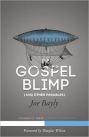
The Gospel Blimp: And Other Parables

–  Joe Bayley

gospel blimpHave you ever wondered the church is such a mess; why missions projects fail, and why some pastors have the backbone of milk-soaked piece of toast? Joe Bayly takes on these questions with a series of short-stories that strike the reader with parabolic power. If you are open to an easy read that tackles the uneasy problems of the modern church with page-turning humor and heart wrenching conviction, I encourage you to read The Gospel Blimp. This collection of short stories was written in the 1960s; it relevance has seemingly only increased with the passage of time.

Quick Peak:

“What repercussions there would be if he coupled these verses for tomorrow’s sermon! The fire would be kindled at eleven thirty a.m. and spread from church through the whole town shortly after noon.

‘‘A sermon against lynching! Why doesn’t he stick to the gospel?” – p.115


Don’t Fire Your Church Members: The Case For Congregationalism

–  Jonathan Leeman

dont-fire-yoruWe all love the church. But few of us have spent time reflecting on how creating a working definition of the church and thinking about how the church should be managed. Leeman’s book on church polity provides insightful looks into both these topics. He defines the local church and then lays out the doctrinal case of elder lead congregational polity. Though written at the popular level, Leeman’s short 200 page book contains many dense sections. But if you have a heart to know more about Christ’s bride and a heart to see your church become more like the churches of the NT, you will find Leeman’s book rewarding. I did. Leeman’s profoundly shaped my understanding of the local church. I trust you too will benefit from this book! If you want the cliff notes version, I encourage you to grab Church Membership by Jonathan Leeman.

Quick Peak:

Congregationalism, in other words, is not about voting on the color of the pew cushions or photocopier purchases. It is not a democracy in which members ask leaders to represent their views. It is, instead, the trust that Jesus has given to every Christian to take ownership of the gospel witness wherever they live. He authorizes them to do this through gathered assemblies. – p. 117


Biblical Authority After Babel: Retrieving the Solas in the Spirit of Mere Protestantism Christianity

– Kevin J.  Vanhoozer.

bible-authorityThe reformation begun in 1517 by Martin Luther has dramatically reshaped Christianity. But change is not always good. Many scholars claim Luther and his fellow reformers undermined the pillars of the Christian faith, preparing the world for secularism and atheism. Kevin J. Vanhoozer devotes his book to answering this charge. He systematically discusses each of the Five Solas – Grace Alone, Faith Alone, Scripture Alone, Christ Alone, and Glory Alone – explaining how the five interrelated doctrines capture the heart of New Testament Christianity. If you desire to know more about the reformation, more about why the doctrines of grace remain essential, or more about why protestants no longer follow the leadership of Rome, grab a copy of Biblical Authority After Babel.

Quick Peak:

Grace is the gift of God’s beneficent presence and activity – that is, the communication of God’s own light, life, and love to those who have neither the right to them or claim on God. Grace is God giving what is not owed. Grace is God in communicative action ad extra. Grace is the economic Trinity, the means by which God extends himself towards others, first in creation and later in redemption. Put simply, grace is the Triune God – God sharing his Fatherly love for creation in the Son through the Spirit. – p.53. 

Jesus’ Dad isn’t Larry: Why The Virgin Birth Matters

A popular theologian once said little Biblical truth would be lost if archaeologists discovered that Jesus’ father was Larry. In other words, he assumed that integrity of the gospel would not be harmed if Jesus’ came into the world through normal biological processes.

The idea of Jesus having an estranged father named Larry is so absurd the notion has become thought provoking. The concept of Larry forces evangelicals to answer the bigger question of: “Is the virgin birth significant?” Is it a topic akin to the discussions of choir robes and overhead projectors? Or is it a fundamental doctrine of the Christian faith? Can we have a credible faith without the virgin birth? Could Jesus’ dad really have been Larry or Joseph or any other human being?

The short answer is, “No.” If Jesus is Jesus, then Jesus could not have had an earthly dad. If archaeologist find Larry’s tomb, the gospel disintegrates into meaningless religious powder. The gospel stands and falls upon the credibility of the Virgin birth. God declared in Isaiah 7:14 that God would give his people a sign. The Messiah would come by a virgin birth. “Therefore, the Lord himself will give you a sign. Behold, the virgin shall conceive and bear a son, and shall call his name Immanuel.” God stakes his credibility upon this claim. If Jesus’ dad is Larry, then either God is untrustworthy, and we have no reason to hope that Scripture’s promise of salvation is true and no reason to assume that Jesus is the Messiah. J. Gresham Machen hit the nail on the head when he wrote,

If the Bible is regarded as being wrong in what it says about the birth of Christ, then obviously the authority of the Bible, in any high sense, is gone.

A handful of scholars have pivoted to Hebrew and Greek dictionaries to prove that the virgin birth was nothing more than the byproduct of bad teaching and untrained religious zeal. These liberal scholars reminded us that both the Hebrew word and the Greek word for ‘virgin’ could also mean young woman or maiden. They claimed God was not predicting a virgin birth but rather the birth of a child named Immanuel who would be either Isaiah’s or King Ahaz’s kid.

Though these scholars correctly point out that the words translated ‘virgin’ have other meanings, they do not have compelling reasons to think that Isaiah is talking about just a young maiden. The prophecy is an attempt by God to show the doubting King Ahaz that God is powerful. Unless Ahaz was dumber than Professor Hinkle who lost his hat to Frosty-The-Snowman, Ahaz would not have been wowed by news that a young woman would have a baby and name the child Immanuel. And the failure of Isaiah to mention either his wife or Ahaz’s wife in this prophetic passage and the chapters surrounding the prophecy also cast a significant shadow of doubt upon the claim that Isaiah is talking only about a young maiden in his day. Modern assumptions that deny the possibility of supernatural occurrences have to be read back into Isaiah to arrive at the conclusion that Isaiah is talking about a normal biological event.

Moreover, Matthew clearly believed Isaiah was pointing to a future virgin birth. He presents the Holy spirit as the progenitor of Christ. Matthew reports, “that which is conceived in her is from the Holy Spirit.” Matthew clearly claimed that Jesus was conceived supernaturally.

Liberal theologians have attempted to reinterpret Matthew’s clear meaning to defend their denial of the supernatural. These scholars argued that Matthew mentions the Holy Spirit as a nod to the presence of God in the normal procreative process. They claim Matthew is simply affirming that children arrive through sexual relations because the Holy Spirit blessed such and such moments. Thus, Matthew is said to be only recounting the normal sexual activity that spawned baby Jesus. Moreover, the Greek word used for virgin could also mean young woman, indicating that Matthew did not view Jesus’ birth to be miraculous.

But if this liberal interpretation is correct, then Joseph would also have had to been dumber than professor Hinkle. Why would Joseph decide to fulfill his marriage to Mary if the angel simply confirmed what Joseph already knew, that God makes babies by procreation? Why would Joseph marry Mary if he was even more sure of her sin and broken vows? Why would he be so protective of her chastity?

Matthew mentions Isaiah’s prophecy, the role of the Holy Spirit, and the whole birth narrative because Matthew clearly believed that the Messiah would be virgin born and that Jesus, the son of Mary and the adopted son of Joseph, was that Messiah. Matthew’s gospel makes the most sense if it is read as a historical account of the birth, life, death, and resurrection of Jesus.

Like Luke, Matthew compiled his narrative through interviews and historical exploration, desiring to provide a credible work. Matthew recorded the virgin birth because it was a historically attested fact that proved Jesus’ divinity. He did not create Jesus; he described him.

Moreover, the early church fathers affirmed the historicity of the virgin birth. The Old Roman Creed, the first creed of the church which appeared around 341 A.D, says, “I believe in God the father almighty; and in Christ Jesus His only Son, our Lord, Who was born from the Holy Spirit and the Virgin Mary.” The virgin birth was not seen to be a myth forced upon Christianity by overly zealous, religious neanderthals. It was a historical fact readily affirmed by the church.

Today, men and women deny the virgin birth because they deny the supernatural worldview that proclaims God to be the just and Holy ruler of the universe.

When a man or woman says that Jesus was the son of Larry or some other man, they are denying the trustworthiness of the gospel as revealed in the Scriptures. If Jesus was not born of a virgin, we have no reason to trust what the Bible says about sin, the cross, or the resurrection. The Bible is a complete package. If we remove one pillar, the entire building collapses. If there is no virgin birth, we have no need to be concerned about sin or salvation.  If Jesus’ dad was Larry, we have no gospel. Machen noted correctly,

It is not this or that element of the Christian religion that is here at stake, but all elements of it, or rather the Christian religion as an organic whole

Thankfully Jesus’ dad is not Larry. Both our heavenly father (as seen in the gospel of Matthew) and the early church affirmed the virgin birth. And though, we often have to strain to find time to contemplate the virgin birth as we swim through the busy swirl of the Christmas season, such theological meditations always prove beneficial.

When we realize that the God of the universe is trustworthy and that none of his words fall to the ground, we will find our hearts filled with hope this Christmas season. We will see that we have every reason to believe that God will deliver us from our trials. We will understand that we have every reason to believe that Jesus will save us from our sins. We will come to realize that Jesus is both fully man and fully God, the perfect sacrifice who pays the penalty for all our sins. We will find the truest of hopes!

The virgin birth is a wonderfully essential doctrine of the Christians faith. Don’t you agree?