Finding Clarity in Confusion: Understanding Lloyd-Jones’s 1966 Address

The following was published at Credo Magazine which is an excellent theological resource for scholar, pastors, and lay readers! I highly encourage you to visit their sight.
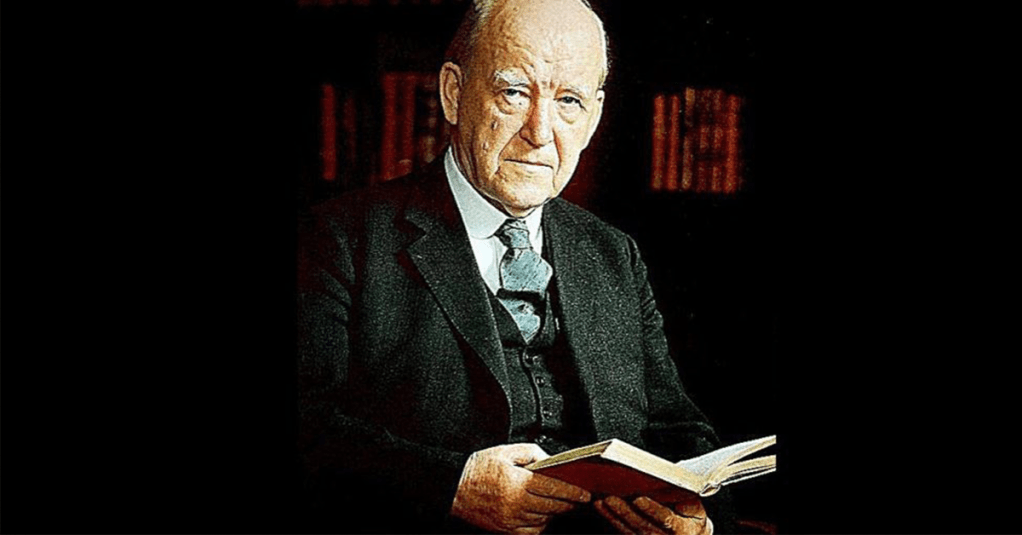
Confusion hung over the crowd of the Second National Assembly of Evangelicals like a cloud of secondhand smoke. Moments earlier, the famed pastor D. Martyn Lloyd-Jones had appealed for the creation of a new evangelical association. He believed an evangelical exodus from mainline denominations would facilitate “a mighty revival and re-awakening.” As he brought his appeal to an end, everyone seemed to know what was expected of him or her. The evangelical leader John Stott shared this impression believing his audience would “go home and write their letter of resignation that very night.” Fearing that this assembly which had been formed to further ecumenicism was about to condemn ecumenicism, Stott broke professional protocol and proclaimed, “I believe history is against what Dr. Lloyd-Jones has said…Scripture is against him, the remnant was within the church not outside of it. I hope no one will act precipitately.”

The battle had been engaged. Yet few in attendance could clearly articulate why these two leaders of British evangelicalism had exchanged blows. Both seemingly advocated for the gospel, the supremacy of the Scriptures, and unity. Yet they had both just thrown verbal punches at one another. The crowd was confused. Historians and theologians are still confused about what happened.

Much of the confusion over what had transpired on October 18, 1966 centered upon the content of Lloyd-Jones’s now famous speech “Evangelical Unity: An Appeal.” Stott and the evangelical press of the day believed that the Doctor’s speech “should be interpreted as calling for evangelicals to leave mixed denominations.” They believed Lloyd-Jones was schismatic, working against the unifying influences that had risen to prominence in British evangelicalism during the 1960s.

By contrast, the supporters of the Doctor believed Lloyd-Jones had offered a positive appeal that had little to do with the creation of a new denomination. His grandson and historian, Christopher Catherwood, concluded, “The doctor was arguing for unity, not for division or schism.” The debate over whether or not Lloyd-Jones was a unifier or schismatic still smolders in more than one evangelical fire pit and will not be put out anytime soon.

Though many scholars huddle about the fires that seek to illuminate the Doctor’s intentions, little effort has been devoted to understanding why Lloyd-Jones’s speech proved confusing. While scholars have credited Stott, the evangelical press, and Lloyd-Jones with igniting the fire of controversy, they have not examined why Lloyd-Jones’s 1966 address was so ready for the kindling.

Why the Confusion?

Lloyd-Jones’s address lacked clarity in part because it lacked Scripture. Though Lloyd-Jones believed evangelicalism had reached a “most critical moment” in 1966, he approached this monumental time with only a partially open Bible. He referenced the Word of God twice during his speech, mentioning Acts 2:42 and the “First Epistle to the Corinthians.” He spent more time discussing the Reformation than exegeting the Word of God. Consequently, J.I. Packer would conclude the Doctor had contended for a kind of Puritanism. Other listeners believed the Doctor had been consumed with denominational concerns. Catherwood wrote his grandfather had placed “his emphasis on structure rather than doctrine.” The Doctor had been misunderstood because he stood upon logic and church history instead of the Scriptures. Because of this mistake, he suffered the loss of both friends and influence.

The Lessons of Failure

Pastors, theologians, and lay leaders should take note of Lloyd-Jones’s failure. The man who had devoted his life to glorifying God through sermons designed “to make doctrine real to the heart and therefore permanently life-changing” had stepped out from underneath the shadow of the Scriptures. Without the Word of God, the Doctor’s logic and knowledge of church history proved to be as vibrant as a water-soaked piece of charcoal.

If Christians wonder into ecclesial, social, or political spheres without the Scriptures, they too risk being misunderstood by their listeners. Such presentations may win some adherents in the moment, but they will not advance the gospel, strengthen the Church, or edify local congregations. Lloyd-Jones correctly noted, “You cannot build up a church on apologetics, still less on polemics. The preacher is called primarily to preach the positive Truth.” The Christian’s ability to influence others rests upon his or her ability to exegete and teach the gospel. The Christian has no other power. The people of God must ground their arguments in the Word if they hope to influence hearts.

Lloyd-Jones: A Man of the Scriptures

In many respects, Lloyd-Jones would recover from the wounds of the 1966 controversy because he never wandered far from the Scriptures. Over the course of his life, he lived by the maxim, “Any doctrine that we claim to believe from the Bible must always clearly be found in the Bible.” Three years after the controversy of 1966, the Welsh pastor delivered perhaps his most famous lectures in Philadelphia. These addresses would later be edited and published under the title, Preaching and Preachers. His influence did not stop with this volume. Crossway and Banner of Truth continue to release new editions of his sermons and lectures which cover everything from Romans to the Psalms to the theology of parenting. He was a profoundly biblical man. As his daughter Elizabeth Catherwood noted, “He read his Bible regularly. He knew it and loved it. At the very end, when he couldn’t speak, he would point to verses out of it.” The Doctor remains a fixture upon the evangelical mantel because he loved the Word.

Lloyd-Jones, the Scriptures and 1966

Even his 1966 address had been sparked by his earlier exegetical work. Many of the arguments the Doctor put forward in 1966 had appeared in a booklet he wrote in 1962. In those pages, Lloyd-Jones built his understanding of ecumenicism upon his exegesis of John 17 and Ephesians 4. The booklet restated the conclusions of numerous exegetical sermons he had preached at Westminster Chapel in the 1940s and 1950s. Though Lloyd-Jones shared only his logical conclusions in 1966, they were conclusions that had been extracted from the Scriptures. He had not abandoned his principles. Rather, he had forgotten to fully share them. This oversight doomed the Doctor’s address.

The Scriptures clarify and empower our thoughts; our thoughts do not clarify and empower the Scriptures. Regardless of the Christian’s training, intellect, and persuasiveness, nothing can compensate for the absence of the plain and powerful words of the Scriptures. As Lloyd-Jones said in 1969, “What matters is not the man or his ideas: it should always be this Word, for it alone is the sources of the preacher’s authority.” May God keep us grounded in this Word.

Bad Polls, Fear, and the American Psyche

The prophets of the American political industry have failed the American voter. Days and in some cases only hours prior to election day 2020, a majority of pollsters predicted that a blue wave would sweep across America and would gently deposit Vice President Joe Biden on the lawn of the White House. According to the Real Clear Politics polling average, Vice President Biden possessed a 7.2% advantage over President Trump in the national vote. FiveThirtyEight said Biden had an 8.4% advantage. The Vice President was also projected to take Michigan by a 4.2% to 8% margin and Florida by a 1.1% to 2.5% margin. He was then supposed to speed across North Carolina and eventually contest if not flip Ohio, Iowa, and Texas. Few of those things occurred. Trump had almost a 4-point advantage in Florida, and a 6-point advantage in Texas. Though he seems to have lost Georgia, he has held firmly onto Iowa.

If readers dive into the Senate races, they will discover even greater polling inaccuracies. For example, Susan Collins was supposed to lose Maine by 6%. She won by more than 9%. Mitch McConnell and Lindsey Graham were also supposedly fighting for their political lives. McConnell garnered a 20-point victory and Graham had a 10-point victory.  At the end of the 2020 election cycle, the polling industry appears to be as credible as the physic hotline industry. Or to use the words of the Atlantic, the polling industry faces, “serious existential questions.” They do. Let’s tackle some of them.

Why Were the Polls Wrong?

Undoubtedly, the polls’ inability to capture the sentiment of the American voter reveal something of the biases of those who run the industry. But the phenomenon also exposes a fundamental problem with the American psyche, a psyche that has fallen victim to fear.

Fearful Pollsters

Americans like winners. If the polling data rummaging around the internet reveals that candidate A will most likely lose to candidate B, some of candidate A’s supporters will choose to avoid the polls on Election Day. After all, what is one more vote for a lost cause? By the nature of their societal position, pollsters have the power to both report and to shape public opinion.

The gross discrepancy between the election and the polls indicates that some pollsters may have exploited their position and played statistical gymnastics with the data they have collected. They appear to have published reports that reflected their wishes for the American voter instead of the electorate’s wishes for their nation.

Left to itself, the American electorate possesses the ability to choose both great and not-so-great candidates. To prevent the ruin of the nation that they love, some pollsters have stopped listening to the voters and have attempted to manipulate them through social engineering. Their misstated data promises to bring out certain voters and to suppress others, helping the “great” candidate win. The ethics involved in such a decision prove problematic because they express of fear of neighbor. In short, some pollsters fear the electorate lacks the wisdom to choose its own leaders.

Though the pollsters fear the average voter, they also covet that voter’s approval. To get that approval, pollsters must provide the electorate with meaningful data. Speculation that candidate A may win proves far less exciting than a poll that says candidate A has a 7-point lead. That seven-point advantage proves relevant because of the pollster’s margin of error. The margin represents with a 95% confidence level how much variation could occur if another pollster ran the same poll with the same respondents and questions. Most polls claim a margin of plus or minus 3-points. If candidate A was polling at 54%, the margin of error would allow that her real numbers could be between 51% to 57%. Thus, voters would conclude that candidate A appeared to be on the path to victory. The information proves insightful and noteworthy.

But according to a UC Berkley study, the margin of error is almost twice that of what the average pollster reports. When polls are compared against election results, the margin of error for most polls doubles to 6%. If we go back to our imaginary poll and apply this correction, candidate A could now be polling at either 60% or 48%. She could be on her way either to a huge victory or a close defeat. Such a poll proves far less definitive and by extension far less newsworthy. Instead of admitting their human frailty, most pollsters say that their margin of error still hovers around the 3% range. Fear of the electorate and of rejection drives many pollsters to distort and exaggerate reality, undermining political discourse.

Fearful Voters

But the fault for the erroneous polls does not lay only at the feet of those crunching numbers on their laptops. The American electorate is also becoming increasingly fearful. Pollsters have noted that fewer and fewer voters will participate in polls. Voters will not share the information that pollsters need to create accurate polls. The head pollster for the Trafalgar group reported that a majority of those who participate in polls possess either deep partisan affiliations or large amounts of boredom. Essentially only those willing to die for their cause or those so desperate for human interaction that they welcome a telemarketer call talk to pollsters. The average voter who looks to the polls for guidance about what tomorrow will bring proves to be the very person who will not respond to the pollsters’ phone call, text message, or email.

Photo by Element5 Digital on Pexels.com

Seemingly, the American electorate increasingly fears the pollsters. The average voter has seen the press, the pollsters, and the Twitter mobs dub some candidates to be the embodiment of racism, intolerance, and hatred. The electorate fears that going on the record to support the manifestation of Satan or supporting a satanic cause could result in their Twitter account being suspended or the termination of their job. Though the pollsters promise confidentiality, the American voter cannot help but wonder what would happen if some unscrupulous employee released the polling database and exposed their answers to the American public, a group that increasingly criminalizes and then asks questions. The average voter fears both the pollster that he doesn’t know and the neighbor he does know. Discourse which helps American politics to thrive and adapt has been broken down by fear.

For the sake of full disclosure, I need to admit that I too felt this fear in my gut as I came to the final question of a YouGov survey. I thought to myself, “Do I really want my name attached to this data? Will I be punished?” I wasn’t sure. So, I sat staring at the iPhone screen.

The Explanation and Solution

Why are the polls so off? Why is the American psyche shaped by the fear of neighbor instead of the love of neighbor?

The American voter has become increasingly less religious, less Christian. According to a 2019 Pew research poll, only 65% of Americans identify as Christians, a decrease of 13% over the last ten plus years. When Americans drift away from Jesus, they wander away from the embodiment of love which cast out fear. The soul that trusts in Jesus has no reason to fear its neighbor. Jesus has conquered the shame of sin and the fear of death when he died on the cross and rose again. He bequeathed the liberating power of the cross to all who trust in him for salvation and unites the heart of his children to the love of God. Thus, the Christian is not defined by his neighbor’s vote, approval, or disapproval but by the love of God, a love that can never be lost (Rom. 8:38-39). Since God loves the Christian, he or she can enter the political discussion without fearing either the electorate or the pollster. The Christian does not have to fear the American voter for that subset of individuals cannot elect a politician that will separate the Christian’s soul from God. And the Christian voter does not have to fear the pollster because a leaked survey or suspended social media account will not separate the believer from the love of Jesus.

There is no fear in love, but perfect love casts out fear. For fear has to do with punishment (1 John 4:18).

At the end of the day America does not need an infusion of better pollsters. The electorate needs an infusion of the faith that casts out fear.

…and that YouGov survey…well if you want to know how I voted, I encourage you to check out the results of the November 3, 2020 YouGov election poll. My opinion is hidden somewhere in all their data.

Thanks for visiting the witkowskiblog.com If you have other insights or thoughts on the 2020 polls please drop a comment below.

Did the Reformation Destroy the ‘Church?’

Catholics, academics, and some protestants view the Reformation launched by Martin Luther on October 31, 1517 as being a less than helpful historical development. Prior to the posting of the 95 Theses on the door of the Wittenberg Chapel, seemingly one unified Christian church existed. Our Christian friends in the East who assemble under the banner of the Greek Orthodox Church take issue with this Western view of church history. Almost five hundred years before the Reformation, they broke with the Bishop of Rome on July 16, 1054. But the great schism did not destroy the unity of the Western Churches. Luther and the second generation of Reformers deserve the credit or the blame for that development. Baptists have a president, Methodists have bishops, and Presbyterians have presbyters in part because Luther walked off the field and refused to play with the historic and unifying expression of Christendom, the Roman Catholic Church.


Did Luther and Sola Scriptures Destroy the Church?


But is this truly what happened? Did Luther’s quest for a purer church destroy “The Church,” dividing that which God has always intended to be unified?


Those who view the Reformation to be primarily schismatic in nature, point to the most famous line of the Reformation. At the Diet of Worms in 1521, the representative of Pope Leo X demanded that Luther recant of his errors and his teaching. His errors included such things as Thesis 36 which stated, “Any truly repentant Christian has a right to full remission of penalty and guilt, even without indulgence letters.” Luther asked for an adjournment of the meeting to form his response. When he returned to the hall the following day, he replied:


I will answer without horns and without teeth. Unless I am convicted by Scripture and plain reason – I do not accept the authority of popes and councils, for they have contradicted each other – my conscience is captive to the Word of God. I cannot and I will not recant anything, for to go against conscience is neither right nor safe. God help me. Amen.”

Here I Stand

Protestants champion Luther’s statement because it encapsulates the idea of Sola Scriptura, Scripture alone. Instead of looking to Rome for truth, protestants can scan the Bible and discern God’s truth through plain reason. Luther had shifted the authority of the church from the Pope’s throne to the pew. Protestants rejoiced.

Christendom quaked. The democratization of the church’s authority threatened to destroy all authoritative claims. Any man or woman with access to the Bible could reason himself or herself to a variety of doctrines that may have no relation to the doctrines proposed by other Christians. Essentially Luther and the Reformers who followed the pugnacious monk had turned theology into a subjective experience that seemingly undermined the idea of truth, leaving no place for cultural much less spiritual unity. Interpretive anarchy reigned.


What Did Luther Really Do?

Though Luther and those in the Reformed camp turned the world upside down, they were not seeking to create a new church, modeling a theological paradigm of unending evolution and progress. The Reformers were inherently theological conservationists who wished to lead the Church back to the historic, apostolic faith. Luther had said his 95 Theses aligned, “with what is in the Holy Scriptures…and then what is in…the writings of the church fathers.”

Luther had not advocated for theological anarchy. He and those who followed him believed that the Holy Spirit that had inspired the New Testament text, converted the lost and sustained the church as the caretaker and protector of the evangelical witness. Christians were free to interpret the text according to their own conscience as long as that conscience aligned with the Scriptures and the testimony of the historic church that affirmed the apostolic witness. Theologian Kevin Vanhoozer correctly noted that for the Reformers, “Tradition was not the Word of God; it is the testimony to that Word.” Luther took issue with the Pope not because the Vatican championed tradition. He took issue with Rome because it advocated for theological positions that ran counter to the Scriptures and the testimony of the historic apostolic faith. Vanhoozer helpfully describes what Luther did, writing,

Protestantism is not the virus that divides and attacks the body; it is the antibodies that set to work attacking the body’s infection (e.g. late medieval Roman Catholicism).

Luther had not protested the authoritative nature of apostolic tradition as taught in the Scriptures. He protested against the commands of the Pope because the Pontiff, “distorts the Holy Scriptures.” He was not an theological anarchist. He was theological purest, Sola Scriptura.

Why Is the Church Fractured?

The church lacks unity not because the reformers protested the authority of Rome but because men and women of every age refuse to acknowledge the Scriptures and the apostolic tradition of the Church as Rome has done. The ancient church father Irenaeus whom Luther knew well described schismatics as follows:

When we refer them to that tradition which originates from the apostles, which is preserved by means of the succession of presbyters in the Churches, they [the schismatics] object to tradition, saying that they themselves are wiser not merely than the presbyters, but even than the apostles, because they have discovered the unadulterated truth.

The unity of the church fractures when men and women walk away from the apostolic witness of the Scriptures, preferring new sources of authority ranging from prophetic dreams, to religious traditions, to personal feelings. Regardless of their claims, the new traditions always produce schism.

Luther did not infect the church with schism. He reintroduced the church to the cure for division, the gospel once delivered for all and attested to be all true believers. May we be wise stewards of the cure.