Anna Who Waited: How the Means of Grace Sustain the Grieving

When my dear wife stopped breathing, I instinctively and instantaneously began yearning for the wholeness that had been. Though I longed for a quick fix, the God of Abraham, Isaac, and Jacob does not guarantee his members two-day shipping. At times, we will have to wait weeks, months, years, and even lifetimes for God to restore and heal what has been lost. In other words to grieve well, we must learn to wait well.

Half The Story: Make Your Bed And Do the Next Thing

A few year back, Admiral H. McRaven made waves in American culture when he asserted that, “If you want to change the world, start off by making your bed.” He explained, “It will give you a small sense of pride, and it will encourage you to do another take and another and another.” Though there exists a whole litany of reasons why someone might not make their bed first thing in the morning (for example sleeping spouses and children generally don’t appreciate being folded into sheets at 5AM), the basic idea behind the “make your bed principle” still stands. When everything is not what it should be and when we feel like quitting life, we do not need to climb Mt. Everest. We only need to do the next thing: take a shower, pick up the kids from school, or organize those pillows at the foot of the bed. Such an attitude can keep depression from spiraling into an ever-growing vortex doom which grows in size with ever failed tasks. But while the determination ‘to do the next thing’ proves essential to survival while grieving (click here for a fuller discussion of this topic), it cannot restore and sustain our aching souls as they wait for wholeness.

That Something More: Prayer and Fasting

Life comes not from our resolve but rather from our dependence upon the author of life through prayer and fasting. In Luke 2:36-37, the gospel author introduces us to the prophetess Anna. Like all young women of her day, she had entered marriage at a young age anticipating all the joys that come with having a family. But the children never came. Before she reached her eighth wedding anniversary, her husband would die. She would spend at least the next sixty years (if not more) as a widow waiting for the appearance of the Lord. How did she survive all those long years of waiting in the midst of grief? Luke relays the secret of her success writing “She did not depart from the temple, worshiping with fasting and prayer night and day (Lk 2:37).”

Upon the death of her husband, Anna doubled down on her faith. As Asaph before, Anna trusted that she would find answers to her grief, sorrows, and afflictions in the house of the Lord. In the words of Psalm 73:16-17 “But when I thought how to understand this it seemed to me a wearisome task, until I went to the sanctuary of God.” Eternal perspective and its resulting hope comes not through relaxation, new friendships, or our contemplative walks. It comes through worship that is facilitated by the people of God in the house of God. As the author of Hebrews notes God uses liturgies, songs, sermons, and corporate prayers to stir us up “love and good works (10:24).” If we hope to make sense of our longing, our sorrow, and the goodness of God as we wait, we must enter the temple of the Lord.

And we must do so actively. Once inside the temple, Anna prayed and fasted. She deprived her body of food to represent the brokenness that she felt and to affirm that her salvation did not reside in God’s good gifts but in God revealed through Scripture. To quote Psalm 119:92, “If your law had not been my delight, I would have perished in my affliction.” In other words, the power to keep waiting, to survive the sorrows of grief comes from the Lord through the Scriptures. Moreover, the very ability to understand and obey those scriptural promises also comes from the Lord. He must open our eyes so that we can “behold wonderous things out of” his law (Ps 119:18). Every time her stomach growled, Anna affirmed afresh Deuteronomy 8:3, which declares, “man does not live by bread alone, but man lives by every word that comes from the mouth of the Lord.”

Not only did Anna depend upon the word of God and his means of grace, but she also knew the God of the temple would act. The great king David had written in Psalm 34:6 that: “The poor man cried, and the Lord heard him and saved him out of all of his troubles.” God had acted and saved David from his political enemies. She also knew she was not the first woman to fast and pray in the Lord’s house. Before there was a king David or a temple, Hannah the future mother of the great prophet Samuel, entered the tabernacle (a holy tent structure where the Jews worship the Lord) desperate for a child. Scripture said of her, “She was deeply distressed and prayed to the Lord and wept bitterly.” In taking her sorrows to the Lord, Hannah shows us that those who have been overwhelmed by the waves of grief can and will find hope, relief, and encouragement in the knowledge that “By day the Lord commands his steadfast love and at night his song is with me (Ps. 42:3, 8).” Though her soul was melting away with sorrow, Hannah found contentment, hope, and eventually a son through her prayers. Likewise, Anna remained faithful to the Lord for over six decades and got to see the Christ child because she never stopped taking her concerns to the Lord who sustained her. In the words of John Flavel, “It is not your inherent strength that enables you to stand but what your receive and daily derive from Jesus (130).” To take one’s concern’s to God is more than an psychological, therapeutic exercise. It is an expression of faith in God’s goodness that in turn produces more faith, the very faith that will sustain us as we wait.

The Apostle Peter and What Not to Do

The worst thing we can do as we wait for wholeness is to trade prayer and fasting in God’s house for self-reliance. If we switch out the things of God for shopping, nights out, and vacations, we will find ourselves buddying up to the apostle Peter on the night when he betrayed Jesus three times and then descended into deep despair. As theologian D.A. Carson helpfully notes, “People do not drift towards holiness.” Or as Jesus warned Peter, “Watch and pray that you may not enter into temptation. The spirit indeed is willing, but the flesh is weak.” Because Peter neglected the normal means of grace, Peter found himself not at Jesus’s side as the events of the crucifixion unfolded but fleeing into the darkness of the night. Neither made beds nor vibrant faith come about through magic, well wishes, or happenstance but through intentionality.  If we neglect the means of grace, our waiting will not end in joy but in the unrelenting despair of unnecessary sorrow.

Admittedly, we can attend church, fast, and pray for all the wrong reasons. Jesus cautions us against retooling such things for personal gain, saying, “But when you fast, anoint your head and wash your face, that your fasting may not be seen by others but by your father who is in secret. And your father who sees in secret will reward you (Mt 6:17-18).” But the solution to bad rhythms and misuses of God’s good gifts never proves to be the elimination of those means of grace but rather the proper usage of them. We do not abolish speech because of lies nor marriage because of sexual sin. Similarly, we should not avoid church, fasting, and prayer because we or someone else we know fasted or prayed poorly.

And when we do find ourselves reading, praying, and fasting with a cold or faithless heart, we need only to confess those sinful motives to the Lord and ask for fresh love. Grief is not a time for new inventions or indolence but rather a time for pressing into those simple and yet extraordinary means of grace that we were hopefully employing before the tragedy of death struck our hearts.

Our Hope

And we do all of this because the God who hears our prayers promises to answer our prayers precisely because we are poor and needy. One day soon, our waiting will come to an end. We will see the redemption of Jerusalem. For some of us, that answered prayer might take the form of a spouse, a child, or a new friendship. For some of us that moment will come when God reduces our desires and thereby brings them into line with his secret will for us. And for some of us, that moment may not come until we see Christ face to face. But it will come. Just assuredly as Anna saw the newly born savior and bore testimony of that joy to all who would listen, we too will soon see Jesus. And when we do, all grief and sorrow will be made well. Friends do not grow weary in your waiting. Do not neglect the means of grace. Go make your bed, but even more importantly go with Anna to the house of the lord to pray and fast. God hears our prayers!  

How an Introduction Destroyed the Hope of Transcendentalism: A Review of the Scarlet Letter

The Scarlet Letter grabs the reader’s attention in much the same way a wreck between a Ferrari and a Porch does. But the most remarkable facet of the book is not Nathaniel Hawthorne’s mishmash of tedious descriptions and keen insights into the psychology of shame and repentance but rather his inability to overcome with his own hubris. In his attempt to show how humanity has progressed beyond the cold and unflinching, intolerance of puritanism, he inadvertently reveals humanity’s nature to be unmovable. And he accomplishes all this before the reader event gets to chapter one.

Too Many Words

Before introducing readers to the firmly resolved Hester Pryne who is branded with the infamous letter for her infidelity, the unstable Reverend Mr. Dimmesdale who is the father of Hester’s child, and the ever-scheming Roger Chillingworth who seeks to covertly punish the pastor for his unconfessed sin, Hawthorne invites his readers to hear about the story behind the story. Although he could have recounted it in the space of two or three pages how he stumbled upon the scarlet letter that inspired this American classic, Hawthorne devotes some forty-seven pages to this tale. Those pages quickly put the transcendental author on the defensive. About a month after his book went to print, Hawthorn found himself having to add an addendum to the second edition of his book this story behind the story had “created unprecedented excitement.”

Somewhat understandably, Hawthorne’s first audience took exception to his negative description of those old men who propped up the Boston Custom House which once employed the author. Hawthorne portrayed his coworkers as being indolent if not outright incompetent government employees. Having, “flung away all the golden grain of practical wisdom, which they had…so many opportunities of harvesting (18-19), most of Hawthorne’s aged coworkers now spent their days mastering the skill of napping with one’s chair propped against the wall. Even the two people who managed to earn some respect from Hawthorne still proved less than laudable. Though the inspector did his job well, according to Hawthorne this leader still possessed “no soul, no heart, no mind, nothing.”  The patriarch of the Custom House knew nothing of beauty and talked only of food. Food. To quote Hawthorne, “It was marvelous to observe how the ghosts of bygone meals were continually rising up before him…A tender-lion of beef, a hind-quarter of veal, a spare-rib of pork, a particular chicken, or a remarkably praiseworthy turkey.” Hawthorne spoke a touch more kindly about the rusty general. Though Hawthorne avoided conversation with the now decayed man, the author still found some delight in watching the general’s “almost slumberous countenance” because he could at times display “a ray of humor” or some other praiseworthy trait (25).

Though Hawthorn believed that his soul had benefited from being forced “into habits of companionship with individuals unlike himself,” he still found those who had abandoned the ideals of nature for the doldrums of the Custom House as being less than good. He described them as having fallen victim to the “Devil’s wages.” Thankfully, Hawthorne ‘escaped’ from such enchantments among other things through his meditations upon the scarlet letter that produced the book by the same name. He was in the truest of senses, “a citizen of somewhere else.”

A New Letter for A New Age

Given the vast distance between myself and the author, I happily defer to Hawthorne’s knowledge of his coworkers and presume his descriptions of them to be accurate. But they cannot be said to be kind or needed. Criticisms of others that only highlights one’s own abilities and merits cannot help but appear selfish and thereby somewhat petty.

By going after his coworkers, Hawthorne reveals that his new ethic has not advanced beyond “the blackest shade of Puritanism” that had “so darkened the national visage.” The scarlet letters still exist in Hawthorne’s age albeit now slightly reworked.

Instead of condemning Hester and the Reverend Mr. Dimmesdale for breaking a religious law that had been so mangled by society that it prevented the very displays of love and goodness that it should have protected, Hawthorn now condemns his contemporaries for a much less harmful crime, the crime of dullness. But instead of placing the criminals of his age on a platform for a few hours, our author has placed the objects of his disdain atop the pages of his book so readers can view his coworkers letters of shame for posterity.

Despite all his efforts to elevate humanity from the depressing confines of Christendom, Hawthorne’s ethic proves not to have reached upward but rather sidewise. The pettiness of his ancestors that he so hated is still alive and well in Hawthorne’s heart. Though freely critical of his coworkers, Hawthorne maintained a much more favorable view of himself writing, “I was, A Surveyor of Revenue, and, so far as I have been able to understand, a good a Surveyor as need be (28).” Just like the crowds who stared at Hester, Hawthorne failed to heed Jesus’s warning against seeing “the speck that is in your brother’s eye” while refusing to “notice the log that is in your own eye (Mat 7:3).” Ironically, Hawthorne sought to atone for his forefathers sins by committing them anew. To borrow the words of Reverend Mr. Dimmesdale, one might say of Hawthorne, “He spoken the very truth, and transformed himself into the verist falsehood.”

How Sin Made the Book a Classic

Moreover, I suspect the book remains a classic because humanity has not fundamentally changed with the passing of time. The modern reader can still relate to Hawthorne’s description of the Reverend Mr. Dimmesdale for they too have experienced shame, offered half-hearted confessions, and languished under the sorrow of unrepentant sins. Others know the sorrow that comes from nobly enduring injustice at the hands of the self-righteous. And I suspect many too have enjoyed the liberation that comes through confession described in the books closing pages. Moreover, the twenty-first century reader could just as easily say as Hawthorne did that his political opponents might “guillotine” him if given the chance. Humanity is still the same.

But perhaps most of all, today’s readers can relate to Hawthorne because they too long to find life outside the law. In one sense, such an urge is good and proper for salvation does not come through the law. As the apostle Paul notes in Romans 7:10: “The very commandment that promised life proved to be death to me.” But unfortunately for Hawthorne and his readers, it also does not come through the removal of the puritanical or biblical law. When men and women remove the law of Scripture, they always fill the newly created void with another law of their own creation, a new letter of some other color to be branded onto a new generation’s chest. Rather salvation comes through the fulfillment of the law in the person of the Lord Jesus Christ who dies not so that we can discover ourselves but so that we can be good and know the joy of a clean conscience. In other words, we need not go to the woods but to the cross to find ourselves. Sadly, Hawthorne’s book reveals that he never grasped the beauty of this truth, the truest of truths that alone explains and redeems the human condition. In other words, Hawthorne understands something of the human condition but is powerless to improve it. And we discover all this simply by reading the introduction.

My Top Reads of 2023

Though it is something to have one’s words appear on a printed page (unless of course said printer is the one found in your home office), it is still much more of a something to have those same words appear in print a decade if not even a century later. While not exactly hot off the press, the three volumes below proved the most edifying and stimulating to my soul this past year. Thus, I happily pass along some aging and well-aged volumes to you.

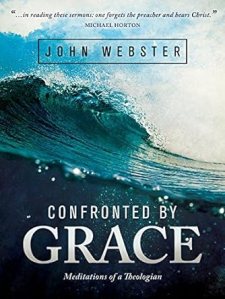
Confronted By Grace

By: John B. Webster

Making full use of his academic genius and renowned conversationalist skills, Webster skillfully presents deep doctrinal truths in a manner that quickly connects them with the readers heart. In the span of 247 pages, Webster provides his readers with manageable definitions of worship, anxiety, grace, faith, and many other topics that prove essential to the wellbeing of our souls. With his terms defined, the Anglican professor then thoughtfully applies the doctrines to his readers lives in the ensuing 4-5 paragraphs. In other words, Webster connects the Scriptures to his readers’ minds and emotions without devolving into the cheap sentimentality that has come to define so much of Christendom. As Michael Horton said of these short, doctrinal sermons, “One forgets the preacher and hears Christ.” Those who incorporate sermons into their devotional life or who are seeking to grow in their understanding of how to live out their Christian faith would greatly benefit from reading these sermons by the late John Webster. 

Excerpt:

Faith sees the truth about God and God’s merciful, gracious kingdom which is embodied for us in Jesus Christ. Faith is not just some crazy hope against evidence (indeed, when it becomes that it is itself a king of sickness). Quite the opposite: Faith is that deeply healthy state of the soul in which we let God be God. It’s that free, unhesitating, joyful assent to the one in the midst of whose kingdom we stand secure.

Devotion

By: Adam Makos

In the span of 445 up-tempo pages, Makos captures the essence of brotherly love against the backdrop of the Koren War. Though the movie that bears the same name as the book above portrays Jesse Brown as an angry black man, jaded by racism and Tom Hudson as a naive white man, lacking experience, the book teases out a much more complex, inspiring, and beautiful narrative. Though Jesse unquestionably encountered the brutalities of racism as children spat on him, teenagers assaulted him with eggs, and navy colleagues made unkind remarks, he was not an angry man on a mission, but rather a loving husband, father, and Christian, who longed to be home with his wife and daughter. Though much of the world was against Jessie, he easily inspired and won the friendship of men like Tom who shared the former sharecropper’s work ethic and love of neighbor. While on the ground attempting to save Jessie who had been shot down moments earlier, Tom said of his friend, “Jesse was so calm through it all, I’ve never seen anything like it…When we were on the ground, he was calming me down, when I should have been calming him down (393).” Tom, who almost never flew because of bouts with airsickness, also possessed remarkable fortitude. He stayed by Jessie’s side in the cold snow until his death and then stood with his wife and daughter in the years that followed. In a world of causes and movements, we would do well to spend more time reflecting on the bonds of friendship which can withstand even the strains of war. I fully agree with Makos that, “The world needs Jesse Brown and Tom Hudner, now more than ever.”

Excerpt

Against a backdrop of gray clouds, the two blue Corsairs dived toward the snowy mountains. Tom glanced at Jesse as their planes plummeted side by side. Jesse’s helmeted head scanned back and forth, his eyes searching for a place to crash. He was going down, seventeen miles northwest of Hagaru, deep inside enemy territory.

An Ark for All God’s Noahs

By: Thomas Brooks

Thomas Brooks’ 261-page volume serves as a spiritual b12 shot for believers who have been wounded and wearied by the world. Knowing that only a Christian’s unbelief could separate him from the glorious promises tied to the death and resurrection of Christ, Brooks wanted to help his readers get hold of their inheritance. He noted, “Nothing can make that man miserable that has God for his portion, nor nothing make that man happy who that wants God for his portion (xvii). In the first section, Brooks outlines, quantifies, and defines the nature of God’s promises, reminding the believer that God is the source of all goodness. The Puritan then explains why God freely bestows his goodness on those who believe before applying the doctrine to a host of practical concerns. He then ends the book answering objections that some of his readers had such as, could sin keep them from experiencing God’s promises. Though the book was first published in 1666, the promises of God that Brooks highlights remain forever relevant. And when Brooks makes use of a Latin phrase or even an awkward English expression, the Banner of Truth edition contains footnotes that quickly blow away any clouds of confusion that might otherwise disrupt the reading. If you want to be reminded afresh of just how amazingly good, loving, just, merciful, and patient our God is, I encourage you to read this book!

Excerpt:

If God be your portion, then every promise in the book of God is yours, and every attribute in the book of God is yours, and every privilege in the book of God is yours, and every comfort in the book of God is yours, and every blessing in the book of God is yours, every treasury in the book of God is yours, and every mercy in the book of God is yours, and every ordinance in the book of God is yours, and every sweet in the book of God is yours, if God be yours, all is yours.

Two Bonus Picks

Right Ho Jeeves by P.G. Wodehouse – “You know how it is with some girls. They seem to take the stuffing right out of you. I mean to say, there is something about their personality that paralyses the vocal cords and reduces the contents of the brain to cauliflower.

Expositions of Chapter 6: The New Man by Martyn Lloyd-Jones – “The cure for that [depression] is to realize that, whether you have sinned or not, you are in Christ; that sin does not affect you yourself as a person, that it cannot bring you again into its realm and reign; that sin only remains in your mortal body, and that – even that – because you are in Christ is going to be entirely set free.”