
Seeing worry take hold of our child’s face, we begin frantically scanning our mental database of naughty children. We seriously wonder why some erudite person measuring less than four feet tall would shatter our child’s sweet imagination by declaring, “Santa Clause isn’t real.” And now thanks to this miniature scrooge, we must look into our child’s perplexed eyes and answer the lump of coal of question, “Is Santa real?” As we determine what to say, we must remember to turn to the ultimate source of all things Christmas, the Bible. In the pages of Scripture, we will find the perfect answer to the Santa Clause question.
The Bigger Question
Before we answer the question regarding the probability of reindeer pulling a flying sleigh around the world every December 25th, we must first ask, “Should Christians even celebrate Christmas?” If the Bible is anti-Christmas, then we can simply sweep aside Santa and all his trappings without a second thought about whether or not he sees us when we’re sleeping.
Some Christians do join Charlie Brown and exclaim “Ugh” each holiday season, viewing American’s who celebrate Christmas to be a perfect personification of Sally who asked for “ten’s and twenty’s.” These anti-Christmas Christians argue that the “Christ” in Christmas has been replaced with consumerism. During the holidays, they complain that Christians buy gifts as an expression of self-love, ignoring the poor that Jesus cared so greatly about (Luke 6:30-31). These anti-gift givers claim Christians place presents under the tree because Christians have caved to worldly pressures.
And as Christians, these men and women have the freedom to abandon the holiday and its traditions (Col 2:16). But we also have the freedom according to Romans 14:5 to celebrate Christmas. As long as we observe the holiday as unto the Lord, we can celebrate the birth of Christ on December 25th. We can set aside the cold winter’s day to praise God for sending his son to save humanity. We can light advent candles, devote our family worship times to the nativity story, and sing “Away in a Manger.”
 In also quite natural for Christians to give gifts at Christmas. According to 2 Corinthians 8:7-10, we demonstrate our love for Christ through gift giving. As the magi before us, Christians can employ gift giving as a method of worshiping God. We can place presents under our twinkling Christmas tree to express how the gift of salvation brought through the life, death, and resurrection of Christ is worth infinitely more than a few pieces of green paper. Admittedly, we must always check our hearts to ensure that we are giving out of love and not from a desire to have others send us gifts (Luke 14:12-14). But as long as we give from pure motives, we can embrace Christmas with a clean conscience. Having tasted the goodness of God, we have the freedom to celebrate Christ through gift giving on December 25th.
The Importance of Truth
Since we have the freedom to celebrate Christmas, we now turn our attention to the question about the man up north. First and foremost, we must resolve to tell the truth. Christians are supposed to be like God, walking as Christ walks (John 12:25-26). We read all throughout scripture that one of God’s character traits is truthfulness (Psalm 33:4-6). Naturally, we are commanded to worship him in truth (John 4:24). In Colossians 3:9, we read that lying is condemned as sin of unbelief. If we are to be faithful men and women of God who are daily being transformed into the image of Christ, we must be truth tellers. Consequently when we speak to the Santa question, we must speak the truth.
 In addition to being a sin against God, deceptive words will harm the children whose innocence we are trying to protect. For our children to trust us and to embrace our worldview, we must carefully delineate the difference between truth and fiction. If we blend the shepherds watching over their flocks by night with the elves making toys in Santa’s workshop, we will confound our children’s ability to discern fiction from reality. We can naturally expect our children to lump baby Jesus and Santa into the same category. And when our children discover that we did not tell them the truth about Santa via google or the uppity child next door, we must realize that our children will also question the authority of Scripture. Moreover by practically demonstrating to our children that google and neighbors are more trustworthy than us, we will have to fight to regain our children’s trust. And we do not have a Christmas guarantee that we will recapture our children’s trust. Are we willing to abandon our children to google and society for cheery myth?
Lastly before we look at how to answer the Santa question, we must remember to reveal truth in a responsible manner. For example, we should not tell a 4 year old how his baby brother was created. Seeking to be truthful and understanding, we simply tell the toddler that God put a baby in his mommy’s tummy. In the same manner, we should answer our children’s question about Santa in an age appropriate manner.
How to Answer the Question
So what do you tell the puzzled little face that popped the Santa question? I think we should tell him or her the truth. We should help our children understand that Santa is a fairy tale – a fun, but untrue story. With kindness in our hearts, we need to patiently explain that Santa does not bring presents, does not see you when you’re waking, and does not live eternally at the North Pole. In fairness, we should also mention that many people pretend that Santa is real because they think it is a fun way to encourage people to love one another. But, we do not have to pretend because we celebrate the ultimate source of love, Jesus. Since Jesus has done far more on the cross than anyone could ever ask for, we do not have to put out cookies for Santa.
The Santa Story
Although we must delineate clearly between truth and fiction, we should also attempt to maintain our children’s imaginative 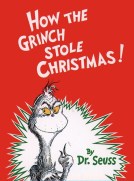 longing. As Dr. Mohler said in his broadcast back in 2009, “Children are built to tell and to hear stories.” We can encourage them delve into the story of the Santa Clause. We can explain how Coca Cola and other corporations spawned the buzz about Santa through TV specials and artistic billboards. As we sip hot chocolate, we can also talk about how Saint Nicholas, the bohemian duke – King Wenceslas – and Chris Cringle were real people who lovingly cared for the poor.
And once the tree is set up, we can encourage our children to explore other fictional stories associated with Christmas such as “How the Grinch Stole Christmas,” “The Best Christmas Pageant Ever,” and “The Christmas Carol.” We do not have to banish all fiction to the destruction on “Mount Crumpit.” Nor do we have to discard every Christmas song that does not mention Christ. We can have stories at Christmas.
But we do have to tell the truth to our children. We have to help them discern reality from fiction during the holiday season. And if we do tell them the truth, we will equip our children to sort through fiction and the many false world views that will shortly envelope them. We will prepare our children to discern the value of a story upon the authority of scripture. For the sake of our children and the gospel, we must be truth tellers.
Truth & Love
Once we tell our children the truth, we cannot pat them on the head and scoot them out the door. If we do, we may be sending little Scrooge commando’s out into the world intent on sabotaging Christmases far and near. These little Grinchy Special Forces will invariably wreck the happiness of other kids, parents, and grandparents with their little truth filled explosives. I don’t think its best for us to mobilize a midget-sized anti-Christmas brigade.
 To send little, lovable “Tiny Tim’s” into the world, we must equip our children to handle truth with love (Eph. 4:15). To accomplish this feat, we can remind our children that our words should always encourage others to be worship Jesus. Even if true, words that tear down and that mock the foolishness of others bring no delight to God. To speak the truth in love, we meet Santa greetings with the hope of the gospel. For example, when our children are asked if the saw Santa, we teach them to respond with, “No, but our parents give us presents because they love Jesus.” And when our children encounter playmates striving to be good for Santa, we can tell our children to say, “We want to be good because we want be like Jesus. He is perfect and he already gave us the best gift ever, eternal life.” If we model truth and love for our children, they will hopefully adopt “God bless us, everyone” as their holiday mantra and be invited to Christmas parties everywhere.
Conclusion
Although the Bible never mentions jolly old Saint Nicholas by name, Scripture does provide us with the answer to the Santa question. We do not have to fear our child’s imagination. We simply imitate our Savior and proclaim truth. And as we gently help our children understand who Santa really is, we will prepare them for something far better. We will show them how to worship the little babe who has come to give us eternal life on Christmas and throughout the year! Dear friends,
Let nothing you dismay
Remember Christ our savior
Was born on Christmas day
To save us all from Satan’s power
When we were gone astray
Oh tidings of comfort and joy
Have a Merry Christmas!
 Yesterday’s blog on the manipulative power of the Elf struck a nerve with many of you. Some of you of were supportive; others were dismissive, and many were somewhere between the two polls.
  anytime soon. Nor will I be hunting reindeer or attempting to bag Santa.
 your living room wall with a permanent marker has just been rechanneled. He obeys you this time not because he’s sorry. He fears the elf. He realizes that he gets more presents when he doesn’t color the wall than when he does. In short, he has simply found a more convenient way to express his selfish impulses. Instead of getting closer to Jesus at Christmas, instead of realizing his need for the free gift of salvation that he could never earn, he drifts off into the world of self-righteous confidence. According to his adopted elf friend, he’s good enough for Santa. Junior might be tempted to rest in that praise.


 Witkowski Blog