Memo: Witkowski Apple Engagement Announcement

When the darkness of April’s death swept across my soul, all but the tiniest pinpoint of hope disappeared. Everything hurt. Everything from the writing of my dissertation to the microwaving of chicken nuggets for the millionth time was marred with bitterness. Though I knew God to be all wise, all good, and all powerful, my circumstances much like Job’s seemed to tell a different story. The pain stung so deeply, I longed for the escape granted to many a faithful martyr. But I knew that was not to be my path for God had called me to care for my children and my church family. Many a late afternoon, I would walk between the deserted pews of my church audibly questioning the Lord. I could not see how anything good or profitable could come from such pain, such sorrow, or such brokenness.

During that season, a kind, old professor after discerning my intent to remarry remarked with subtle confidence, “God will do something really good for you Peter.” I too had read Ephesians 3:20, and intellectually assented to his sentiment. But I could not imagine how that could be…how darkness could ever give way to light.

In time, I once again began charting a course through that strange and rocky land known as “Christian dating.” Though I encountered many a godly woman worthy of respect and admiration, none of their hearts contained the providential contours needed to transform two into a unified whole. Discouraged, I defaulted to that thing which I should have done more of all along. I prayed.

And as I sought divine wisdom about how to proceed, I sat down to a farewell luncheon with a faithful colleague and friend. Somehow or other (and to be fully transparent – much to my liking), the conversation turned into a review of my dating life. The friend then encouraged me to consider one more name, Jenny Apple. As we reviewed her LinkedIn profile and my friend described how Jenny’s range of character enabled her to do everything from serve on executive boards to bounce babies on her knee, a wave of pure joy swept through my soul. More than ever before, I knew I needed to ask that beautiful woman out.

And so, off went my first message to Ms. Apple…albeit somewhat apprehensively. I had learned long ago not to trust my emotions, even when they were informed by prayer. But when I met Jenny that first Saturday in March for a casual conversation over coffee and discovered that she had read Grudem’s Systematic Theology in its entirety, possessed a heart for people, and was attempting to visit all 32 major league baseball stadiums, I knew my emotions were properly ordered. By the end of our second date during which we covered our philosophy of family and her love for the Ravens, and host of other things, I came to believe that Ms. Jenny Apple was something special…something uniquely and gloriously good!

Over the next several months as we climbed mountains, met family, and went to church together, my impression gave way to a settled determination to marry her…a determination also shared by my dear children. The night they first met Ms. Jenny, one of my kiddos lacking the word for ‘proposal’ dropped down on one knee (thankfully out of Jenny’s view) and said, “Dad, you know… you should do this tonight.” Though I did not propose that night and have had to warn my kiddos against proposing on my behalf on multiple occasions, I too share their admiration for the amazing Ms. Jenny!

Jenny possesses a generosity of spirit, a humbleness of character, and a sharpness of mind that makes her a jewel beyond value. To converse with her is to converse with that joyful wisdom that can only be found in the deep well of biblical knowledge and faithfulness. She also possesses a seriousness that can engage the most complex of interpersonal issues and a playfulness that enables her to connect with kids as jump waves and build sandcastles at beach.
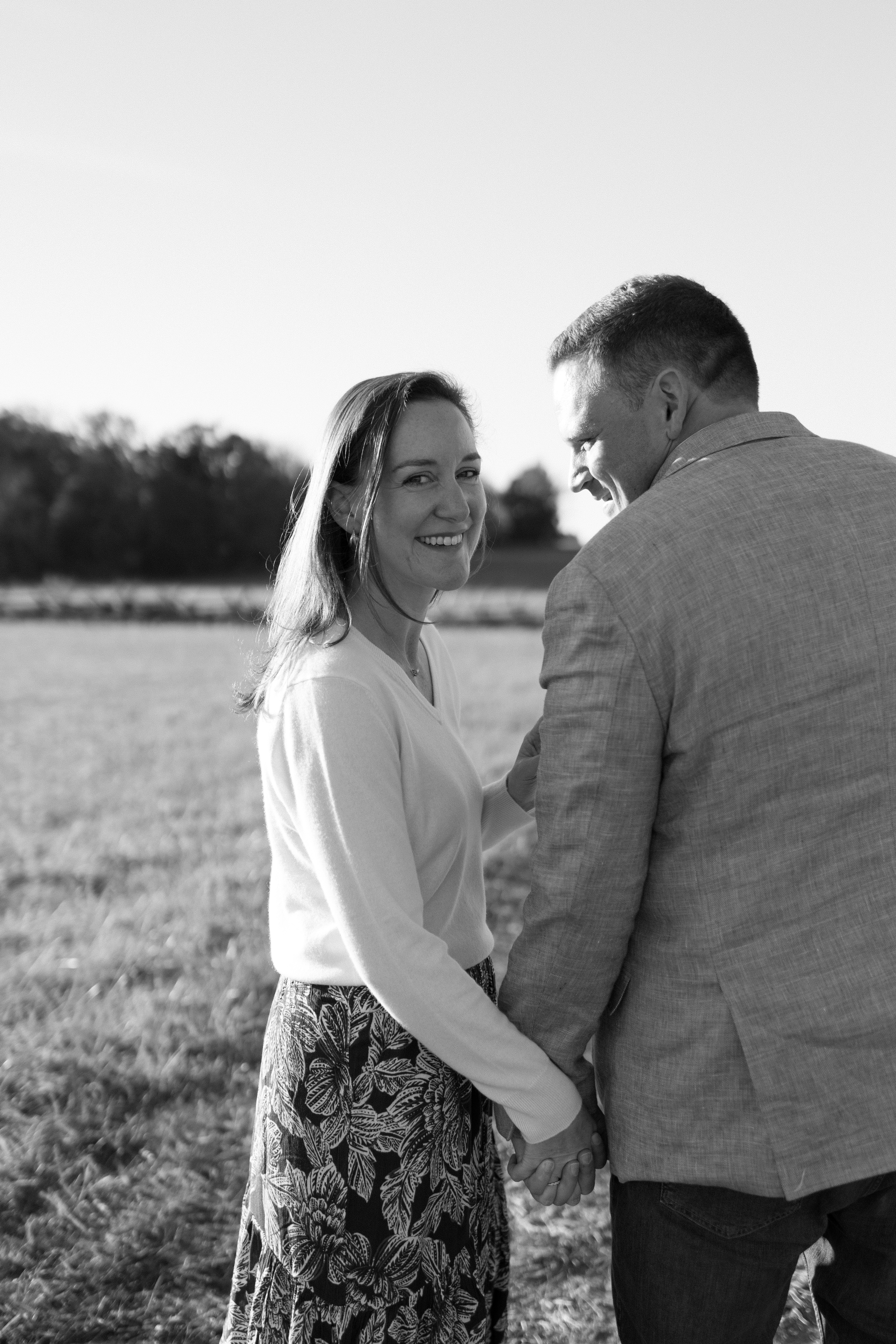
Perhaps most marvelous of all, divine providence has shaped the contours of her heart in such a way that they fit perfectly into the boundaries of my soul. As I have stepped into Jenny’s world and she into mine, we have both at felt home. Indeed, few things feel as gloriously right as spending a day with her walking about Capitol Hill or having her curl up with the kiddos for family movie night. The kind, old professor was right, God is do something really good for me. He is cementing my heart to Jenny’s!

Wise king Solomon once said that “He who finds a wife finds a good thing and obtains favor from the Lord (Prov. 18:22).” I can joyfully say I have found such goodness and favor in the glorious Jenny Apple. I love this beautiful woman without qualification or nuance!

Operating on this knowledge, I did what biblical reason, wisdom, and love demanded: I asked the amazing Ms. Jenny to marry me while kayaking the Shenandoah River on Sunday, August 25, 2024.

 I am happy to report that she said, “Yes!”

We are engaged to be married!

For more information on the Apple Witkowski wedding visit our Knot page.

Jesus Wept and We Should Too: The Resurrection, Sovereignty and Grief

Jesus wept. This short verse mercifully demonstrates that Jesus can and does as the Bible says elsewhere, “sympathize with our weakness (Heb 4:15).” In that weeping over the death of his friend Lazarus, Jesus legitimized the tears of every grieving husband, wife, child, mother, father, and friend. Jesus knew the soul penetrating pain of our grief.

Should We Grieve?

Though this moment in the biblical timeline grants us the permission to grieve and to grieve deeply, some within the church still find the topic of grief distasteful if not at points unspiritual. They fear that grief could be a denial of the resurrection or of God’s sovereign goodness. Since they know that their loved one is alive with Jesus and that no death is an accident, they view death to be little more than a brief interruption in their daily rhythm. They do not mourn when their husband takes his Sunday nap, why should they now mourn his death?

Such a perspective can be a good and helpful remedy against “excessive grief” or depression. But it cannot banish grief all together, for it was never meant to do so.

Does the Resurrection Banish Grief?

As Martha mourned the death of her brother Lazarus, she tells Jesus, “I know that he will rise again in the resurrection on the last day (Jn 11:24).” And not only did she have faith in the resurrection, but she also knew the resurrection. Jesus told Martha, “I am the resurrection and the life.” Because Jesus was Immanuel, God with us – the sacrificial lamb who saves us from our sins through his death and resurrection, he can in good faith command: “Lazarus, come out.” John concludes the story with these words: “The man who had died came out, his hands and feed bound with the linen strips, and his face wrapped with a cloth. Jesus said to them, “Unbind him, and let him go (11:44).” Jesus did not simply believe in the resurrection. He was the resurrection, the very guarantee and cause of eternal life. In other words, he was the the solution to or the very antidote for death. And still, he wept.

Does Sovereignty Banish Grief?

Moreover, Jesus knew that Lazarus’s death was not an accident brought about by the winds of chance while the heavenly Father was preoccupied with some disaster. The Son in accordance with the Father had ordained the death of Lazarus. Describing the Son’s relationship to the Father, the British pastor Charles Spurgeon noted, “Jesus is to the Father what speech is to us; he is the unfolding of the Father’s thoughts, the revelation of the Father’s heart.” When messengers came from Mary and Martha seeking Jesus’s help – a help that could have resulted in Lazarus’ full recovery, Jesus acting with the Father by the Holy Spirit chose not to come. John’s gospel reports, “Now Jesus loved Martha and her sister and Lazarus. So, when he heard that Lazarus was ill, he stayed two days longer in the place where he was (Jn 11:5).” Jesus understood the thoughts of the Father and knew that his friend would die so that others might believe. He knew that even death glorified God. And still, he wept.

Why Does Jesus Weep?

Why does the resurrection and the Word become flesh, grieve? Why as John reports was Jesus, “deeply moved in his spirit and greatly troubled (11:38).”  He was moved by love. Allowing the crowd to interpret Jesus’s action for us, John offers the following commentary on Jesus’s tears: “So the Jews said, “See how he loved him!” Deep soul wrenching tears do not convey unbelief but love. To grieve is to express that goodness and sweetness has been lost. It does not deny the goodness that is to come nor the wisdom that has brought us to the point of tears and aching, but rather affirms the unsatisfactory nature of this broken world and our longing for Christ to come again (and to borrow another’s phrase) and “make everything sad untrue.” As the puritan John Flavel noted, “There is no sin in complaining to God…Griefs are eased by groans and heart-pressures relieved by utterances.”

In other words, faith does not call the believer to vanquish grief from his psyche but rather grants him the assurances needed to safely express his anguish. He does not have to fear that his soul altering loss will forever trap him in that dark and swirling vortex of depression. Jesus conquered the tomb and has prepared a mansion for us. As Jesus told Martha, “Whoever believes in me, though he die, yet he shall live,  and everyone who lives and believes in me shall never die (Jn 11:25-26).” With heaven secured, the believer can confidently lay claim to the promise of Psalm 23:4 which states, “Even though I walk through the valley of the shadow of death, I will fear no evil, for you are with me; your rod and your staff, they comfort me.” We do not grieve apart from Jesus but with Jesus, knowing that grief finds its end, its telos, in the steadfast love of our Lord (1 Thess 4:13). He will guide us home. In other words, the resurrection and God’s sovereignty are not antithetical to grief but the very bumpers that keep us from rolling into the gutters of hopelessness as we traverse the lanes of grief. If ever there should be a people that was comfortable with the uncomfortable nature of tears, it should be the people of Jesus.

Jesus wept. May we go and do likewise.

A Firm Foundation for My Mental Health

Much like two sides to a coin, there are two sides to one’s life, the physical and the spiritual. I’m a firm believer that the two are woven together and affect each other. But they are also separate aspects of a person. Different needs are required for both.

The physical nature of the cancer in my body has certainly had a profound effect on my spiritual health. So I understand the question that medical professionals ask as well as close friends. “How are you doing?” many times means more than if I am in physical pain. People want to know how I’m internally thinking and feeling about my life since my diagnosis.

My mental health is not a stagnant pond, but more like the shore of the sea. The waves ebb and flow. The tide comes in and goes out. No day is the same; yet, there are constants. I have a Rock that is always firm despite the size and intensity of the waves of the storm.

I use this analogy partly because of Jesus’s words from the Sermon on the Mount.

“Everyone then who hears these words of mine and does them will be like a wise man who built his house on the rock. And the rain fell, and the floods came, and the winds blew and beat on that house, but it did not fall, because it had been founded on the rock” (Matthew 7:24-25).

This was also the picture I kept in my mind in the days and weeks immediately following the death of our infant son in 2013. It felt like a storm had beat on our house, and all we had was the Rock of our foundation left. While grieving our loss, my heart clung to the truth: “God is good.”

So when this breast cancer storm hit, I went back to this familiar passage for comfort once again. This second storm is greater and more intense. The winds and waves have beat on our house without end. But the Rock has not moved. And I cling to it harder than ever before.

Focusing on Things Above

I know that I did not create my faith. There is no room for me to boast about how great my faith is (Jeremiah 9:23-24; Hebrews 12:2; Ephesians 2:8-9).

Let me instead boast in God and how unchanging He is. His Word is completely true and trustworthy (1 Peter 1:24-25). The Bible comforts me by providing the framework to understand life. Yet the same way the tide rises and falls, so some days are harder than others to rest in what I know is true.

One morning only a few weeks after my diagnosis, I woke up and just lay in bed staring at the wall. The onslaught of all the new terms about breast cancer and medications made me feel so ignorant and out of control. Everything was new and unfamiliar. I was scared. But then in that moment, I realized that while I may not have a medical degree what I did have no one could take away. Who God is hadn’t changed. What I knew and had studied about Jesus was still the same. So, I determined then that I would lean hard into what I did know. I wasn’t going to go crazy researching every cancer article I could find online. I wasn’t going to buy all the books about coping with cancer or make radical life changes. Jesus was going to be my anchor.

And even though I have wonderful friends and family, it is Jesus who is always with me. When anxiety sneaks in suddenly, I cry out to the Shepherd of my soul for peace. The moments when the pain is too much to bear, I ask my Savior for mercy to endure. All alone in a waiting room or in a scan, He has not forsaken me. I never have to worry about Him not being available. There is no doubt about His love and care.

The Bible and Suffering

The Bible is full of examples of godly people experiencing suffering. Sometimes it is the result of evil forces gaining permission by God to attack the righteous (Job 1-2). Other times, it is God who lovingly decides to test the faith of His people (Hebrews 11-12).

Hebrews reminds us “My son, do not regard lightly the discipline of the Lord, nor be weary when reproved by him. For the Lord disciplines the one he loves and chastises every son whom he receives” (Hebrews 12:5-6). Likewise, the Apostle Peter wrote to suffering Christians, “Beloved, do not be surprised at the fiery trial when it comes upon you to test you, as though something strange were happening to you” (1 Peter 4:12) and “In this you rejoice, though now for a little while, if necessary, you have been grieved by various trials, so that the tested genuineness of your faith—more precious than gold that perishes though it is tested by fire—may be found to result in praise and glory and honor at the revelation of Jesus Christ” (1 Peter 1:6-7).

Suffering shouldn’t surprise me. God in His perfect power and wisdom is testing my faith so that it will lead to praise and glory and honor. It is for my good.

Making Sense of the Physical

While all I can see is this physical life, I know it is not all that exists. I very much live in the here and now, doing laundry, cooking meals and picking up children from school. But this will not last. I am being prepared for a more permanent life to come. And it is this spiritual understanding that guides my thoughts through days filled with sadness in this current life.

I believe God cares about how I physically feel. I know that He is the one who supplies all my needs, whether that is food, clothing or medical care (Matthew 6:25-34). That’s why I pray for God to sustain my life. I’m not afraid to ask Him for temporary things in this life, like raising my children and owning our own home. He wants me to go to Him about the things that are important to me (1 Peter 5:7).

My Biblical Framework

The Bible creates a framework for me to understand and process life. My theology (my beliefs about God and this world) were firmly in place before I was sick. I have not abandoned what I knew or added to it. But I do have a deeper, fuller grasp of the great truths I hold dear. God has proven Himself to be good and faithful to me through my affliction.

I understand that sin and suffering exist in this world and affect me and my family because of Adam’s first rebellious act against God (Genesis 3; Romans 5). While I don’t believe that my cancer is a result of a specific sin in my life, I do believe that sickness is a result of sin infecting the whole world. Brokenness marks all aspects of life. Jesus came as the Savior of the world to rescue sinners from the curse of sin and death. He offered His body as a sacrifice for the forgiveness of sins to God. And His resurrection from the dead proves it was accepted. Jesus has promised that all who believe in Him will have eternal life (John 3:16). He is going to resurrect all believers to a new life in a new and perfect Heaven and Earth (2 Peter 3).

“Then I saw a new heaven and a new earth, for the first heaven and the first earth had passed away, and the sea was no more. And I saw the holy city, new Jerusalem, coming down out of heaven from God, prepared as a bride adorned for her husband. And I heard a loud voice from the throne saying, “Behold, the dwelling place of God is with man. He will dwell with them, and they will be his people, and God himself will be with them as their God. He will wipe away every tear from their eyes, and death shall be no more, neither shall there be mourning, nor crying, nor pain anymore, for the former things have passed away. And he who was seated on the throne said, “Behold, I am making all things new.” Also he said, “Write this down, for these words are trustworthy and true” (Revelation 21:1-5).

The Bible tells me how things like cancer can exist. And why bad things can happen to good people. But it also provides hope for a future. And peace and grace for today. This is a strong and sturdy foundation to build a life upon. For those who put their trust in God will never be ashamed or disappointed.

The lyrics to the hymn “How Firm a Foundation” seem a fitting way to end this post. The firm foundation of God’s Word provides me with all the hope and stability I need to navigate the various paths of my heart and mind through life’s storms. My God truly supplies for my every need and that includes my mental health.

“How Firm a Foundation” (1787)
How firm a foundation, ye saints of the Lord
Is laid for your faith in His excellent Word
What more can He say than to you He hath said
To you who for refuge to Jesus have fled

Fear not, I am with thee; oh be not dismayed
For I am thy God and will still give thee aid
I’ll strengthen thee, help thee, and cause thee to stand
Upheld by My righteous, omnipotent hand

When through the deep waters I call thee to go
The rivers of sorrow shall not overflow
For I will be with thee, thy troubles to bless
And sanctify to thee thy deepest distress

When through fiery trials thy pathways shall lie
My grace all sufficient shall be thy supply
The flame shall not hurt thee; I only design
Thy dross to consume and thy gold to refine

The soul that on Jesus has leaned for repose
I will not, I will not desert to its foes
That soul, though all hell should endeavor to shake
I’ll never, no never, no never forsake