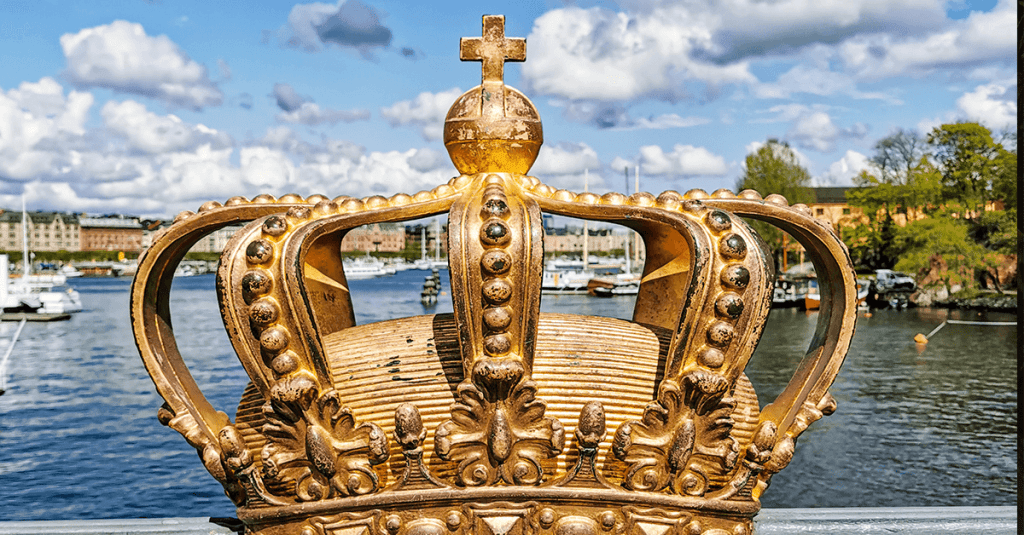
Churches often crumble into ruin because their members engage in king-making. Though some evangelicals show up at the polls every 4 years, their greatest power rests not in the public square but underneath the steeple spire. Here with the help of Jesus, church members elevate men and women to positions of authority, granting them the power to determine church policy, remove members, and allocate funds. With fifteen minutes, a clerk, and a few votes by acclamation, churches can turn just about anyone into an evangelical power broker. Churches appoint elders, deacons, and ministry leaders. They make evangelical kings, if you will.
Why Things Go Wrong
Though common, such thinking runs counter to teaching of Scripture. The Church is the Lord’s; it is not the congregation’s nor the denomination’s property. In Mathew 18:16b, Jesus proclaims, “I will build my church, and the gates of hell shall not prevail against it.” Jesus, the head of the church, builds the church. Faithful church leaders acknowledge his authority, teaching and following the commands of Jesus as found in the Scriptures. Most churches nominally agree with this description.
But when deciding who to elect or who to appoint to the church office, the churches often attempt to transform ordinary members into extraordinary leaders. When the church family needs a willing or somewhat willing candidate, it sends the guy through a 6-week elder class or it lays hands on the soul, hoping that the wisdom of the other deacons will rub off on him. In so doing, the congregation often places men into leadership whose greatest qualifications consist of popularity, money, or a lengthy tenure on the church role. Sunday school classes also fall victim to such thinking. Such appointments prove dangerous as they give men and women the keys to the church who lack the character to exercise that authority responsibly.
God has a much better plan.
God’s Work
In Micah 6:4, the prophet reminds the Israelites that God had appointed, “Moses, Aron, and Miriam,” to lead his people. The God who created the church provides each local church with the leaders it needs. Ephesians 4:11-12 declares
And he gave the apostles, the prophets, the evangelists, the shepherds and teachers, to equip the saints for the work of ministry, for building up the body of Christ.
No congregation should create elders and deacons or Sunday School teachers. Rather it should find them.
The process of creating church officers more closely remembers a search for Waldo than political election campaign or pickup game of kickball. Churches need to find the elders, deacons, and ministry leaders that God has divinely placed in the middle of the church family. As Richard Baxter noted in 1658 “God gives the qualifications which he requires…all that the church has to do…is discern and determine which are the men God has…qualified.” God gives us a divine description of who to look for. Paul tells Titus to appoint men who are “above reproach (Titus 1:6).” Those called to be elders should be above the charges of drunkenness, poor stewardship, greed, violence, exemplifying hospitality goodness, self-control, holiness, uprightness, and discipline (7-8). The elder qualified man must also be able to teach well. Similar qualifications are given for deacons in 1 Timothy 3:8-13. God also blesses the church with godly older women who are gifted to “teach what is good (Titus 2:3-4).”
The church does not make men and women above reproach or gift them the Holy Spirit. Instead, the local church vets and examines men to see to see if they are qualified to be deacons and elders. It also looks at the character of women to discern if they should serve the church teaching the younger women in their midst. Then when the church finds a man or women who has been serving faithfully, they recognize the service that exists and appoint that person to the appropriate leadership role. In short, the church does not make a man an elder. It bestows the title and privileges of eldership upon the man who is already serving as an elder, counseling, teaching, and serving the churcn. When the men circle the stage to lay hands on their brother, they are not transferring the Holy Spirit to him. They are recognizing that the Holy Spirit is in him and has prepared him to serve the church.
The church does not make kings. It discovers servants who have already been appointed by God to serve.
 The men we stick behind the pulpit of our church, place at the bottom of our bulletin, and stick int he pastors office reveal a lot about our hearts. I firmly believe that God has called local church members to wield the keys of the kingdom by overseeing member care and appointing elders and deacons. Quite often, we appoint men to church leadership because they share our worldview. We see this phenomenon take place 1 Samuel 8. The people of Israel want a king like all the nations. They want that king who is tall, handsome, and powerful because they have rejected the leadership of God. As God tells Samuel they,
 The church stands as a beacon of hope in this crazy fallen world. Believers are able to survive the trials and storms of life by depending upon the Holy Spirit who nurtures and sustains their souls through the faithful local church which preaches the gospel and administers the sacraments of Baptism and the Lord’s Supper.
 In 1 Peter 5:1, Peter addresses the elders in the church. He does not address the elder but the elders, plural. God designed his church to be ruled by a plurality of men. A quick survey of Acts and the Pauline letters supports Peter’s assumption. Acts 14:23 says, “And when they had appointed elders for them in every church, with prayer and fasting they committed them to the Lord in whom they had believed.” Acts 20:17 states, “Now from Miletus he sent to Ephesus and called the elders of the church to come to him.” In 1,2 Timothy and in Titus, Paul tells his sons in the faith to, “put what remained into order, and appoint elders in every town as I directed you.” And in Philippians 1:1, Paul writes to, “To all the saints in Christ Jesus who are at Philippi, with the overseers and deacons.” The local church should be led by elders and served by deacons (Acts 6).
 Witkowski Blog