How to Lead Your Family: A Review

If ever a book was worthy of being labeled “Must Read,” it would be Joel Beeke’s How to Lead Your Family. In the span of 73 dense yet readable pages, Beeke casts a vision for Christ-like male leadership in the home and family.  Appealing to Jesus’ character of Jesus, Beeke argues that husbands and fathers should serve as their family’s prophet, priest, and king. Essentially, Beeke’s book serves as a paper version of that man-to-man conversation that many Christian men long for and that all men need.

Overview

Beeke begins his book with a call for husbands and fathers to prophetically shape their homes through their faithful practice of family worship and through modeling that same gospel as they interact with their wives and children. In the second chapter, Beeke encourages men to serve as their family’s priest. While no man can replicate the sacrifice of Christ on the cross, faithful husbands can model Christ’s sacrificial spirit and intercede for their family’s needs through prayer. As Beeke notes, “If you would die for your wife, you will also live for her. You will joyfully help her with some of her household and childcare duties, listen to her cares and anxieties, sympathize with her distresses, and serve her in her needs and desires – even when you do not feel like doing so (30).” Addressing prayer, he presses his readers, writing, “If you do not pray for your family, how can you say you fear the Lord?”
Beeke devotes the next chapter to biblical kingship. He encourages men not to lead with ruthless authoritarianism but with sacrificially service. Beeke explains, “The point is that he always does what he believes, in the fear of God, is for the good of his wife and family, regardless of his selfish desires (47).”  As king of the home, the father must also defend his family, guiding them away from physical and spiritual harm through biblical counsel and loving discipline.

Beeke then ends his book with a helpful reminder that the ability to lead one’s family comes not from within but from the Lord with gives wisdom freely.

Reflections

Though women can benefit from this book, Beeke unapologetically writes for Christian men. He dispenses with sentimental stories and passes along the direct commands of Scripture backfilled with practical examples. For example, Beeke charges men to disciple their children and then presents them with a whole host of options such as the “Ten Commandments, the Lord’s Prayer, and the Apostles’ Creed…the atoning blood of Christ and its efficacious power…tell them of His Beauty and all sufficiency as the Mediator who is truly God and truly man, who serves as Prophet, Priest, and King (15).” When speaking of discipline, Beeke unapologetically writes, “If you never spank your young children, you are acting more out of self-love than for their best interest (58).” He also calls men to love their wives “superlatively” and then offers them the following guidance: “Respect her, honor her, tell her how much you love her (every day!), shower her with verbal, physical, emotional, and spiritual affection (49).” And most importantly of all, Beeke holds out the hope of the gospel to his readers, reminding us that, “It is never too late for you to find the grace and mercy from the great Prophet, Priest, and King (68).”

Final Thoughts

In writing down his fatherly and grandfatherly counsel, Beeke has given his readers access to one of the best man-to-man talks that I have ever overheard. Dear reader, dear young man, dear faithful brother, get a copy of this nugget of divine wisdom. Be encouraged. And then go faithfully serve your wife and children as their prophet, priest, and king.

The Story of the Story: A Review of the Boys in The Boat

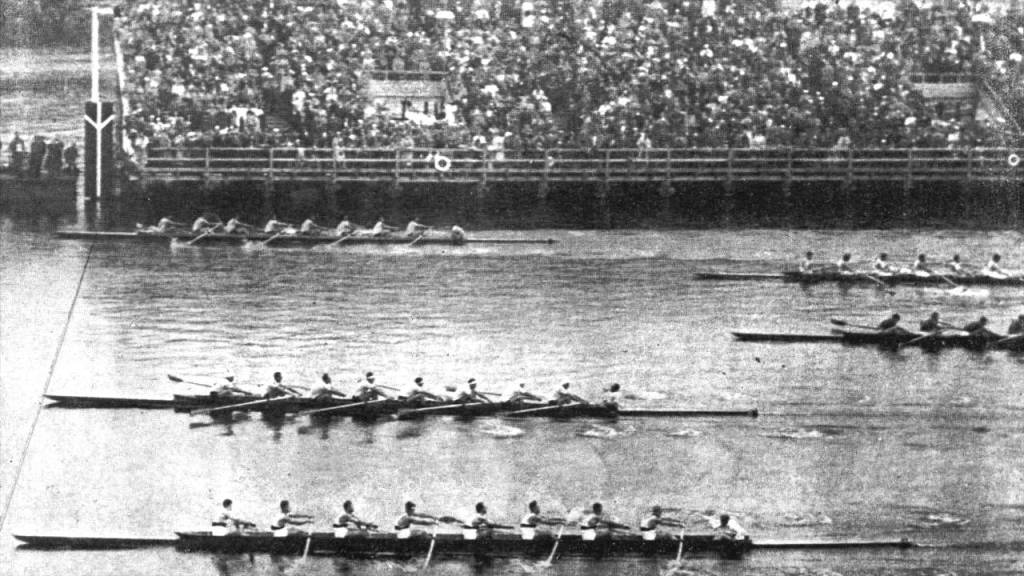
Poughkeepsie. Most sports fans have never heard of this word that once filled the sports pages of the major newspapers. Those industrious enough to do a quick Google search of the term will discover a short definition of the word, a map, and a Wikipedia page that contains a few paragraphs about a sleepy town at the edge of the Hudson River. The amazing sports history tied to this term has almost completely faded from the American consciousness.

A Quick Overview

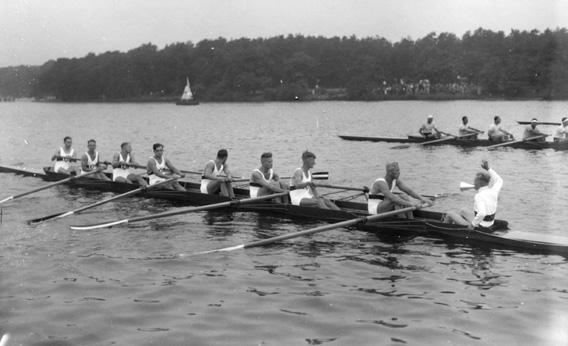
In all honesty, I too knew nothing of the word until I discovered the book, The Boys in the Boat, written by Daniel James Brown. In the span of 403 pages, Brown introduces his readers to the Poughkeepsie regatta and to the western college boys who overcame a world of adversity to best the Ivy League rowing crews at Poughkeepsie before securing Olympic gold in Berlin. I commend the author for rediscovering and then retelling this heroic tale of fortitude and perseverance that was accomplished by Joe Rantz, Roger Morris, and seven other determine, college students. As the pages turn, Brown places the reader on the edges of the Lake Washington, the Poughkeepsie and of the Grunau as he recounts the Washington University’s team’s various training exercises and multiple victories. Brown’s vivid details allow the reader to feel the boys’ powerful strokes as their racing shell, the Husky Clipper, glides past its competitors boats one seat at a time. Brown’s fulfills his mission to tell the narrative of the boys in the boat who made the 1936 Olympics. It is a story well worth remembering.

The Story of the Story

Though the book was phenomenal, I found the need for the book to be as thought provoking as the story printed on its pages. 

As Brown notes, rowing has not always been an obscure pastime. The author reminds us that, “In the 1930s and 1920s, collegiate crew was wildly popular, often ranking right up there with baseball and collegiate football in the amount of press it received and the crowds it drew.” In 1939, 125,000 fans came to watch the Poughkeepsie regatta. Radio listenership for the major rowing races came to rival the Kentucky Derby, the Rose Bowl, and the World Series. Kids even swapped trading cards of their favorite crews.

What exactly happened to the sport of collegiate rowing pushes beyond the bounds of this book. But its modern obscurity remains a fact. Where it not so, this book would not be necessary. The author recounts in the prologue how Joe Rantz’s gold medal had gone missing only to be discovered years later in a squirrel’s nest tucked away behind a wall. Picking up on the anecdote, Brown writes, “it occurred to me that Joe’s story like the medal, had been squirreled away out of sight for too long.” I am thankful that Brown was able to retrieve the story of the Husky Clipper.

Fame Does Not Last

But the fact that Joe and his boat could almost disappear from the American, public consciousness reveals that the philosopher Albert Camus was on to something. Our earthly legacy does depend a great deal on those who survive them. If one generation forgets us, our story can be lost from the halls of history forever. If a team of world-renowned fame can almost completely disappear from the modern consciousness, most of us average Joe’s and bland Betty’s face even worse odds. To quote the wise king Solomon who was reflective in his own right, “the dead know nothing, and they have no more reward, for the memory of them is forgotten (Ecc. 9:5).” If you doubt Solomon, I challenge you to recall the name of your grandmother’s grandmother without referencing your genealogy. How did that go? Don’t feel bad, I can’t do it either. We can all be easily forgotten. To quote Solomon again, “a living dog is better than a dead lion (Ecc 9:4).”

To his credit Joe Rantz was happy to be forgotten. The man who was content to let a squirrel steal his gold medal while he hauled logs down a mountain lived for much more than the fame of the moment. He enjoyed life with his bride and his children whom he loved deeply as evidence by their ability to share Joe’s various stories with Brown. To some degree, I think Joe Rantz understood that life was more than sports fame which can be lost far easier than it can be won.

Solomon also understood this principle, declaring most things to be vanity except the fear of the Lord. The story of Joe’s story reminds us all of the importance of heeding Ecclesiastes 9:13 which offers this overview of human life, “Fear God and keep his commandments, for this is the whole duty of man.” Sports Fame is fleeting. The Fear of the Lord lasts forever. Choose wisely.

Final Thoughts

The story of Joe Rantz and the boys in the boat could easily be one of the best sports stories of all time. Brown should be commended for having preserved this captivating tale for yet another generation of readers. But I find the epistemological meaning found within the story of the story to be of even greater value. To stand atop the platform of eternity, men and women must do more than strain for earthly gold. To achieve that which cannot be destroyed by rust or faulty memories, men and women must heed the wisdom of Solomon and pursue righteousness, trusting God to care for the rest.

In other words, don’t waste your life pursuing that which can be stolen by a squirrel.

Top Books of 2019

favorite books of 2019Had you told 13 year-old Peter Witkowski that he would be reading thousands of pages every year, his eyes would have rolled upward and his mouth would have broken into a sarcastic laugh.  Despite my youthful misgivings and limited prophetic abilities, I have come to love books. I count them as some of my truest friends. They have guided, encouraged, and challenged my heart and mind.
Given my academic studies and profession, my tastes unapologetically bend towards history and theology. Though I read a good deal of academic literature, I have found such literature to possess an engaging sense of readability. Below are the three books that most prominently snuck into my conversations with April Witkowski and a few others in 2019. Though all are not academic in nature, I found all of them to be enjoyable reads.

George Whitefield: America’s Spiritual Founding Father

Thomas Kidd

51OpXIDSonL._SX328_BO1,204,203,200_ (1)

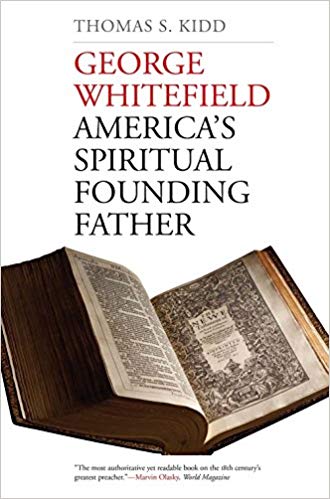
“With apologies to the Beatles, George Whitefield was the first “British sensation.” The missionary to Georgia quickly outgrew the confines of his Savannah assignment and metamorphosed into the first great American preacher. He profoundly shaped the America Christianity as he preached to overflowing churches, challenged other pastors to preach the doctrines of grace, denounced the faculties of Harvard and Yale for their lack of spiritual vigor, and employed the technology of the printing press with unprecedented skill. Since his death, historians have either stomped upon the preacher’s grave in frustration or have desecrated his memory by pulling out one or two choice biblical lessons that ignore the scope of his life and ministry. Kidd attempts to avoid both extremes. He explores and defends Whitefield’s robust faith, giving credence to the preacher’s spiritual believes and experiences. But Kidd also wrestles with Whitefield’s faults, chronicling his odd (and at times comical) interactions with women, his self-awarded sense of grandeur, and his promotion of slavery. Kidd provides readers with a sympathetic and honest presentation of the first “British sensation”

Whitefield may have adopted modern marketing and communication methods, then, but his message was traditional and Calvinist. Instead of softening his view on the depravity of man in response to humanitarian critics, he emphasized original sin more. Whitefield spoke regularly of how people in their lost state became “sunk into the nature of the beast and the devil.

America’s Pastor: Billy Graham and the Shaping of a Nation

Grant Wacker

41Yg0Q1QhxL._SX327_BO1,204,203,200_

Readers who engage Grant Wacker’s book will discover a wealth of insights into the depth of breath of Billy Graham’s influence over America. Wacker looks at how southern culture, the civil rights, the economy, and many other factors shaped Graham and were shaped by him. While Wacker paints an endearing picture of Graham’s heart for reaching the lost, the author also deals with the pragmatic realities of Graham’s life and ministry, discussing how Graham worked with Mormons, interacted with racists, and formed an almost monolithic support base middle-class, white evangelicals. Those seeking to understand the many and varied ways Billy Graham’s life has shaped their culture will find Wacker’s book to be a fascinating and beneficial read.

To say that Graham possessed an uncanny ability to adopt trends in the wider culture and then use them for his evangelistic and moral-reform ability purposes is another way of saying he possessed an uncanny ability to speak both for and to the times. Speaking for required him to communicate in a registrar his listeners could hear. He legitimated their social location by guaranteeing that their values would count…Yet…he spoke to them as well. He helped shape their consciousness…Speaking to Americans mean that he challenged them to live up to their self-professed values of biblical equality, moral integrity, and social compassion.

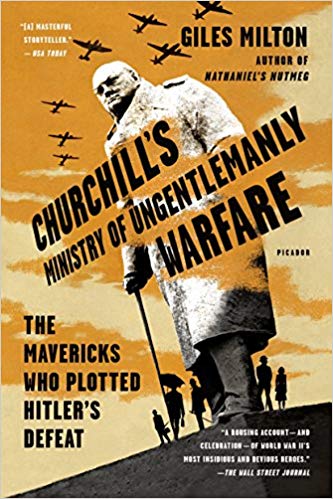
Churchill’s Ministry of Ungentlemanly Warfare: The Mavericks Who Plotted Hitler’s Defeat

Giles Milton

51GYXwSUOBL._SX331_BO1,204,203,200_ (1)

Prior to World War 2, to be British was to be one who championed “decency and fair play.” But as the Nazi military machine filled Europe with death, Winston Churchill decided to liberate the British army from her people’s high sense of morality. The Prime Minister empowered Cecil Clarke, Colin Gubbins and others to research and deploy the dirtiest tools of warfare. The stories that follow appear more fanciful than the tale of Beau Geste. Yet these stories arise not from Milton’s imagination but from the British National Archives. Readers cannot help but be drawn into the tales of misfiring rockets that became for the first anti-tank weapons, daring assignation attempts that snuffed out hated Nazi leaders, and commandos raids that resulted in ships disappearing into the night. As author P.C. Wren noted in 1926, “Truth is stranger than fiction.” Milton has rediscovered this maxim afresh, providing his readers with a fantastic read. In addition to chronicling the spies’ bravado, Milton found ways to discuss the humanity of his subjects, weaving details into his book about how their sixteen hour days and long alcohol filled nights strained marriages, enhanced their grief, and resulted in a tank being driven to church. Milton has put together a compelling string of stories that reveal both the strategic benefits and the human cost of Churchhill’s ungentlemanly warfare.

A Ministry of Ungentlemanly warfare. If its name was amusing, its role was anything but. It was to subvert the conventions of war – punch below the belt…Any German target, however soft, was to be considered fair game, and no weapon was to be considered off limits. “This from of activity was of the very highest importance.’ Said Churchill.