Five Things Good Pastors Do

Is your pastor, elder, or  overseer competent? Does he possesses the character qualities need to lead, guide, and shepherd the people of God? Naturally the above question begs the questions of essential qualities? What qualities or things should define the pastor? Should the effective pastor be engaging, open-minded, kind, empathetic, and funny? Does the effective pastor need to follow the Huffington Post’s advice and have “a healthy appreciation for pet participation, children squirming in the pews, and people in bike shorts and uniforms?”

Thankfully, God has not hidden the answer to this question in popular magazines, academic books, or opinion polls. He address pastoral and elder qualifications in 2 Timothy 2:24-26. Paul writes:

And the Lord’s servant must not be quarrelsome but kind to everyone, able to teach, patiently enduring evil, correcting his opponents with gentleness. God may perhaps grant them repentance leading to a knowledge of the truth, and they may come to their senses and escape from the snare of the devil, after being captured by him to do his will.

The effective pastor, the elder, and the overseer avoids quarrels, is kind to everyone, is able to teach, is able to patiently endure evil, and is able to humbly correct his opponents.

The pastor should be defined by these qualities because he is the Lord’s servant. He is the Lord’s slave. The Greek word translated servant or bishop is actually doulos. It means slave. The pastor is not God’s co-pilot. The elder is not an employee who can improve the church through his ingenuity, skill, or aptitude. He is a slave. He is beholden to the God of the universe. He lives, moves, and does in accordance with the Lord’s commands. He is the slave of Christ.

1.  They Avoid Quarrlesomeness

And because he is the slave of Christ, the Pastor should reflect the character of Christ in his character. He should not be quarrelsome. The one who quarrels is one who is always ready for physical combat and who is always ready to toss out heated words. The quarrelsome man attacks others with his words, his body language, and possibly even his fists. When his sermons are criticized, when his ideas are rejected, and when his ego is not praised, he strikes out with vengeance. He insults his opponents. He takes to his cell phone, to Facebook,  to Snapchat, and to Instagram to defame, insult, and criticizes his opponents.

The pastor should not be such a man. As Paul told Timothy in 1 Timothy 3:2, the pastor should be “above reproach…sober minded, self-controlled…not violent…not quarrelsome.” If a man is violent, a bully, or someone who attacks, assaults, and belittles people to shape the church into his image, he should not be an elder. He should not pastor. If your pastor becomes angry quickly, insults others quickly, and takes offense quickly, pray for him and encourage him to repent. The faithful pastor must not be quarrelsome.

2. They Are Kind To Everyone

Rather, he should be kind to everyone. He is not just kind to those who look like him. He is not just kind to men or to women. He does not just welcome the whites, or the blacks or the Hispanics. No, he is kind toward everyone.

He visits the poor and the wealthy. He counsels the both the millionaire’s daughter and the young couple that struggles to arrive to church on time. He spends time with the senior adults, the children, and everyone in between. He welcomes Asians, Whites, Hispanics, and African Americans into his church. He is just as excited to talk sports with the men as he is to talk about sports with the ladies. He is kind to all. He avoids all appearance of partiality and favoritism. He is kind to everyone regardless of who they are and what they have done or could do for him or the church.

3. They Are Be Able To Teach

And then the elder, the pastor must be a teacher. The pastor, the elder, and the overseer must be apt to teach. He must be skilled at teaching. He should posses the skills needed to rightly divide the Word of truth (2:15). He must be able to fully grasp the meaning of each Scripture passage. And then, he must be able to convey that meaning to his hearers and help them live out the Scriptures that they have just studied together. In short, the apt teacher will teach so well that his hearers will be able to develop their own sound study habits and grow in grace. While not all elders or pastors have the opportunity to preach a Sunday sermon, they all should be teaching. They should be expounding the Word to children, youth, or adult classes during the week. The overwhelming witness of Scripture confirms Paul’s exhortation to Timothy. The terms pastor, elder, and overseer all appear with the verbs “to teach” or “to shepherd” (1 Tm 2:2; 3:2; Ti 3:2, Eph. 4:11; 1 Pt 5:1-3). The faithful pastor, the qualified overseer, and the competent elder must be a teacher.

4. They Endure Evil

And he must endure evil. Instead of getting anger and attacking people, the pastor is supposed to be kind to all and he is to patiently endure evil. The pastor should patiently endure the slanderous attacks against his character, his plans, his visions, and his actions. He should endure. He should see the attacks of others and remember that he is the slave of Christ. He should entrust his soul to Christ and extend, love, mercy, and forgiveness to his opponents. The pastor does not always have to be right. He does not always have to force others to see things his way. He does not attack his opponents through Facebook and church wide emails, and the gossip chain. He endures.

Is he a doormat? Does he allow the forceful and belligerent men and women of the community to dominate, control, and run the church while he is enduring?

5. They Correct With Humility

Paul says no. The faithful pastor is a corrector. He sees men and women running towards a cliff of and calls them to stop. He tells the married man that divorce will end in death instead bliss. He calls the greedy women to abandon her credit cards, warning her that the enticement of happiness ends in slavery to bills and stress. He pleads with the young man not to embrace homosexuality, recognizing that sin ends in broken relationships and physical hurt.

Some pastors take issue with Paul’s teaching, believing they are only called to preach. The preacher preaches the Word but the Holy Spirit must bring conviction. The preacher is not to call be to repent of specific sins. God does that. I just let the chips fall where they may. Paul is emphatically saying no. If you are this kind of preacher, repent or get out of the ministry.

Paul is telling Timothy that God has called him to confront those in sin. Faithful, godly pastors will confront their flock because they want to save them from destruction.

Pastors must be willing to seek out those who have been overcome by sin, because sin is not rational. Those in sin have been ensnared by the devil and have lost their normal ability to reason. They will not understand their sin on their own. They are not attuned to the Holy Spirit. The have exiled themselves from truth.  They will rationalize away the absurdity of paying for a $125,000 boat on a $30,000 income. They need help. We need help. We all need pastors who will pursue us and call us away from destruction and death while we are within midst of our sinful absurdities. Dietrich Bonhoeffer rightfully said,

“Nothing can be more cruel than the tenderness that consigns another to his sin.  Nothing can be more compassionate than the severe rebuke that calls a brother back from the path of sin.”

Do not promote cruel men to the office of pastor, elder, and overseer. Appoint men who will lovingly confront your sin. The devil prowls about as a roaring lion (2 Pt 5:8). Shouldn’t your pastor be just a vigilant in protecting and caring for your soul?

Is your pastor a faithful pastor? Is your friend qualified to be an elder? Does he avoid quarrelsomeness, is he kind to everyone, he is able to teach, does he endure evil, and does he correct in love?

Does these five things define your pastor(s)?

Escaping Futile Faith

futilityFutility and faith are not terms we readily associate with each other. Yet, futility and faith can be close companions. Remember the great judge Samson who lost his god-given-ability to protect God’s people because he wanted to impress a pretty girl (Judges 16:4-22). He spent a good portion of his life blind and in jail, protecting no one, expressing the futility of life.

He is not alone. Throughout the ages, countless men and women have been redeemed by God and have yet squandered years of their lives in spiritual wastelands because they turned their back on God for a brief or protracted moment.

In 2 Timothy 2:20-21, Paul address this very topic of useless or futile Christians.

Now in a great house there are not only vessels of gold and silver but also of wood and clay, some for honorable use, some for dishonorable. Therefore, if anyone cleanses himself from what is dishonorable,[d] he will be a vessel for honorable use, set apart as holy, useful to the master of the house, ready for every good work.

The great house is the kingdom of God. The kingdom is filled two kinds of vessels: honorable and dishonorable, those which hold food, jewelry and beauty and those which hold trash, garbage, and human waste. The analogy of the great house implies the kingdom of God. And Paul refers to the vessels usages and not their inherent qualities. The discussion concerns believers.

Paul mentions the analogy to remind us that simply being in Christendom does not guarantee success. Simply occupying a spot on a pew will not necessarily make us useful. Simply showing up to church does not guarantee spiritual growth, joy, and vitality.

If the believer allows pornography, greed, selfishness, pride, covetousness, or any of the countless manifestations of idolatry to dominate their life, they become a vessel of dishonor. They will not be an encouragement to the body. They will not be a spiritual blessing to their family. They are still very much saved, but they have been sideline.

Instead of glory, health, joy, and energy, they have fear, doubt, anxiety, and depression. They have voluntarily imprisoned themselves into futility far away from their calling, gifting, and identity. Like Sampson, they are simply pushing through life one miserable step at a time.

What do we do when we find ourselves overcome by sin?

We cleanse ourselves. We thoroughly clean all the dirt out. We repent of all our sin. We confess our greed to our wife showing her the receipts she already knew about and the ones from our private credit card. We remove the porn from our computer, our T.V. and our phone. We tell our teacher about the test we cheated on and about all the homework we did not do. We thoroughly repent. We find each and every manifestation of sin and repent of it. We cleanse ourselves from what is dishonorable. And when we repent, we immediately become a vessel of honor.

Samson died a restored man, a cleansed vessel. He prays in Judges 16:28, “O Lord God, please remember me and please strengthen me only this once, O God, that I may be avenged on the Philistines for my two eyes.” God restores his strength. Samson then destroys the Temple of Dagon killing more people in day than he had in a lifetime of combat. He immediately was used by God to glorify God by judging the wicked.

I suspect few of us will be called to do something so dramatic and woeful. Yet, we too will experience the return of spiritual strength, joy, and power the moment we repent of our sins. James 4:8 wonderfully promises that if you will,

Draw near to God, and he will draw near to you. Cleanse your hands, you sinners, and purify your hearts, you double-minded.

Repent, turn, cleanse yourself from your sin, and you will become a vessel of honor.

Friends if your spiritual life is stunted, check your heart for sin.  The honorable vessel is the vessel that is set apart as holy that is sanctified. If you have not grown in your affections toward God and in your ability to express love to others, check for sin. You most like do not need another Bible study, evangelism program, or mentor. You need holiness. Repent. Cleanse yourself.

Do you feel useless? Do you feel that you have nothing to offer Christ? Do you fell that you have nothing to give to your church body? Check your heart.

In Ephesians 2:10 Christ promises all vessels that they have been saved for good works. We are saved to bear works keeping with repentance. We have been saved to glorify God and to serve the church. If we are not doing good works, if we are not useful for the kingdom, we must check our hearts? We must look into our souls and ask, “Is there any unconfessed sin in my heart?’ Is there anything I need to turn from? We should pray Psalm 139:23-24 and then confess the things God reveals.

Search me, O God, and know my heart! Try me and know my thoughts! And see if there be any grievous way in me, and lead me in the way everlasting!

Brothers and sisters, we are all in the house. But we being in Christ does not mean each and every moment is one of ease and obedience. We have to work out our faith with fear and trembling. We have to be active participants. We have to do more than occupy a spot on a pew once a week. We have to strive for holiness by the power of God. We need to be vessels of honor.

What kind of vessel are you?

If you would like to learn about true spiritual life and the Christian Faith, I invite to come worship at Amissville Baptist Church at 10:30AM this Sunday morning!

If you have more questions, please search around the blog, leave a comment, or contact me directly.

Why Churches Need Church Discipine: This is Church 101

church-discipline.jpgChurch discipline. These two words seem to be an oxyomoron. Church and discipline belong together just as much as hot goes ice or happy with grief. Christians should love sinners, extend grace, and shower out love. Discipline, rebuke, and excommunication appear to be terms reserved for the religous dark ages when knights lived in candle-lit castles and bathed twice a year. As early as 1900, evangelicals had began to distance themselves from this ungracious practice. They said,  “[Church discipline] sounds punitive. Its savors of transgression, conflict and punishment.” Give us Jesus, love, and mercy. No discipline! Fastforward 115 years. Little has changed. Most churches never discuss or practice discipline. And those congregations that do occassionaly execumicate people often discipline those who recieved 25 year prison terms. Church discipline continues to be an evangelical oxyomoron.
But church and discipline do go together. The Greek word “παιδεία, discipline” is credited with producing righteousness in believers (Heb. 12:11; 2 Tim 3:16). To grow in Christ, believers must discipline themsselves. They must form their hearts into the image of Christ by studying the Word, by submitting to sound preaching, by attending Sunday school classes, and by joining a local church. As believers seeks after the things of God with the people of God, their minds will be filled with knowledge of God. This knowledge will shape their thoughts and desires which in turn will determine theirs actions, resulting in increased godliness and biblical living. The positive nature of church discipline could also be labeled formative discipline or discipleship.

But the process does not stop with instruction. As Jay Adams helpfully notes, Church discipline is, “education with teeth…that sees to it that the job gets done.” Discipleship, sanctification, and spiritual growth cannot happen apart from meaningful accountability… apart from discipline.

If the Christian who faithfully attends church and who regularly repents of sin is treated by his church in the same manner as the Christian who never attends church and who regularly gets drunk, the church indirectly promotes sinful living. Hiscox rightfully warns:

Let the school be controlled by strict, yet wise and kindly discipline, or the pupils will learn more of evil than of good.

Many churches are unmotivated, apathetic, and filled with vices because they neglect church discipline. They refuse to confront sin. They actually boast in their ability to tolerate sin as did the church in Corinthian. They claim that their failure to deal with the divorces in their congregation is a sign of wisdom. After all, who has the time or ability to discern who is right and wrong? These churches do not want to get sidetracked from the gospel, from evangelism, and from their growing kids ministry. We are so spiritual we ignore sin to pursue God. Talk about non-sensical thinking.

Yet the opposite is true. As Paul writes in 1 Corinthians 5:6,

Your boasting is not good. Do you not know that a little leaven leavens the whole lump?

When we turn a blind eye to sin, the sin does not go away and the church does not grow in holines. Unconfront and unaddressed sin makes nest and  gives birth to new generations of sin, anguish, and controversy. If the church leadership winks at one divorce, more will come. If one example of greed is excused, the sin will grow and deplete the church’s budget. If the pastor refuses to address the members known gambling addiction and allows the man to gain influence in the church, to teach a Sunday schoo class, and to serve as a deacon, that gambler will sway the church towards error and foolish decisions. Unconfessed, unconfronted, and unrepented of sin destroys the local church.

Though church discipline seems counterintuitive to our human natures, the practice is needed.  J.L. Dagg has prophetically warned:

When discipline leaves the church, Christ goes with it.

How Do We Do It?

If we see that a brother is sinning or has sinned, we go to him privately and encourage him to repent. If he repents or clears up the misunderstanding, all is good. The brother has been restored and won back. Our relationship is no longer broken. The rebuked brother has grown in his faith by putting off his sin and embracing righteousness afresh. If we love our brothers and sisters in Christ, we will confront them in love, seeking their spiritual well being.

But if he both admits to his sin and refuses to repent of it, we take another friend and go back to to the brother. We repeat the confrontation. If that confrontation does not bear the fruit of repentance, we take the matter to the church. Then the whole church should seek out the man and call him to repentance. If that does not work, then he is to be kicked out of the church. We expell the man desring him to  come to grips with and repent of his sin. Leviticus 19:17 says,

You shall not hate your brother in your heart, but you shall reason frankly with your neighbor, lest you incur sin because of him.

Do you love your brothers and sisters in Christ? Go confront them!

Hopefully, most confrontation never moves beyond the first step of church discipline. The loving rebuke of a brother or sister should suffice a majority of the time. But when more actions is needed, the church must take it. The church must move forward with discipline.

Upon investigating and verification of the unrepentant sin, the church must be willing to excommunicate the former member, breaking off all familial, social contact with him. Paul tells the Corinthian believers to, “not even eat with such a one” (1 Cor. 5:11). God has already declared the believer to be worth of judgement. The church must follow suit and treat the unrepentant sinner as a sinner.

If she does not take actions, she allows the brother to wrongly believe that sin is tolerated in God’s eyes and acceptable in his kingdom. She encourages her other members to abandon the hard work of righteousness. And she proclaims to the world that redemption is a fraud, unnecessary, and unneeded. If believers never repent of sin, why should unbelievers?

The God of the Bible and of the church is a Holy God. He commands us, his people, to “Consecrate yourselves, therefore, and be holy, for I am the Lord your God (Lev 20:7).” The true local church will strive for holiness and execomunicate all who love their sin more than Christ. Dr. Albert Mohler correctly concluded,

A church lacking these essential qualities, is biblically defined, not a true church.

Is your church a true church? Does it practice meaningful church discipline?

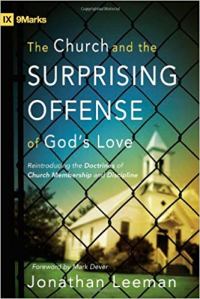
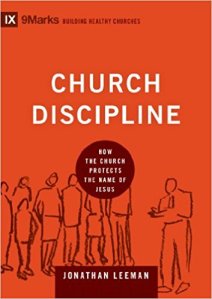
If you wish to explore the topic of Church Discipline more, I encourage you to grab copies of one of the books below:

416xVVlVVmL._SX351_BO1,204,203,200_51qYz6bTJ1L._SX331_BO1,204,203,200_