Top Reads of 2020

I read books much like Sam from the iconic Green Eggs and Ham who could eat the green stuff here and there. I can read pretty much everywhere. In 2020, I have read books in a plane and on a train. I’ve read them within a car and in hotels from afar. And I would read them with my wife and with PhD students who play the fife. In short, I do so like good books. I hope you too will try a good book or two soon. Below are the four tastiest volumes that I read in 2020.

If you feel the urge to stop reading this post, finding books scary, I encourage you to stay with me for another minute or two. Investigate the books below. Though you may not like books much today, I encourage you to heed the advice of Sam-I-Am who profoundly said, “Try them! Try them! And you may.

The Great Influenza: The Story of the Deadliest Pandemic in History

John M. Barry

I began the year unaware of this book. But a pandemic and a well-timed tweet by my fellow PhD. student John Blackman later, the book became my favorite volume of 2020.

When the Coronavirus swept across our shores, I found myself completely unprepared for the virus. I did not know how to think about a virus. My grandparent’s stories which dipped into the 1920s knew nothing of pandemics or plagues. Barry’s book provides the historical context that I needed to make sense of these times. In the 546-page book that reads like a novel, the author traces the conflict that erupts as scientists seek to conquer the mysterious and every changing world of microbes that are killing thousands. As the story flows from rural Kansas, to France, and then back to urban New York and to a host of other locations, Barry clarifies many misconceptions that have distorted our understanding of the Spanish Flu, the benefits of epidemiology, and the power of modern medicine. He also draws connections between the 1918 pandemic and other medical crises such as Polio and the Swine Flu, noting both the advances of modern medicine and its frustrating limits. Modern medicine still fails to definitively answer our questions. Barry notes, “They knew so little. So little. They knew only isolation worked.”

At times, Barry’s own biases bleed into the story. But his biases against Christianity do not impede his overarching commitment to leave no stone unturned. He examines Presidential files, small town newspapers, and private correspondence. The research that produced this book has captured the attention of Presidents on both sides of the political spectrum. I would encourage you to listen to Barry as well.

Excerpt

And they lied for the war effort, for the propaganda machine Wilson had created. It is impossible to quantify how many deaths the lies caused. It is impossible to quantify how many young men died because the army refused to follow the advice of its own surgeon general. But while those in authority were reassuring people that this was influenza, only influenza, nothing different from ordinary “la grippe” at least some people must have believed them, at least some people must have exposed themselves to the virus in ways they would not have otherwise, and at least some of those people must have died who would otherwise have lived.


J.C. Ryle: Prepared to Stand Alone

Iain H. Murray
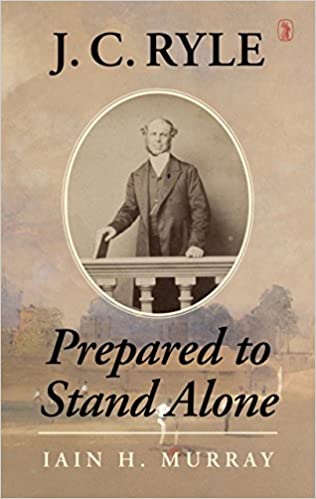
As the world around him descended into darkness, J.C. Ryle remained fixed to the light of Christ. In the space of 273 pages, historian Iain Murray chronicles the life and discusses the theology of one of the greatest British theologians of the nineteenth century. Ryle overcame his nominal Christian roots and was transformed into the famous grace inspired pastor we know today because of his single-minded devotion to Christ. Murry writes, “The gospel itself was ever the most important part of whatever he spoke or wrote, and the gospel meant the person and work of the Lord Jesus Christ (133).” He clung to it when his wives died, when the Church of England drifted from the truth, and when his son wrote off the historic Christian faith as being archaic. Through all the disappointments, criticisms, and sorrows, Ryle rested happily upon the rock of Jesus Christ, extending love to friend and foe alike. One contemporary described Ryle as “that man of granite with the heart of a child.” Though the church of England sank into liberalism, Ryle’s ministry bore great evangelical fruit. He opened 44 new churches and installed more than 100 new clergy in his diocese. The relevance Ryle’s son, Herbert, sought through theological innovation, J.C. Ryle achieved through the proclamation of the historic faith. Murray’s work is a valuable and encouraging read.

Excerpt

Faced with difficulties of many kinds, Ryle had no doubt where his priorities lay: ‘my first and foremost business, as Bishop of a new Diocese, is to provide for preaching of the Gospel to souls now entirely neglected’…From the time of his conversion he had believed that nominal Christianity – ‘churchianity’ without personal experience of Christ – was ‘the greatest defect of the Christianity of our times.’


Know the Creeds and Councils

Justin S. Holcom

Using only 192 small pages, Holcom accomplishes the herculean task of providing his readers with helpful introductions to more than thirteen creeds and doctrinal statements. Each of his chapters chronicles the historical background, the content, and the relevance of documents such as the Apostle’s creed, the Council of Trent, and the Chicago Statement on Inerrancy. At the end of each chapter, the author provides his readers with discussion questions and a list of books for further study, making this the perfect book for both the pastor and the lay person. Though no book of this size could comprehensively deal with every issue tied to these documents, Holcom provides his readers with a meaningful introduction to those movements that both indirectly and directly shape their theological practice. For example, he details Nicaea which solidified the church’s understanding of Jesus and the Council of Trent which explains why protestants cannot rejoin the Catholic Church. Though Jesus’s church does not need councils and theological documents to be the church, these statements prove to be more helpful than most Christians realize. Holcom writes, “Creeds aren’t dogmas that are imposed on Scripture but are themselves drawn from the Bible and provide a touchstone to the faith for Christians of all times and places.”

Excerpt

The fact that Christianity developed – that the sixteenth century, for instance, looked very different from the third, and that both looked very different from the twenty-first – can sometimes lead us to wonder what the essential core of Christianity is. As a result, some people decide to ignore history altogether and try to reconstruct “real Christianity” with nothing more than a Bible. But this approach misses a great deal. Christians of the past were no less concerned with being faithful to God than we are, and they sought to fit together all that the Scripture has to say about the mysteries of Christianity – the incarnation, the Trinity, predestination, and more – with all the intellectual power of their times. To ignore these insights is to attempt to reinvent the wheel, and to risk reinventing it badly.


The Heart of Christ

Thomas Goodwin

The sweetness of Thomas Goodwin’s 1651 book has become all the fuller with age. Instead of being driven to the edge of irrelevance by the busyness of the modern world, Goodwin’s exposition of God’s love for his people proves to be acutely applicable to our day. The first part of the book reveals how heaven amplifies Jesus’s love for his disciples, reminding readers that the God who extended grace to the bumbling Peter readily extends grace to you and me. Goodwin notes, “now that he is in heaven, his heart remains as graciously inclined to sinners that come to him, as ever on earth (4).” In the second and third part of the book, Goodwin unpacks the heart of Hebrews 4:15 which declares the Jesus is a high priest who “was in all points tempted like us, yet without sin.” He also traces Christ’s love for his people throw the Trinity, amplifying the love of God exemplified through the mercy and grace of God.

Goodwin’s recounting of God’s love for his people proves a refreshing correction to the works righteousness that dominates much of the evangelical world. Though the author’s old English could prove a little cumbersome for some readers, Goodwin’s small book will prove to be a powerful dose of encouragement for souls worn down by sickness, relationship difficulties, and the pressures put upon them by well-meaning religious folks who think God’s love flows through choir practices, painting projects, and Wednesday morning Bible studies. We don’t need those things to earn Jesus’s love. Christ’s heart is always towards his people.

Excerpt

But then, some greatly distressed souls might question thus: Though he pities me, and is affected, yet my misery and sins being great will he take them in to the full, lay them to heart, to pity me according to the greatness of them? To me with this thought therefore, and to prevent even this objection about Christ’s pity the apostle sets him out by what was the duty of the high priest, who was his shadow; that he is one that ‘can have compassion according to the measure of every one’s distress’s…Thy misery can never exceed his mercy.

3 Helpful Advent Devotions

To keep Christ in Christmas, we need to do more than wear catchy slogans woven into tacky Christmas sweaters. We need to commit to reading the Scriptures, reflecting on the Biblical themes of expectation, fulfillment, peace, salvation, and redemption (to name a few) that comprise the Christmas story. I have found Advent devotionals to be useful tools. They have helped me and my little family to pause and reflect upon the glorious realites wrapped up with baby in the manger. If you are looking for a Christmas devotional that you or your family could use this December, I encourage you to grab 1 of the 3 titles below. If you currently don’t gather the kiddos or spouse for family worship, I encourage you to make use of this Christmas season. Grab a devotional and start a new tradition on December 1 built on the eternal truths of the Lord Jesus Christ. May we be faithful to make much of Jesus today and always!

Good News of Great Joy: Daily Readings for Advent

John Piper packs 25 meaningful devotions into this 63-page book. Each devotion extends across 2-3 pages, beginning with a Scripture passage and ending with helpful applications that challenge our hearts. I came into contact with this book shortly after its publication in 2013 and have repeatedly returned to the volume because Piper writes with a simplicity and potency that beautifully illuminates the purpose of Christmas. April and I have used this book for our family devotions on more than one occasion. I encourage you to grab a copy of the book here. It gets even better. If your Christmas Bank Account has run dry or if you simply want to preview the book before committing to it, you can download it for free here.

Joy Upon Joy: An Advent Devotional

This short 128-page book features 25 Advent readings taken from the sermons of Charles Spurgeon. In typical Spurgeon fashion, the devotionals feature a short verse or phrase and then two pages of Spurgeon’s commentary on the meaning of the words followed by a few lines for notes and personal reflections. Spurgeon has a unique way with words that draw out the deep truths of Christmas. If you love Spurgeon, reading sermons, or desire to see Christmas through a slightly different and yet profound perspective, I encourage you to grab a copy of this devotional here. If you can handle reading the occasional old English phrase out loud, this book can well serve your family worship time. If you wish to explore Spurgeon’s Christmas sermons in more depth, I encourage you to visit the Spurgeon Library Website at Midwestern Baptist Theological Seminary here. And then, search for “Christmas”

Come Thou Long Expected Jesus: Experiencing the Peace and Promise of Christmas

In this 142-page volume, editor Nancy Guthrie gifts her readers 22 devotions taken from sermons that have helped Nancy reflect upon the richness of Jesus’s birth. She taps into a wide selection of authors, featuring the thoughts of Augustine, Martin Luther, J.C. Ryle, Alistair Begg, and many more. The chapters feature a Scripture reading, followed by 3-5 pages of reflection, encouragement, and admonishment. Nancy designed her book to serve as a short evangelical Anthology of Advent that provides readers with the space and theology to taste the glories of Christmas anew. Though the volume does not translate well into family worship settings with little kids, I have benefited with the depth of this book and have referenced during my sermon prep. I encourage you to grab a copy here.

Book Review: The Gospel at Work by Sebastian Treager and Greg Gilbert

When Christians leave church on Sunday afternoon and step into office on Monday morning, many do so without the gospel. They leave that on coat rack at home with their kids’ backpacks. They will wear it again when they dive into their church’s midweek Bible study, pray with their family, or go to church. But the gospel seldom makes it to the work floor.

Sebastan Traeger and Greg Gilbert wrote The Gospel at Work: How Working For King Jesus Gives Purpose and Meaning to Our Jobs to remind Christians that they need the gospel at work for it alone provides Christians with fulfillment. The two authors conclude,

No matter what you do, your job has inherent purpose and meaning because you are ultimately doing it for the King. Who you work for is more important than what you do .

They use the next 160 pages to tease out the implications of working for King Jesus.

The acessable book begins with a discussion of the two great errors that transform the beauty of God’s design for work into a mangled mess. Traeger and Gilbert warn, “we can let our job become our idol…on the other hand we can slip into being idle at work.” After providing the reader with six questions that will help him or her diagnose whether or not they have swerved into the ditches of either idolatry or idleness, the authors detail how the theology of the gospel should shape the Christian’s motivation for working. They encourage their readers to use their job as a means to love God, to love others, to reflect God through improving the world, to secure the money they need to care for their family, to find enjoyment, and to create a platform for gospel expansion. In short, Traeger and Gilbert believe the gospel can be boiled down to, “Work Hard, work smart, trust God (71).”

Though the gospel is simple, its influence upon the workplace is anything but trite. The authors reveal the extent of the gospel’s power as they wrestle with the following questions: “How do I choose a job? How do I balance work, church, and family? How do I handle difficult bosses and coworkers? What does it mean to be a Christian boss? How can I share the gospel at work? Is full time ministry more valuable than my job?”

These chapters highlight the book’s true value. The authors avoid the temptation to create a modern version of the 1950 homemaker books that turned societal expectations into morale codes. In the place of heavy burdens, the authors hand the readers freeing biblical principles that can be used by teenagers nervous about their first job and by executives looking for the next great thing. Concepts such prioritizing obedience to God and love for others above our felt needs shows the reader how to avoid jobs that will lead to to his or her financial or spiritual ruin. The decision-making pyrimid found on pages 77 and 81 alone makes the book a must have.

The authors show Christians that an effective work, church, and life balance consists of finding a job that enables one to provide for themselves, care for their families, and share with others. Successes is located in biblical principles as opposed to keeping up with this Christian or that Christian.

All these practical chapters are built around questions or principles that help the reader to tease out what is driving his or her perception of work. Each chapter also contains a list of questions that can be used by couples, counselors, or Bible study groups to further applicaiton and discussion.

The authors also reveal the sustaining power of God’s sovereignty. Instead of worrying about missing out on job opportunities or descending into petty office politics, the believer locates his confidence in the powerful hand of God who is working all things, even the dead-end job, together for his good. Traeger and Gilbert also note,

We compete by working at whatever we do with all our heart, not by undercutting and sabotaging the efforts of our coworkers.

The book should also be commended for addressing the bosses. While many books deal with complaining spirits and unbiblical competitiveness on the ground floor, few books speak to those who occupy the corner office on the second floor. Traeger and Gilbert’s go up the elevator. They remind employers that their authority comes from God. CEOs shuold use such authority to bless others though sacrificial service that should inturn create a platform for gospel expansion. In short, both the employee and the employer should view the jobsight as space for gospel living that will benefit others and facilitate evangelsim.

The authors believe God has sent Christians to career fields with a missional purpose. Christians who work can reach scores of people that would never pick up the phone if a pastor called. But the authors caution the Christian against merging either idolatry or idleness into one’s evangelism. Both the cutthroat Christian and the lazy Christian undermine the beauty of the gospel. To reach the lost, the Christian must work faithfully, speak honestly about God, and love others well while tapping into the resources of the church.

Though Traeger and Gilbert should be applauded for having given their readers a biblical understanding of how the gospel shapes work, their book could be enriched if they addresses issues related to gender. They only briefly touch on the role of motherhood as work. The also do not tease out how the roles of fatherhood and motherhood shape the discussion on work and life balance. Though the book could have been enriched, its content still proves helpful for both men and women who are thinking their work in light of the gospel.  

Those who bring the gospel to work with them will find work to be a joy because it ceases to be a race for money, power, or meaning. The authors correctly note, \

We don’t need work to make us loved or liked or accepted, nor do we need it to prove ourselves that we’re worthwhile. Why? Because all of that has already been secured for us by Jesus!

The Gospel liberates the Christian to work!

Do you know that joy? Are you bringing the gospel to your job?

If not or if you are like me need help thinking through the job-related questions that Traeger and Gilbert tackled, I would encourage you to read their book!