 Tears of gut-wrenching sorrow streamed down Peter’s face. A few short hours before he had been promising to fight side-by side with Jesus to the death. But now his manliness and bravado consisted of cowardice and cursing. He was in this state because an insignificant servant girl had identified him as ,”one of them” (Mk 14:67,69). Peter was scared of a lowly servant girl. What happened to this brave apostle who had recently proclaimed Jesus to be the, “Christ” (Mk 8:29)? Why was he now cursing and telling all who would listen that, “I do not know this man of whom you speak?”
He became self-reliant. He trusted in his strength, ability, wisdom, and power. He forgot that salvation was accomplished by Jesus and that human efforts did nothing to pay for sin. Peter was undone by his self-confidence and by his pride.
Often our own Christian lives and our own churches are undone by this same mentality. The pastor D. Martin Lloyd-Jones noted, “It is our cleverness that is our undoing.” We believe that we can accomplish the Christian life with our own wisdom, power, and ingenuity. And without fail, we fail.
How do we avoid this failure? We listen to the Word of God; we depend on Christ in prayer; and, we repent of our sins.
In Mark 14:27, Jesus quotes Zechariah 13:7 and applies it to his disciples. He tells them that he will be killed and that all of them will flee.
And Jesus said to them, “You will all fall away, for it is written, ‘I will strike the shepherd, and the sheep will be scattered.’
But, the disciples deny the charge. Peter especially finds Christ’s words troubling and boldly tells Jesus in verse 29 and again in verse 31 that, “Even though the all fall away, I will not…If I must die with you, I will not deny you.” All the other disciples echo Peter’s sentiment. You can almost visualize the disciples going around chest-bumping each other and chanting, “Jesus or Death!” over and over again. Talk about ego and egoism. The disciples think they know more about God’s plan than God. The openly reject the Word of God, trusting in their wisdom, understanding, and foresight.
Such is true of many Christians today. They read about how God hates divorce, pride, lying (manipulation), and sexual immorality and choose to go against the Scriptures. They know they must bend the rules a little to find joy in their lives and to grow the church. They believe that their emotions which contradict the commands of the Bible are valid. They believe their arrogance is excused because of all they do in the church. They believe lying and deception are justified because otherwise people would not give. And they believe all acts deemed loving by us humans are loving. They believe they have the freedom to go against God’s Word. They believe like the apostles that they know more than God about how to live life. Thus, they openly defy the Word of God and yet hope to please him. And instead of pleasing God, they find themselves in opposition to God. James 4:4 succinctly states:
You adulterous people! Do you not know that friendship with the world is enmity with God? Therefore whoever wishes to be a friend of the world makes himself an enemy of God.
Their divorce, their pride, their lying, and their sexual immorality do not lead them to happiness or their church to health. Rather, they find themselves denying Christ, full of frightful thoughts and consumed by turmoil. Even the honest questions and reflections of children scare them for these believers are walking away from the Word of God. Those who trust in their own strength do not find success but disaster. To fight against the temptation of self-reliance, we must submit ourselves to the Word of God. We must place our desires under the Bible instead of placing the Bible under our desires.
The self-reliance of Peter and the apostles dominates the crucifixion narrative. After Jesus warns the disciples about their impending failure and tells Peter, “Truly, I tell you, this very night, before the rooster crows twice, you will deny me three times,” (Mk 14:30), the disciples go to sleep. Instead of joining Jesus and imploring God for mercy, the disciples sleep. Peter sleeps. The text tells us that Jesus goes to Peter three times and finds him asleep all three times. Peter is so self-confident, he is asleep. Jesus is sweeting drops of blood. Peter and his fellow brave men are sleeping. They have no need to depend on God because they’ve got this. The God of the universe is about to die and is in turmoil and the disciples are sleeping like little babies.
Many in the church follow the disciples’ example. We think, we scheme, and we speak and then we sleep. We never give a second thought to prayer. We never implore God for wisdom, direction, and protection. We boldly declare that we have got this. We know what to do. We have are two swords and are ready to take on army of several thousand men. And then we step forth, we preach our sermon, we launch our event, and we start are program. People are offended by our ill-timed joke, no one comes to the event, and the deacons start to comment about the dumb new discipleship class. We find failure. Why? We depended on our own strength instead of the God of the universe who merely speaks and soldiers fall down in fear. We depend on our own strength and find ourselves acting like the disciples who “all left him and fled” (Mk 14:50).
To break this trend, we must call out to Jesus. We must implore him. We must realize that we are weak and that he is strong. We need to spend less time blogging, updating websites, organizing programs, and facilitating trips and spend more time crying out to our Messiah imploring him to work and to move. We must depend on God in prayer. As the famous preacher British preacher George Muller said,
Precede all your labors with earnest, diligent prayer.
Those who depend on God, pray to God.
Finally those who depend on God, humbly repent. After Peter denies Christ three times, he hears the rooster crow twice and breaks down in sorrow. He remembers the words of Christ and repents of his sin. A few weeks later, the man who hid his relationship with Christ from a servant girl stands before the rulers of Jerusalem and declares, “And there is salvation in no other name under heaven given among men by which we must be saved.” Peter goes from coward to bold preacher. He repents, he stops trusting in his wisdom and begins relying on Christ. Then God uses him to do great things.
If you tend toward self-reliance, if you neglected prayer, and if you ignore the Bible when it says things you don’t like, I encourage you to repent and to return to Christ. James 4:8a promises that if you, “Draw near to God, and he will draw near to you.” If we tend towards pride, we need to ask God to give us sight. We need to ask God to use our neighbor or our child, or our quiet time to awaken our souls to the reality of God’s word. We need to ask God to give us a moment of conviction that leads to repentance. If we are self-sufficient, we need to repent. And we need to regularly repent, knowing that we are sinners in need of repentance.
Peter’s repentance was marked with tears according to Mark 15 and the other gospels. Those who humbly themselves under God will often experience great emotional outbursts. But the emotions do not equal repentance. We know Peter repented because his tears lead to changes actions. 2 Corinthians 7:10 states,
For godly grief produces a repentance that leads to salvation without regret, whereas worldly grief produces death.
Tears and strong emotional reactions can occur apart from true repentance. Men and women can mourn the discovery of their embezzlement scheme because they fear God or because they fear jail. If they fear only the consequences, they will return to the sin as soon as the consequence is gone. Think of the man who promises with tears running down his face to end his affair while his wife is home but then hops into bed with another woman while his wife is away helping her mom recover from hip surgery. True repentance leads to changed behavior. Those who are tempted toward self-reliance need to ask God to help them daily repent.
Self-reliance seems great. Our culture applauds it to the point that many Christians think the phrase, “God helps those who help themselves is in the Bible.” But the opposite is true. If you try to live the Christian life by depending on your own ideas, schemes, and efforts, you will find yourself running naked through the night, terrified of young girls (Mk 14:51-52, 66-72).
Are you willing ready to depend on Christ?

 While April and I leave our FBCE family with full hearts, we enter into this transition period with great excitement, looking forward to developing bonds with our ABC church family. We are especially thankful for Dr. John L. Lindsay Sadler and for the Elders of ABC. They have diligently worked and sacrificed to lay down the foundation for ABCs future, a future full of gospel hope and godly expectation! April and I look forward to working with the Elders, Deacons, and members of ABC to build up and to expand upon their fruitful labors.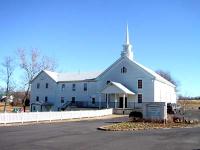
 “Location, Location, Location!” The phrase has morphed from a real-estate maxim to a local church maxim. Increasingly churches believe that the pastoral candidate’s location and social-economical upbringing determine his ability to lead their church. Those potential pastors that share the southern congregation’s affinity for Alabama football are placed in the keep pile. Those who grew up eating clam chowder on the New England coast are stuck in the do not call pile. And if the outsider pastor some how sneaks into the church office and manages to place his name on the desk, church members reserve the right to disagree with and to discount the Pastor’s leadership because he is not “really one of us.”
 Witkowski Blog