Marks of a Good Pastor (Part 1: Gospel Preacher)

marks-of-a-pastor-1Who is a good pastor? How do we know if the guy in the pulpit is doing his job? Do we measure him by his appearance: suit and tie, kakis or jeans? Do we measure him by checking the church’s financial, attendance, or baptism numbers? Do we measure him by his stories and his ability to hold our attention on Sunday? Do we measure him by his ability to reach young families, to care for senior adults, or to connect with millennials? What makes a good pastor a good pastor?

And as those who belief in church elder lead and congregation ruled church polity should be heavily invested in this question. Church members should not assemble to discuss the color of the pastor’s office, the location of the projector, or the pros and cons of pews. The church members should assemble to ensure that their pastor’s follow the gospel, to verify that their worship is God centered, and to protect their congregation from theological error. The people of God have been appointed by God to fight for and promote the spiritual well-being of their congregation. Church members regularly exercise this authority through picking, vetting, and encouraging their elders and pastors. So what makes a good pastor?

Paul helps answer this question for Timothy, his mentee in the faith, and us in 2 Timothy 2:14-19. He tells us that the faithful pastor is one who faithful reminds others of the gospel, who charges others not to quarrel about words, who is approved as a faithful worker, and who avoids irreverent babble.

 He Reminds Others of the Gospel

Paul tells Timothy in verse 14 to “Remind them of these things.” Anytime, we encounter pronouns not directly tied to a noun, we must hunt to find what “these things” is referring to.  A quick survey of chapters 2:1-13 indicates that Paul is referring to the gospel. Paul is telling Timothy in strong words to regularly expose his people to the gospel. Remind them of the truth that God created the word, the man fell through sin, that Christ saves through his death on the cross and his resurrection, and that we all must respond to the gospel. As Greg Gilbert notes in his book, What is the Gospel, that the gospel can be summarized in four words: “God. Man. Christ. Response.” The faithful pastor is the pastor who regularly shares the gospel in all of their public messages and in all of their private counseling. The faithful pastor is not someone who simply recounts their testimony nor someone who can tell moving stories. The faithful pastor is the man who recounts the gospel day-in and day-out.

The pastor must be tied to the gospel because the gospel is the only power, source, and resource available to the Christian. There is no deeper truth. We do not get saved by the gospel so that we can reach some greater, some more powerful, or some more glorious reality. Paul notes in Colossians 2:6-7

Therefore, as you received Christ Jesus the Lord, so walk in him, rooted and built up in him and established in the faith, just as you were taught, abounding in thanksgiving.

The Christian grows down. The Christian grows by meditating on the gospel and by applying the gospel to their everyday life. C.J. Mahaney noted,

The Key to joy, growth, to passion isn’t hiding from you. It’s right before your eyes. It’s the gospel.

The faithful pastor is the pastor who faithful shares the gospel. And we all need to hear the gospel day-in and day-out because we all regularly suffer from gospel amnesia.

We give into to sexual sin because we think God has withheld good things from us forgetting that God has given us his son. We dive into debt because we buy into the lie that life in found in experiences, vacations, and stuff, forgetting that meaning in found in Christ who liberated us from ungodliness and troubled consciences. We get angry and snap out our kids because we forget that God is the perfect ruler of the universe and has ordain even our craziness that comes with our kids. And when we sin, we tend to stumble into depression because we forget that God has covered all our sins on the cross. We ultimately sin because we forget, twist, or misuse the gospel. We all need to be reminded of the gospel if we hope to live faithfully for Christ. We all need faithful pastors to direct us back to the gospel.

The faithful pastor will regularly declare the good news of the gospel in all that he does. Dr. Albert Mohler, The President of Southern Seminary rightly noted that,

We [Christian Leaders and Pastors] are to find our identity and meaning in this story and in no other story. It is to be the story that frames our thinking, our living, and our leading. This is the story that tell us who we are, how we got here, and where we are going.

The gospel is all we need and all we have. Our pastors share this conviction if the hope to be faithful godly pastors.

Pray for your pastor, asking God to make him gospel focus. Pray that the gospel will dominate and control your pastor’s life. Pray that your pastor will faithfully declare the gospel in both his private and in his public ministry. Pray for God to give you a man who reminds you of the gospel!


Baptism: yes, no, maybe?

baptism

Should we baptize the energetic five-year-old who just bounded down the aisle to tell us they love Jesus? Should we require Sarah to get “re-baptized” even though her Christian parents had her sprinkled as a child? Should we ask Jerry to get re-baptized since he just told us about how he is finally following Jesus. He was dunked as a kid, but now his life is changing. He has stopped getting drunk; he faithfully attends church; and he has begun to final treat his wife with dignity and love. And what about Sally? She was dunked by a Roman Catholic priest. She went was fully submerged and everything. Does she need to be baptized before become a member of our church?

The answer all of these questions and the many others that play on the sands of baptism’s shore, we must turn to the Scriptures. We must look at how the Scriptures speak of baptism and then baptize accordingly.

What does the Bible have to say about baptism?

Baptism is For The Redeemed

The New Testament church only baptized those who had repented and believed in response to the Word of God. The three thousand souls added at Pentecost, the Ethiopian Eunuch, the apostle Paul, the Gentiles at Cornelius’s house, and the Philippian Jailer all heard the gospel, repented, and then entered the waters of baptized (Acts 2:37-41; Acts 8:34-36; 9:17-18; 10:47; 16:29-34).

Luke documents Peter’s words in Acts 10:47-48:

“Can anyone withhold water for baptizing these people, who have received the Holy Spirit just as we have?” And he commanded them to be baptized in the name of Jesus Christ. Then they asked him to remain for some days.

Baptism never precedes faith and repentance. It is often closely tied to faith and repentance. After all, the believer who has been redeemed will undoubtedly want to publicly obey Christ and unify with the people of Christ through the waters of baptism. Paul writes in Ephesians 4:4-6:

There is one body and one Spirit—just as you were called to the one hope that belongs to your call—  one Lord, one faith, one baptism, one God and Father of all, who is over all and through all and in all

All who believe in Christ become part of God’s people and share a common hope that is defined by the Lordship of Christ, faith in the his resurrection, and baptism. Baptism cannot be detached from faith. All who believe and have the opportunity to get baptized will eagerly embrace the waters of baptism.

The 1 Peter Objection

But then we encounter 1 Peter 3:21-22 which states:

Baptism, which corresponds to this, now saves you, not as a removal of dirt from the body but as an appeal to God for a good conscience, through the resurrection of Jesus Christ, who has gone into heaven and is at the right hand of God, with angels, authorities, and powers having been subjected to him.

Peter just said that baptism saves, but the Scriptures mentioned above teach the opposite. What is going on?

The word “corresponds,” ἀντίτυπον, refers to an impression made from stamp used to seal envelopes. It could also be translated as “representation.” Peter is saying that baptism, dunking, is a representation of how God saves us. The salvation is not based on works. Rather it is based on faith in God which grants us good conscience through the death and resurrection of Jesus Christ. Peter is explicitly revealing that the physical act of baptism does not save. Salvation comes through Christ alone by faith. We cannot initiate salvation for ourselves or for anyone else through the waters of baptism.

Baptism By Immersion

How do we do it? How should be baptize people? Do we immerse them? Do we sprinkle them? Do we need running water? Do any of these things matter?

Correct and biblical baptism always consists of immersion. The baptism described in the New Testament indicate that the baptismal candidates where dunked. Both Mathew 3:16 and Mark 1:10 record that Jesus “when up from the water” following his baptism. And in Acts 8:38-39 we read the following description of the Ethiopian Eunuch’s baptism:

And he commanded the chariot to stop, and they both went down into the water, Philip and the eunuch, and he baptized him. And when they came up out of the water, the Spirit of the Lord carried Philip away, and the eunuch saw him no more, and went on his way rejoicing.

Moreover baptism points to the salvific work of Christ in the believer’s heart. The sacrament does not signal future salvation or hope for salvation. Baptism shows what Christ has done in our hearts. Notice Romans 6:3-4:

“Do you not know that all of us who have been baptized into Christ Jesus were baptized into his death? We were buried therefore with him by baptism into death, in order that, just as Christ was raised from the dead by the glory of the Father, we too might walk in newness of life.”

Colossians 2:12-13, Titus 3:5, and 1 Corinthians 6:11 all confirm the Biblical maxim that baptism should be by immersion. The believer goes under the water to express death to sin and comes back out of the water to express their new life in Christ. Such powerful imagery, such gospel explanation is lost when we dip our hands in small bowl of water and sprinkle someone’s head. Such little amounts of water couldn’t wash dirt off a child’s face. The picture fails to accurately represent the powerful, awesome, and beautiful act of salvation which is tied to Christ’s death, burial, and resurrection.

Baptism In the Church

Baptism is a proclamation, a demonstration, and an identification with the gospel. Those who go into the waters of baptism declare that they have been redeemed and our now part of the people of God. The church is charged by God in Matthew 16:19-20 to both bind and loose. The church is supposed to recognize those who have been redeemed and excommunicate those who evidence no fruit of continued repentance. Since Baptism is, “The boundary of visible Christianity” the church should guard and administer the sacrament. The local church should determine who has demonstrated faith and baptize them. The local church (and not camps, college ministries, or para-church feeding programs) has been given the keys to the kingdom and should oversee the sacrament of Baptism. More specifically, the pastors and elders of the local church should do the baptism. They have been appointed by the church to teach, guide, and when needed represent the church.  God honoring Baptism takes place when a believer who has heard the gospel and repented is baptized by immersion by an elder in the presence of the local church.

We could summarize all that has been said above in the below definition:

Baptism is the first sacrament of the new covenant which initiates believers into the local church through immersion which symbolizes that the believer has died to sin and been raised with Christ.

The Answers

Who should be baptized? Those who believed in response to the preached gospel. Who has truly been baptized? Those who were immersed after faith. All other baptismal acts including sprinkling and being baptized in a non-gospel affirming church are not biblical baptism. Who needs to be baptized? All who have believed and who have not been immersed in the presence of a gospel believing church by a recognized leader of the church.

Whose Slave Are You?

We all serve someone. slave We live, move, and breathe in service to something or someone one. We may live for Sports, home décor, education, good health, financial gain, fame, or a host of other things, but we all live for something. We are all enslaved to something according to the Scriptures. Paul writes in Romans 6:16
Do you not know that if your present yourselves to anyone as obedient slaves, you are slaves of the one whom you obey, either of sin, which leads to death, or of obedience, which leads to righteousness?

In the game of life there are no fair-weather fans or bandwagon groupies. We do not casually determine who we will serve according to team color or according to the team’s mascot’s ability to conquer another mascot. We are all either willfully serving sin which leads to death or obedience which leads to righteousness. We either live and move according to the world and our flesh or we live and move according to God of the universe.

We all initially begin the game of life on Adam’s team, the team of sin. But we do not have to stay with him; we do not have to remain on the team destined for loss, disappointment, and death. We can embrace Christ and experience righteousness, victory, and unbroken fellowship with God!

Embrace Christ become his slave!

Admittedly the sentiment of slavery does not resonate with American culture. We are often pridefully independent of all, boldly declaring our opinions, our wants, and our desires to be supreme. The yellow flag that bears the words “Don’t Tread on Me” has become the religious slogan of many Americans. Consequently, slavery to Christ is seen to be the refuge of little, old ladies and weak men who lack the strength to escape their mom’s basement.

But slavery to Christ is not boredom, weakness, or the self-willed surrender of all that is good in life. Slavery to Christ is the very essence of life itself. It is the entrance into joy, meaning, and significance. John Piper writes, “We are most satisfied when God is most glorified.” When we stop serving our selfish desires, when we submit to Christ, and we glorify God through loving obedience, we find the true life!

Slavery Gives us Righteousness

In 2 Peter 2:1-4 the Apostle Peter offers three compelling reasons for embracing Christ as our Lord. First, we gain access to the righteousness of God. Those who repent of their sins and change masters find the righteousness they desperately need. We all come into the world as sinners. When Adam sinned in the Garden of Eden by eating the forbidden fruit, he did not doom the whole human race. Romans 5:19 states, “For as by the one man’s disobedience the many were made sinners.” Some my object and say no, “Adam did not represent me. I am not evil. I am not a spiritual son or daughter of Adam. I can choose a different path. I can be on God’s team.” Yet, your body decays and feels aches and pains signaling your frailty. You will die precisely because you are infected by sin. We all are. Romans 3:10-12 states,

As it is written: “None is righteous, no, not one; no one understands; no one seeks for God. All have turned aside; together they have become worthless; no one does good, not even one.

None of us is righteous. The great attempt of Adam and Eve to improve upon the God the universe did not lead to greater holiness, power, and glory but to evil, brokenness, and death. Even the human psyche cannot imagine a world where the created can improve upon the creator. The only scenario that resonates with our experience is the created destroying the glory of their creator. Sin leads away to evil. And evil separates us from God, the source of life, joy, and truth.

Slavery to Christ through faith in Christ’s death and resurrection gives us the righteousness we long for. When we trust in Christ, we get his righteousness. And we know Christ can make and guarantee this trade because he has risen from the dead. Nothing can conquer him. He offers all who obtain faith in him righteousness. And those who get Christ righteousness can once again walk with God like Adam and Eve did. They can experience the joy of knowing and communing with God.

Come and embrace the slavery of Christ and enjoy the gift of Christ righteousness.

And thankfully there is only one faith. There is only one way to God through Christ. Peter says in verse 1, that all Christians “have obtained a faith of equal standing with ours.” There is not some higher faith than faith in Christ. The apostle Peter, one of the most important men in Christ’s ministry and in the founding of the church, received righteousness just like we do via faith in Christ Jesus. There is no other mystery or program. There is not one salvation for the old and another for the young. There is not one salvation for the introvert and another for the extrovert. There is not one salvation for the scholar and another for the highschool dropout. There is one salvation for all. As Dr. Martin Lloyd-Jones said,

Regardless of the individuality or temperament, all can know this same experience, it does not vary from individual to individual, nor does it vary from century to century.” . 

Embrace Christ as your master and Lord!

Slavery Get Us Grace and Peace

We need righteousness and we long for grace and peace. We long to feel the blessing of God. We long to know that God is on our side, giving us good gifts such as health, safety, and family. We long to experience peace. We long to lay our head down at night without feeling guilt, shame, or sorrow. We want relief from the fear that are lies may be found out. We are tired of fearing death which promises to usher us into judgement. We are tired of trying to compensate for our sin with our good deeds. We want our conscience to stand down and to gift us peace.

We can experience the grace and the peace that we long for through Christ. We can rest confidently in Him, knowing that he has paid for all of our sins past, present, and future. We can get off the treadmill of human opinions, knowing that we have been justified by God. We can find true grace and peace in the arms of our savior.

Faith and slavery to Christ is not something for old ladies and weak men. It is the very essence of joyous life and peace with God. It is also the ability to obey God and to live lives characterized by peace.

And such true peace is only found in the, “knowledge of God and of Jesus our Lord.” To find such peace, we must dive into the Word of God. We must read it and then we must do it. We must obey Christ. We must be his slave. He alone offers peace. The counselor’s chair, the latest video game,  and the bottle of drugs on your shelf cannot give you lasting peace. They cannot pay for your sins and deliver you from evil. Christ as revealed through the Word can do all this and much more!

Embrace Christ as your master and Lord!

Slavery Gives Us Everything

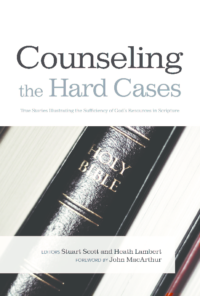
CounsellingHardCases-sample-thumbEmbrace Christ because he has “granted to us all things that pertain to life and godliness.” If you want to have a healthy marriage, wonderful friendships, and outstanding relationships embrace Christ. If you want to gain victory of your lying, your anger, your covetousness, your pride, and your biting tongue embrace Christ. If you want to fix your troubled marriage, your poor parenting techniques, and your fractured relationships, embrace Christ. God has given us everything we need to live good, healthy, and godly lives. He has revealed his Word how we should think, talk, and act. He has provided us with the knowledge and the power to escape all evils. If you want to see the how this plays out practically, I encourage you to read Counseling the Hard Cases. The book affirms Peter’s claim that God is enough. We will not find all that we need for life and godliness in the counselor’s chair, on Facebook, or at the gym. No, the ability to live godly lives come through the promises of God.

Embrace Christ as your Lord!

Are you ready to be a slave of Christ?