Top Reads of 2020

I read books much like Sam from the iconic Green Eggs and Ham who could eat the green stuff here and there. I can read pretty much everywhere. In 2020, I have read books in a plane and on a train. I’ve read them within a car and in hotels from afar. And I would read them with my wife and with PhD students who play the fife. In short, I do so like good books. I hope you too will try a good book or two soon. Below are the four tastiest volumes that I read in 2020.

If you feel the urge to stop reading this post, finding books scary, I encourage you to stay with me for another minute or two. Investigate the books below. Though you may not like books much today, I encourage you to heed the advice of Sam-I-Am who profoundly said, “Try them! Try them! And you may.

The Great Influenza: The Story of the Deadliest Pandemic in History

John M. Barry

I began the year unaware of this book. But a pandemic and a well-timed tweet by my fellow PhD. student John Blackman later, the book became my favorite volume of 2020.

When the Coronavirus swept across our shores, I found myself completely unprepared for the virus. I did not know how to think about a virus. My grandparent’s stories which dipped into the 1920s knew nothing of pandemics or plagues. Barry’s book provides the historical context that I needed to make sense of these times. In the 546-page book that reads like a novel, the author traces the conflict that erupts as scientists seek to conquer the mysterious and every changing world of microbes that are killing thousands. As the story flows from rural Kansas, to France, and then back to urban New York and to a host of other locations, Barry clarifies many misconceptions that have distorted our understanding of the Spanish Flu, the benefits of epidemiology, and the power of modern medicine. He also draws connections between the 1918 pandemic and other medical crises such as Polio and the Swine Flu, noting both the advances of modern medicine and its frustrating limits. Modern medicine still fails to definitively answer our questions. Barry notes, “They knew so little. So little. They knew only isolation worked.”

At times, Barry’s own biases bleed into the story. But his biases against Christianity do not impede his overarching commitment to leave no stone unturned. He examines Presidential files, small town newspapers, and private correspondence. The research that produced this book has captured the attention of Presidents on both sides of the political spectrum. I would encourage you to listen to Barry as well.

Excerpt

And they lied for the war effort, for the propaganda machine Wilson had created. It is impossible to quantify how many deaths the lies caused. It is impossible to quantify how many young men died because the army refused to follow the advice of its own surgeon general. But while those in authority were reassuring people that this was influenza, only influenza, nothing different from ordinary “la grippe” at least some people must have believed them, at least some people must have exposed themselves to the virus in ways they would not have otherwise, and at least some of those people must have died who would otherwise have lived.


J.C. Ryle: Prepared to Stand Alone

Iain H. Murray
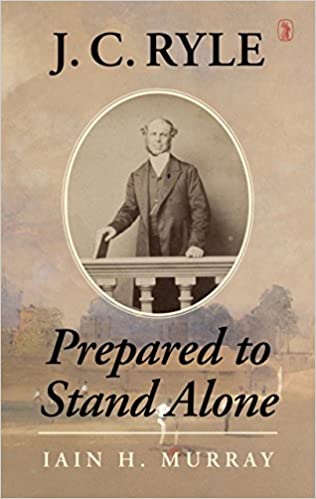
As the world around him descended into darkness, J.C. Ryle remained fixed to the light of Christ. In the space of 273 pages, historian Iain Murray chronicles the life and discusses the theology of one of the greatest British theologians of the nineteenth century. Ryle overcame his nominal Christian roots and was transformed into the famous grace inspired pastor we know today because of his single-minded devotion to Christ. Murry writes, “The gospel itself was ever the most important part of whatever he spoke or wrote, and the gospel meant the person and work of the Lord Jesus Christ (133).” He clung to it when his wives died, when the Church of England drifted from the truth, and when his son wrote off the historic Christian faith as being archaic. Through all the disappointments, criticisms, and sorrows, Ryle rested happily upon the rock of Jesus Christ, extending love to friend and foe alike. One contemporary described Ryle as “that man of granite with the heart of a child.” Though the church of England sank into liberalism, Ryle’s ministry bore great evangelical fruit. He opened 44 new churches and installed more than 100 new clergy in his diocese. The relevance Ryle’s son, Herbert, sought through theological innovation, J.C. Ryle achieved through the proclamation of the historic faith. Murray’s work is a valuable and encouraging read.

Excerpt

Faced with difficulties of many kinds, Ryle had no doubt where his priorities lay: ‘my first and foremost business, as Bishop of a new Diocese, is to provide for preaching of the Gospel to souls now entirely neglected’…From the time of his conversion he had believed that nominal Christianity – ‘churchianity’ without personal experience of Christ – was ‘the greatest defect of the Christianity of our times.’


Know the Creeds and Councils

Justin S. Holcom

Using only 192 small pages, Holcom accomplishes the herculean task of providing his readers with helpful introductions to more than thirteen creeds and doctrinal statements. Each of his chapters chronicles the historical background, the content, and the relevance of documents such as the Apostle’s creed, the Council of Trent, and the Chicago Statement on Inerrancy. At the end of each chapter, the author provides his readers with discussion questions and a list of books for further study, making this the perfect book for both the pastor and the lay person. Though no book of this size could comprehensively deal with every issue tied to these documents, Holcom provides his readers with a meaningful introduction to those movements that both indirectly and directly shape their theological practice. For example, he details Nicaea which solidified the church’s understanding of Jesus and the Council of Trent which explains why protestants cannot rejoin the Catholic Church. Though Jesus’s church does not need councils and theological documents to be the church, these statements prove to be more helpful than most Christians realize. Holcom writes, “Creeds aren’t dogmas that are imposed on Scripture but are themselves drawn from the Bible and provide a touchstone to the faith for Christians of all times and places.”

Excerpt

The fact that Christianity developed – that the sixteenth century, for instance, looked very different from the third, and that both looked very different from the twenty-first – can sometimes lead us to wonder what the essential core of Christianity is. As a result, some people decide to ignore history altogether and try to reconstruct “real Christianity” with nothing more than a Bible. But this approach misses a great deal. Christians of the past were no less concerned with being faithful to God than we are, and they sought to fit together all that the Scripture has to say about the mysteries of Christianity – the incarnation, the Trinity, predestination, and more – with all the intellectual power of their times. To ignore these insights is to attempt to reinvent the wheel, and to risk reinventing it badly.


The Heart of Christ

Thomas Goodwin

The sweetness of Thomas Goodwin’s 1651 book has become all the fuller with age. Instead of being driven to the edge of irrelevance by the busyness of the modern world, Goodwin’s exposition of God’s love for his people proves to be acutely applicable to our day. The first part of the book reveals how heaven amplifies Jesus’s love for his disciples, reminding readers that the God who extended grace to the bumbling Peter readily extends grace to you and me. Goodwin notes, “now that he is in heaven, his heart remains as graciously inclined to sinners that come to him, as ever on earth (4).” In the second and third part of the book, Goodwin unpacks the heart of Hebrews 4:15 which declares the Jesus is a high priest who “was in all points tempted like us, yet without sin.” He also traces Christ’s love for his people throw the Trinity, amplifying the love of God exemplified through the mercy and grace of God.

Goodwin’s recounting of God’s love for his people proves a refreshing correction to the works righteousness that dominates much of the evangelical world. Though the author’s old English could prove a little cumbersome for some readers, Goodwin’s small book will prove to be a powerful dose of encouragement for souls worn down by sickness, relationship difficulties, and the pressures put upon them by well-meaning religious folks who think God’s love flows through choir practices, painting projects, and Wednesday morning Bible studies. We don’t need those things to earn Jesus’s love. Christ’s heart is always towards his people.

Excerpt

But then, some greatly distressed souls might question thus: Though he pities me, and is affected, yet my misery and sins being great will he take them in to the full, lay them to heart, to pity me according to the greatness of them? To me with this thought therefore, and to prevent even this objection about Christ’s pity the apostle sets him out by what was the duty of the high priest, who was his shadow; that he is one that ‘can have compassion according to the measure of every one’s distress’s…Thy misery can never exceed his mercy.

Memo: April’s Cancer Update – Christmas 2020

As we wait for the glories of the Christ child to once again pierce the darkness of Christmas Eve, April and I want to bear witness to how the Christ child has blessed us this December. This past Monday, April endured her latest set of scans replete with needle pricks, swallowable dyes, and not so comfortable beds that drift in an out of large machines. Then like children bouncing around the house the night before Christmas, we waited to unwrap the results. On Wednesday, December 23, 2020 with the help of April’s talented UVA medical team, we unwrapped the latest report and found good news! Though a few new nondescript nodules have dotted the scans like misplaced Christmas light, the overwhelming majority of her tumors have either shrunk or remained stable. One has even decreased from 4.5 centimeters to 3.2 centimeters. The favor of Jesus rests upon my sweet bride.

But that divine favor does not eliminate all sorrow and hardships. Much like the reformed Ebenezer Scrooge, April and I find ourselves living in the past, present and future. We look back at the pain and uncertainty that hovered over our last Christmas and give thanks for the radical improvements that have occurred in April’s body. She just made a Yule Log Cake (Hello Christmas!). We seek to stay in the present reveling in the good news of the day as we watch our three kiddos open Christmas presents, embrace Christmas cookie decorating, and sing “Joy to the World” at the top of their lungs. Lastly, the future also hangs about us like a damp, ill-defined midst. We know April will have to endure more scans, back pain, and days away from our children. April wishes she could reshape her future like Scrooge. Sadly, it remains both fixed and elusive.

Though we do not know what the content of the next report will be, we do know something of the sender’s character. He is our savior, the Christmas child, Christ the Lord! Psalm 100:5 declares, “For the Lord is good; his steadfast love endures forever.” We know this is true because the baby in the manger, lived, died, and rose again to save sinners like April and me. He humbled himself to the point of death on the cross so that we might be exalted to live with God. And he guides us through life with more love and power than even one of Scrooge’s spirits. The famed pastor and theologian, John Calvin, rightly noted that when God’s people descend into hardship, “[God] will not desert them, but will powerfully help them should they need his aid.” In short, the light of Christmas morning reminds us that our future will be snuggly wrapped in the love of God. Though the results of April’s scan will invariably contain variation, we know the love of God will remain fixed. Because of that first Christmas long past, we too can sing with the angels, “Glory to God in the highest, and on earth peace among those with whom he is pleased (Lk 2:14)!”

Thank you for rejoicing with us this cold December day. We covet your prayers and support. They warm our hearts, manifesting the love of God. We hope our good news infuses a little gospel cheer into your Christmas celebration.

More importantly, we pray that you too will discover the joy of the Shepherds, and of Mary and Joseph who knew that Jesus, “the Lord, he is God! It is he who made us, and we are his; we are his people the sheep of his pasture.” God is good all the time!  

Merry Christmas!  

Contact Info:

Email us at: biblefighter@gmail.com 

You can reach us via snail-mail at : P.O. Box 637/ Amissville, VA 20106

You are also welcome call Amissville Baptist Church at: 540-937-6159.

GOFundMe Page

We will posting updates here at witkowskiblog.com

Thank you for your love, prayers, and never-ending support.

The Story of Christmas, The Gospel of Jesus

Sharing the Christmas story with my church family has proved to be one of the highlights of the holiday season. I construct my narratives the around four-part gospel presentation (God, Man, Christ, Response) highlighted in Greg Gilbert’s book, What is the Gospel. I am excited to share one of those retellings of the Christmas story with you today.

The Script below was designed to be read aloud in a congregational setting. But I believe it will hold up quite well when you read in your comfy chair or at the kitchen table with your family. I hope this recounting of the Christmas story helps you rediscover the joy of knowing that the baby in the manager is Jesus, our Messiah who saves us from our sins.

Merry Christmas!

In the Beginning

The Christmas story is a political story. But it is not the story of elections, debates, and shady deals. Yes, King Ahaz gets a less than honorable mention, the Emperor Augustine makes a brief appearance, and the wicked King Herod sets the divine family on the run. But the Christmas story is not about these men and their governments.

As Jesus would one day tell the Governor of Judea, “My kingdom is not of this world.” 

According to the Bible, God’s kingdom transcends the limits of earthly space and time. God lays claim to the universe and everything it: physical and spiritual, visible and invisible…and even you and me. Psalm 89:11-12a declares that, “The heavens are yours; the earth also is yours; the world and all that is in it, you have created them;” The triune God (Father, Son and Holy Spirit) deserves to be worshiped for he created and sustains the universe. 

God also created the first humans, the first royal couple, Adam and Eve. God designed them to lead all humanity to love and goodness, placing them in the center of his beautiful world, the Garden of Eden. For a glorious season, the first couple lovingly nurtured the flowers that swayed in the summer breezes, the creatures that danced in the meadows, and the fish that splashed about the oceans. All was good, pure, and right. All was peaceful between God and man, between man and man, and between man and nature.

But, this glorious world would not last. Adam and Eve would fall from their thrones.

The Political Crisis that Necessitated Christmas

One day, Eve entered into a conversation with a wicked serpent, whom God had tossed out of heaven. This snake told Eve that God was a liar who would exploit the first royal couple.  

First Eve and then Adam believed the snake. They thought rebellion against God would enable humanity to reach heights of unimaginable new achievements. When the first man and women sunk their teeth into a piece of forbidden fruit, they kicked off the greatest revolution of all time.

But their rebellion did not go as planned. When Adam and Eve struck out on their own, they discovered that the snake had lied and not God.

God had kept nothing good back from them. God had only protected the human leaders from all that was evil, rotten, and deadly. And now as Adam and Eve looked about God’s once good world, they saw fear, misery, and death. The very essence of their souls and the very foundation of the world had been corrupted. Adam and Eve were naked before the Lord. Try as they might, they could not undo what they had done. The kingdom of light had been replaced with the kingdom of darkness. The peace was gone. They were rebels against God.

Sadly, the corruption did not end with the reign of Adam and Eve. The first king and queen bequeathed their legacy of deadly rebellion to all of their descendants.

Take King Ahaz for example.

Isaiah Chapter 5 reports that Ahaz’s once shook with fear because an army of sword clad Syrians stood outside his castle gates. But all was not lost. God decided to help Ahaz. God told Ahaz, “Do not fear” for you will prevail. To prove that his message was not a divine prank, God gave Ahaz one genie-like wish. The king could have asked for a star, a dinosaur, or a gold nugget that weighed a million pounds. The universe was his for the asking. But instead of taking God up on his offer, Ahaz said, “No thanks.” The king wanted nothing to do with God’s salvation. He wanted to keep the rebellion going.

Despite all our iPhones, electric cars, and 85-inch flat screen TVs, we modern men and women have not progress beyond the rebellion of Ahaz. We all have spoken angrily to a child, stolen a pen or pencil, and harbored some really bad thoughts about a neighbor, family member or an ex. We have all sinned like Adam and Eve and Ahaz, believing God to be a liar. And like our first parents and all the kings and queens of old, we too will die. Though we cannot shake our fear of death, we will not ask God for help.

But God is not deterred. Humans like you and me cannot keep God from being God. Though Ahaz did not want a sign, God still gave the king a sign, a sign that would be for all people. Isaiah 5:14 reports “Behold the virgin shall conceive and bear a son and shall call his name Immanuel.” God would once again walk peacefully among his people. The kingdom of heaven would be restored. The Prince of peace was coming! 

Baby Jesus: Defeats the Rebellion

On Christmas morning, God again dwelled with the sons and daughters of Adam and Eve. When the baby in the manger became a man, he set out to restore the kingdom of God. He overthrew sickness, rebuked the waves, and vanquished demons. He reminded the heirs of Adam and Eve of the glories of God, preaching peace, joy, and salvation. The serpent too reappeared, seeking to persuade Jesus to follow the first Adam into rebellion. But Jesus refused the offer. The kingdom of God was advancing. A new Adam, a new king had come. Seemingly just as he was about to ascend to the throne of Jerusalem, the Jewish and Roman rulers of the day intervened and crucified Jesus, preserving the political systems of the ancient world. His followers were bewildered by the cross. Perhaps the snake had not lied. Perhaps men and women truly could contend with God and defeat the kingdom of righteousness.

But Jesus had not been defeated. Three days after dying on the cross, Jesus stepped out of the tomb. When the women went to anoint Jesus dead body, the found not Jesus but an angel who declared, “He is not here, he is risen.”

Jesus burst through the serpent’s wall which had built with the slimy bricks of sin and death. The Scriptures reveal that the Wonderful Counselor had intended to die all along so that through his sacrifice he might liberate the descendants of Adam and Eve from the kingdom of darkness. Through his birth, life, death, and resurrection, Jesus had defeated the rebellion!

All the descendants who follow Jesus through the breach are welcomed back into the kingdom of light. Shepherds, prostitutes, prideful men, sex-crazed teenagers, and angry kids are all invited to repent and believe! When Jesus died, he suffered not for his own sins but for our sins. He satisfied the wrath of God with his righteous life, exchanging his holiness for our rebellion. As we step through the hole in the wall by faith, Jesus clothes us in his righteousness and fills our hearts with his spirit, providing us with the credentials and the power to once again walk with God forever. The Prince of Peace had come!

Come Worship the King

Because of the Baby in the manger, we no longer have to follow in the footsteps of our father, Adam. Though Adam brought death to all men and women, Jesus has brought eternal life to all. As the hymn says, “you will no longer need to fear the grave. Christ was born to save.” Those who repent of their sins and believe on the cross for salvation become sons and daughters of the Mighty God and will reign with Jesus in heaven. Those who believe will find the peace that Adam and Eve had lost through their rebellion.

The question we now face this Christmas season is this: “Do we have peace with God? Have we repented of our sins and trusted in Jesus’ life, death, and resurrection for our salvation? Is the baby in the manger, the Prince of Peace, my savior?”

If your answer is no, I encourage you to come and repent and believe before another Christmas comes and goes.  

If the baby in the manger is your savior, rejoice with great joy! No more let sin and darkness reign! You have been delivered from the rebellion. You no longer have to live in fear for Christ dwells with you, leading you to love, gentleness, kindness, mercy, and glory! Joy to the world, the savior Comes. Let earth receive her king.

Merry Christmas!