
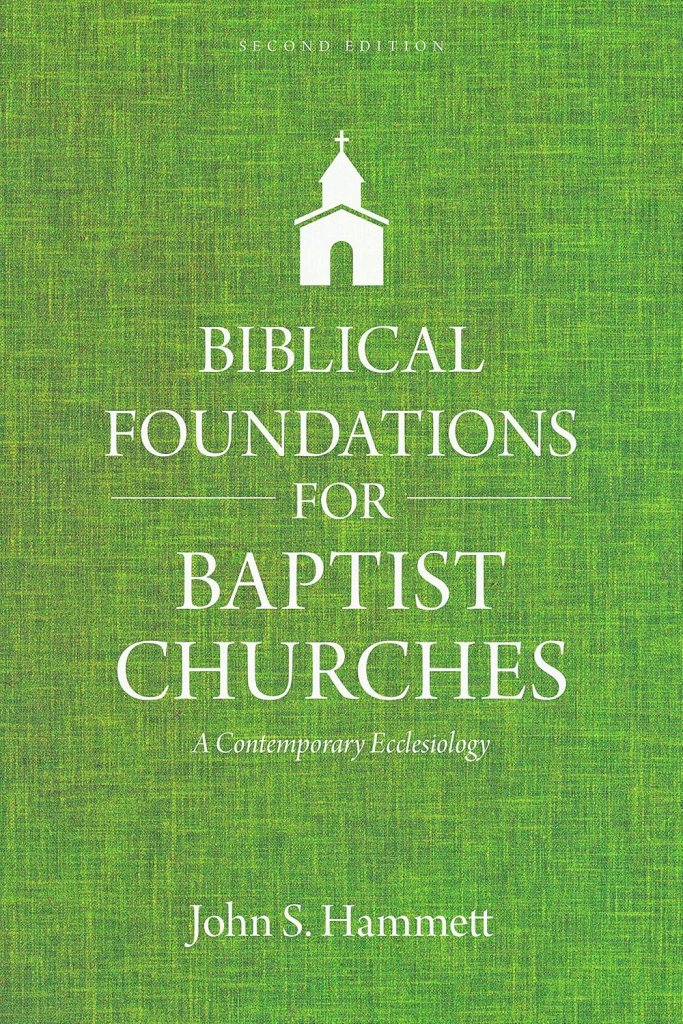
The conversation around what qualifies a man to lead the Southern Baptist Convention (SBC) needs to expand beyond the pragmatic consideration of church growth metrics. To discern whether a man is qualified to lead the SBC, messengers should evaluate his faithfulness in pastoring his local church well, looking at the four elder responsibilities outlines in Dr. John Hammett’s book Biblical Foundations for Baptist Churches: preaching, pastoral ministry, oversight/leadership, and character. In other words, those who aspire to lead the convention well should show the messengers that they pastor well.
Where the Discussion Has Been
For the last few decades, the messengers to the SBC have placed great value on how much a candidate’s church gives to the cooperative program (CP) and on how many people his church baptized. Consequently, the candidate who led his church to give $500,000 to CP and to baptize 300 people is deemed more faithful than the pastor who led his church to give $5,000 to CP and baptize 3 people. Though messengers will at times judge men on percentages instead of gross numbers, allowing for variation in congregational size, the basic principle remains. Faithfulness has been measured numerically.
A Better Way
Such measurements arise from the convention’s rightful focus on missions. Giving and growth stats do reveal something about a man’s ability to exercise oversight as an elder and pastor. But they do not reflect the full scope of a pastor’s leadership or reveal how he will respond to the theological challenges that the convention and its president will face. To gain that insight, messengers must look beyond the giving and baptism stats and burrow into their Baptist roots. They must examine the man’s preaching, pastoral ministry, oversight/leadership, and character.
Preaching
Since the well being of every local church and the convention depends on its obedience to the Scriptures, messengers should acquaint themselves with a candidate’s preaching ministry. Dr. Hammett writes, “It is primarily by the means of his preaching and teaching that the elder exerts the influence of his leadership in the congregation.” If messengers want to know how a man will lead the convention, they should listen to some of the president’s sermons. Podcasters and the members of the evangelical press, and pastors at round tables should ask questions that draw out the candidate’s view of preaching. Is he an expository preacher? Why or why not? How does he go about preparing sermons? Does he see men and women responding to the preaching of the gospel in his church? How many people are being baptized?
And since the ordinances or sacraments support the proclamation of the gospel acting as a visual, corporate sermon, messengers should be curious about the man’s practice of the sacraments. Does he believe in spontaneous baptism? Why or why not? Does he practice open communion? Why or why not? Moreover, if podcasters, members of the evangelical press, or messengers find questionable teaching in his sermons, they should share their findings with the candidate and give him opportunities to clarify. The messengers should familiarize themselves with a presidential candidate’s preaching ministry.
Pastoral Ministry
Messengers should try to understand the man’s pastoral ministry. As Hammett notes, pastors are called, “to protect the sheep (163).” Through public teaching and private counsel, they should show their congregations how to identify sin, repent of sin, and how to counsel and help those trapped in sin. They also must guard their local congregation from theological error. As Dr. Albert Mohler notes, “Error must be confronted, heresy must be opposed, and false teaching must be corrected.
To discern the candidate’s practice of pastoral ministry, podcasters, the evangelical press, and messengers should ask the candidate about his counseling practices and about how they have gone about confronting theological error in their churches. Do they believe in biblical counseling or more integrated approaches, and why? How do you facilitate discipleship of your members?
This category also leads into questions about the candidate’s practice of church discipline. As Southern Baptist church father, J.L. Dagg noted, “When discipline leaves a church, Christ goes with it.” Does the pastor seeking to lead the SBC lead his church to discipline men and women who refuse to repent of their sins or their theological error? And if so, what sins and errors and how? Does the Baptist Faith and Message shape his pastoral ministry? What theological and practically errors does the SBC face and how would you address them?
Oversight and Leadership
The pastor is called to give “overall administrative oversight and leadership to the church (164).” Or to quote the Baptist Church Father Edward T. Hiscox on pastors, “Their duties and services have mainly reference to the spiritual interests of the body, though they properly have the oversight of all its concerns.” At this point, questions about a candidate’s church budget become relevant. How much does his church give to the cooperative program and why? How does he lead his church to maximize its budget for kingdom expansion?
Questions about his church’s worship services and leadership structure also prove relevant at this juncture. Does his church have multiple services? Why or why not? What does his church’s leadership look like? Does he have elders, a deacon board, or a leadership council and why? How does his church go about selecting leaders? Does he believe that women can be elders or pastors or functionally serve in that role?
Character
Hammett notes that the pastor is called to “serve as an example to the flock (1 Peter 5:3).” As Benjamin Keach noted in 1697, a pastor was to show himself “a good Example in Conversation, Charity, Faith, and Purity.” Any man who desires to lead the SBC should possess a character that is above reproach. Those who do not should not be leading their local church much less the convention.
Podcasters, the evangelical press, and the messengers should ask the candidates if their lives are above reproach. They should work through the lists of pastoral qualification found in Titus 1 and 1 Timothy 3. Do you manage your family well? How do you go about caring for your wife and children? Are you self-controlled?
These questions should not be asked from a heart of accusation but from a heart of affirmation. Questions that dig into a candidate’s life should reveal diamonds of faithfulness that encourage the messengers regardless of their tribal affiliations. If such questions uncover coal, the fault lies not so much with the one asking the questions as with the one answering them.
Final Thoughts
I am calling for an expansion of the dialogue around those nominated to be the next president of the SBC because I long to shift the debate over the SBC’s leadership from the squishy edges of pragmatic, convention politics to the hard edges of the biblical truth. I suspect questions about preaching, pastoral care, oversight, and character will reveal far more about how someone will lead the convention than giving metrics, or one’s SBC tenure, and thoughts renewal strategies. I long to see men elected to SBC office not because they have the right pedigree or politics but because their churchmanship proves they are competent to lead the SBC. In short, I want to see men elected because they faithfully preach the gospel, practice biblical pastoral ministry, give godly oversight, and display righteous character.
 Witkowski Blog