Why This Pastor Goes to Church

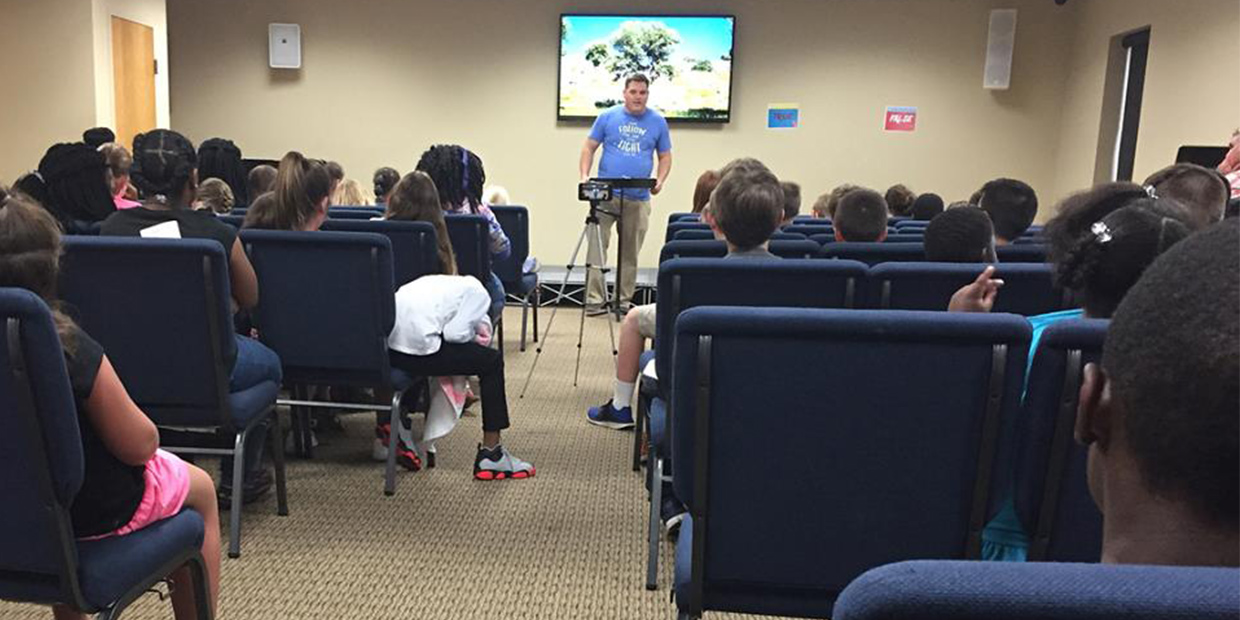
While preaching remains the undisputed foundation of congregational worship, the pulpiteer is not the church. In other words, I as the pastor of a local church do not head to church to hear myself preach on Sunday mornings. I study, wrestle with, apply, and come to terms with the text during the week so that I arrive in the pulpit intent upon sharing my Scriptural convictions rather than forming them. I do not come for the academic insights.

I attend church every morning because my local church serves as a rallying point for God people through whom God edifies my soul. I find encouragement in the corporate singing of doctrinal hymns that encourage my soul , the prayers of my fellow believers that infuse my heart with hope, and the discussions that arise from the congregation after a sermon which guide me to great biblical clarity. I pastor as well as I do (whatever level that is) because I do so within the loving bounds of the local church. In other words, I go to church because the people of God convey me afresh to the throne room of Jesus. Or as David says in Psalm 26:8, “O Lord, I love the habitation of your house and the place where you glory dwells.”

With this conviction in mind, I refused to exclusively “live-stream” my church’s Sunday morning service when the COVID-19 pandemic sent us scurrying to our homes. I believed then as I do now that church is more than a pulpiteer and skilled pianist or music team. Church is the old lady who gives the best hugs, the child who wiggles and occasionally cries, the young couple who faithfully serves in the nursery, the sweet greeters who never meet a stranger, the faithful single wrestling through the idea of marriage, and the aged saint who stands ready to stop and pray with you the minute you open up about your latest struggle. While the sermon serves as one of the foundational pillars of the congregation, it is not the totality of worship nor of the congregation. The church is the body of Christ, the hands and feet of Jesus (1 Cor 12:14).

For this reason, I also require all of my counselees to attend a local church for the duration of their counseling. Just as I need the whole church, the wounded and smarting heart also needs the whole church. Yes, the counselee needs the intensity of the biblical counseling office and the reinforcement that comes through practical homework assignments. But she also needs those encouraging hugs, the hope found in a rich hymn, the loving prayers of the couple in the next pew over, and those moments of reassurance that come as she realizes through a lunchtime conversation about the sermon that she is not alone in her battle against temptation. The soul twisting in the wind needs the church just as much as the soul grounded upon the gospel.

The church fathers of old used to speak of the church as being a nurturing mother. Just as a baby dies without milk, so the believer will die if he or she neglects the food of the church. Stated positively, confessional corporate worship will as Hebrews 10:25 says, “stir up one another to love and good works.” The faithful local church feeds the soul.

The couple that can skip church for months to pursue their highschooler’s softball career no more understand the gospel of Jesus than a surgeon who thinks it’s fine to amputate a foot and then leave it on ice for a month or two understands medicine. We would undoubtedly question the skills of the surgeon. Understandably, the authors of the Bible question the spiritual life of those who willfully neglect the gathering of the church, the life-giving food of the Lord.

Christians need the local church, the whole body. Those who delight in God will forever delight in church: the old ladies, the wiggly kids, the awkward teenager, the tired mom, and the host of other personalities who make our local churches the household of God. As David said in Psalm 16:3, “As for the saints in the land, they are the excellent ones, in whom is all my delight.” This pastor needs the saints. You need the saints.

So why do I go church? I go to church because it consists of the people of God who facilitate the worship of God. If you claim Christ and can make it to church this Sunday, I encourage you to go too. Will you?

Top Books of 2019

favorite books of 2019Had you told 13 year-old Peter Witkowski that he would be reading thousands of pages every year, his eyes would have rolled upward and his mouth would have broken into a sarcastic laugh.  Despite my youthful misgivings and limited prophetic abilities, I have come to love books. I count them as some of my truest friends. They have guided, encouraged, and challenged my heart and mind.

Given my academic studies and profession, my tastes unapologetically bend towards history and theology. Though I read a good deal of academic literature, I have found such literature to possess an engaging sense of readability. Below are the three books that most prominently snuck into my conversations with April Witkowski and a few others in 2019. Though all are not academic in nature, I found all of them to be enjoyable reads.

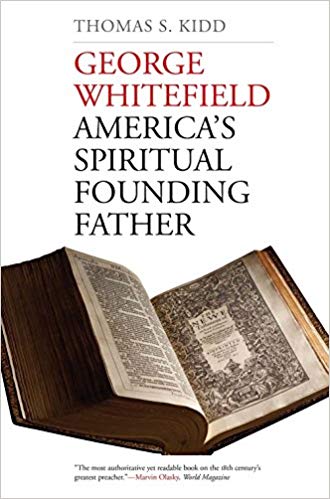
George Whitefield: America’s Spiritual Founding Father

Thomas Kidd

51OpXIDSonL._SX328_BO1,204,203,200_ (1)

“With apologies to the Beatles, George Whitefield was the first “British sensation.” The missionary to Georgia quickly outgrew the confines of his Savannah assignment and metamorphosed into the first great American preacher. He profoundly shaped the America Christianity as he preached to overflowing churches, challenged other pastors to preach the doctrines of grace, denounced the faculties of Harvard and Yale for their lack of spiritual vigor, and employed the technology of the printing press with unprecedented skill. Since his death, historians have either stomped upon the preacher’s grave in frustration or have desecrated his memory by pulling out one or two choice biblical lessons that ignore the scope of his life and ministry. Kidd attempts to avoid both extremes. He explores and defends Whitefield’s robust faith, giving credence to the preacher’s spiritual believes and experiences. But Kidd also wrestles with Whitefield’s faults, chronicling his odd (and at times comical) interactions with women, his self-awarded sense of grandeur, and his promotion of slavery. Kidd provides readers with a sympathetic and honest presentation of the first “British sensation”

Whitefield may have adopted modern marketing and communication methods, then, but his message was traditional and Calvinist. Instead of softening his view on the depravity of man in response to humanitarian critics, he emphasized original sin more. Whitefield spoke regularly of how people in their lost state became “sunk into the nature of the beast and the devil.

America’s Pastor: Billy Graham and the Shaping of a Nation

Grant Wacker

41Yg0Q1QhxL._SX327_BO1,204,203,200_

Readers who engage Grant Wacker’s book will discover a wealth of insights into the depth of breath of Billy Graham’s influence over America. Wacker looks at how southern culture, the civil rights, the economy, and many other factors shaped Graham and were shaped by him. While Wacker paints an endearing picture of Graham’s heart for reaching the lost, the author also deals with the pragmatic realities of Graham’s life and ministry, discussing how Graham worked with Mormons, interacted with racists, and formed an almost monolithic support base middle-class, white evangelicals. Those seeking to understand the many and varied ways Billy Graham’s life has shaped their culture will find Wacker’s book to be a fascinating and beneficial read.

To say that Graham possessed an uncanny ability to adopt trends in the wider culture and then use them for his evangelistic and moral-reform ability purposes is another way of saying he possessed an uncanny ability to speak both for and to the times. Speaking for required him to communicate in a registrar his listeners could hear. He legitimated their social location by guaranteeing that their values would count…Yet…he spoke to them as well. He helped shape their consciousness…Speaking to Americans mean that he challenged them to live up to their self-professed values of biblical equality, moral integrity, and social compassion.

Churchill’s Ministry of Ungentlemanly Warfare: The Mavericks Who Plotted Hitler’s Defeat

Giles Milton

51GYXwSUOBL._SX331_BO1,204,203,200_ (1)

Prior to World War 2, to be British was to be one who championed “decency and fair play.” But as the Nazi military machine filled Europe with death, Winston Churchill decided to liberate the British army from her people’s high sense of morality. The Prime Minister empowered Cecil Clarke, Colin Gubbins and others to research and deploy the dirtiest tools of warfare. The stories that follow appear more fanciful than the tale of Beau Geste. Yet these stories arise not from Milton’s imagination but from the British National Archives. Readers cannot help but be drawn into the tales of misfiring rockets that became for the first anti-tank weapons, daring assignation attempts that snuffed out hated Nazi leaders, and commandos raids that resulted in ships disappearing into the night. As author P.C. Wren noted in 1926, “Truth is stranger than fiction.” Milton has rediscovered this maxim afresh, providing his readers with a fantastic read. In addition to chronicling the spies’ bravado, Milton found ways to discuss the humanity of his subjects, weaving details into his book about how their sixteen hour days and long alcohol filled nights strained marriages, enhanced their grief, and resulted in a tank being driven to church. Milton has put together a compelling string of stories that reveal both the strategic benefits and the human cost of Churchhill’s ungentlemanly warfare.

A Ministry of Ungentlemanly warfare. If its name was amusing, its role was anything but. It was to subvert the conventions of war – punch below the belt…Any German target, however soft, was to be considered fair game, and no weapon was to be considered off limits. “This from of activity was of the very highest importance.’ Said Churchill.

Witkowski Memo: Amissville Start Date

start-date

I will preach my first sermon as the Senior Pastor of Amissville Baptist Church on April 22, 2018. On that day, I will kick off our study in 2 Timothy, working through each phrase and verse found in the text to expand and deepen our knowledge of the one true God. I look forward to seeing all my ABC family that day and warmly welcome all in the area to come worship with us!

As we continue to pack boxes, to switch around official documents, and to ready for the arrival of our baby, we want to thank both our First Baptist Church Eastman family and our ABC family for all that they have done.

April and I have been deeply blessed by the multitude of compliments, encouragements, and hugs that are being showered upon us and upon our kids by our FBCE family. You have loved us well through this transition, doing above and beyond what we could have anticipated. We thank God for you and for all the many memories that we have formed together while doing Easter Egg hunts, watching toddlers, leading VBS, fellowshipping together, and teaching together. God is good!

fcb64785-f132-497f-b1ae-4d58b1ad9535While April and I leave our FBCE family with full hearts, we enter into this transition period with great excitement, looking forward to developing bonds with our ABC church family. We are especially thankful for Dr. John L. Lindsay Sadler and for the Elders of ABC. They have diligently worked and sacrificed to lay down the foundation for ABCs future, a future full of gospel hope and godly expectation! April and I look forward to working with the Elders, Deacons, and members of ABC to build up and to expand upon their fruitful labors.

When April and I look around our house and see that our living room resembles a storage unit, our hearts fill with joy. We know that God is leading us to ABC. He led each member of the search team to my resume before they met to discuss potential candidates. He made April’s and my path to ABC clear and direct, including the unanimous call. God has been good, gracious, and faithful throughout this process. He had done far more than we could have ever hoped for! And April and I know he will do far more than we could ever anticipate or hope for when we arrive in Amissville.

am_bapt

As we wait for that day, we find our hearts increasingly encouraged by and drawn to our new church family. The leaders of ABC and many, many others have been faithfully loving us from afar. They have helped us find doctors, places to rent, office furniture, phone numbers, and so much more. We praise God for you and cannot wait see you face-to-face!

Counting Down The Days,

Peter and April Witkowski